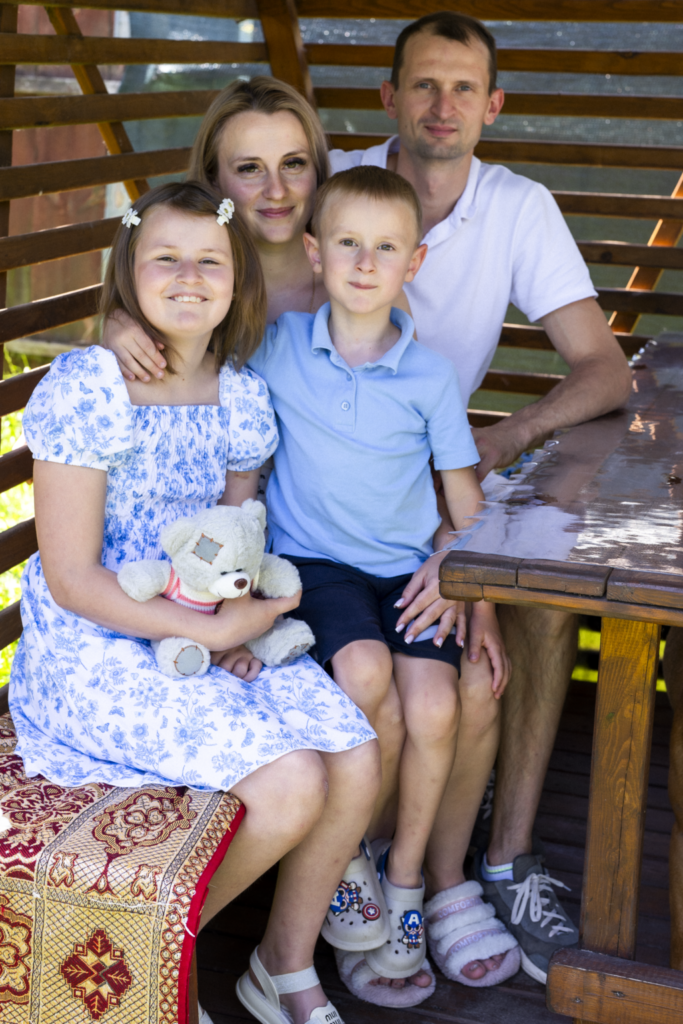
Ten-year-old Valeria loves English most of all; she enjoys doing crafts and makes videos with her younger brother. She is currently studying remotely whilst preparing for an operation in Germany.
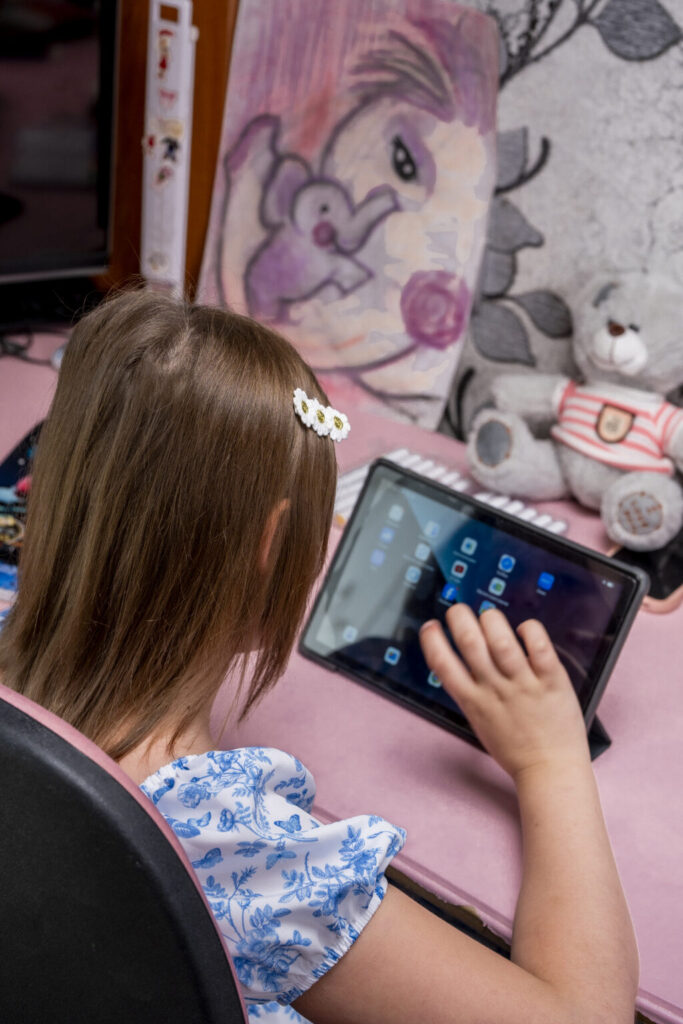
Previously, Valeria used to join her lessons via an old mobile phone that no longer supported the necessary apps. As a result, she would sometimes miss lessons or lose contact with her teachers. The tablet donated by “The League of the Strong” has helped remove this barrier: Valeria can now join her school lessons and English and maths classes independently.
At the age of three, Valeria underwent a complex brain operation followed by a long period of rehabilitation. She will need another operation in the near future. However, her treatment should not mean a break in her education or a loss of contact with her school.
Long-term treatment and a return to school
At the age of three, Valeria underwent a complex brain operation that lasted 16 hours. Following the procedure, she had to relearn how to walk and use her left hand.
Her rehabilitation lasted almost a year and became part of the family’s daily life. Valeria worked with specialists, went to the swimming pool, had massages and did exercises at home.
Over time, she began to walk unaided again, learnt to get dressed, cook simple meals, look after herself and carry out household chores. The mobility of her left arm has not fully returned, but this does not prevent Valeria from studying, engaging in creative activities and spending time with friends.
She is now following the school curriculum. At school, Valeria is supported by a teaching assistant, though she is increasingly managing on her own.
She excels at English. She also loves making aquamosaic crafts, creating jewellery and giving them to her friends and younger brother.
Why Valeria is currently studying remotely
Following her first operation, Valeria underwent regular check-ups. When she began to grow rapidly, her health changed.
She can suffer seizures during strenuous physical activity, so her family is now limiting activities that could put her at risk. Following further examinations, doctors informed the family that Valeria needs to have the skull plate fitted during her previous operation replaced.
Whilst her family prepares for the new procedure, Valeria is studying from home.
Distance learning allows her to continue her education, but this requires a working device, stable access to learning programmes and the ability to communicate with teachers.
The old phone Valeria was using no longer supported the necessary updates. Due to the small screen and technical issues, it was difficult for her to fully participate in lessons and complete her assignments.
The tablet has become for her not just a new piece of technology, but a tool for accessing education.
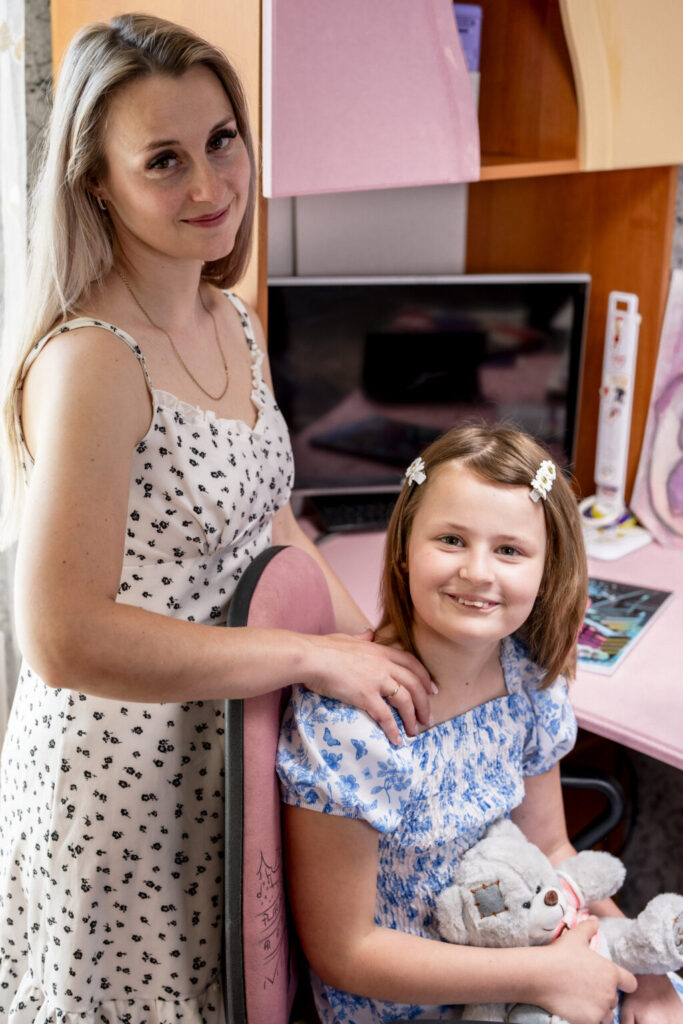
“Valeria joins her lessons and sessions with tutors via Zoom all by herself. Before, her phone often couldn’t run the necessary apps, but now she can study properly, even when I’m at work,” says the girl’s mum, Oksana.
The right to education is not dependent on a child’s state of health
Medical treatment, rehabilitation or preparation for surgery should not deprive a child of the opportunity to learn and maintain links with the school community.
For children who, due to their state of health, are temporarily unable to attend school in person, access to technology and online learning is essential for realising their right to education.
Sometimes, removing a barrier requires a specific and relatively simple solution: the right device, accessible software, adapted learning materials or the support of an assistant.
For Valeria, that solution was a tablet. Thanks to it, she can continue her studies, join lessons independently and stay in touch with her teachers whilst preparing for her operation.
Valeria has a new course of treatment ahead of her. But her life is not limited to medical procedures. It includes school, friends, her favourite subject – English – creativity, home videos with her brother, and plans that should not have to be put on hold because of her health.
We would like to thank the Intesa Sanpaolo Charitable Foundation for its support of the project “Emergency Response for People with Disabilities Affected by the Conflict in Northern Ukraine”, which is being implemented in partnership with CBM Italia.