
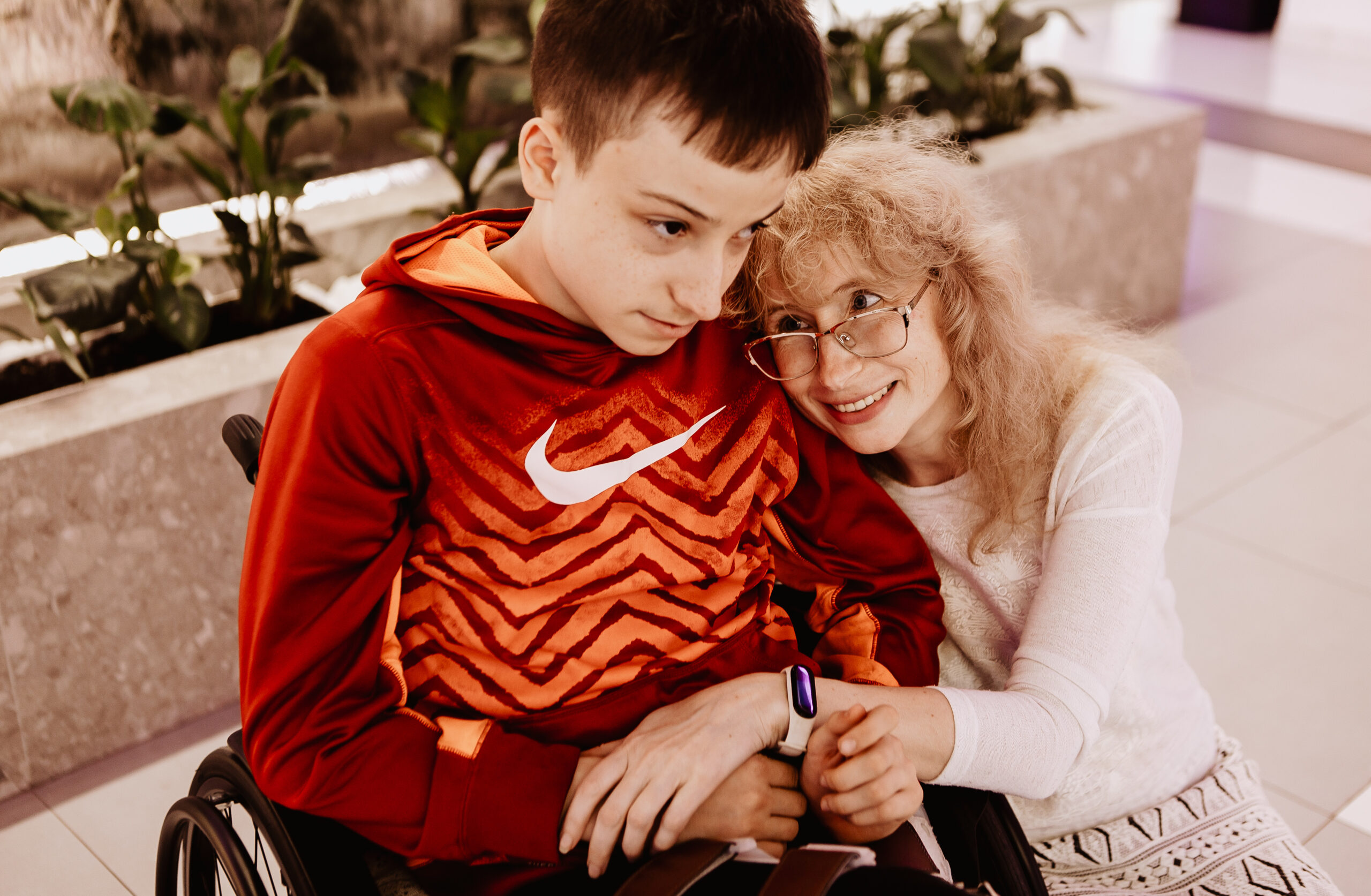
Victoria is a mother of many children whose youngest son has a disability due to congenital spina bifida. She vowed to get her son back on his feet despite the difficult diagnosis: she started rehabilitation as soon as she and her baby were discharged from hospital 15 years ago.
The woman made a lot of efforts to ensure that her son could move freely and independently. But in addition to her knowledge and perseverance, the boy needs assistive devices, such as an active wheelchair.
Victoria shared her son’s story and described the difficulties in getting specialised help from the state and the quick solutions provided by the League of the Strong NGO.
Radomyr’s story
Radomyr is the third son in the family. He was born with a large tumour on his back. So from the very first days, the couple realised that his path would be different from other children.
“Radomyr had his first surgery on the 10th day of his life. We spent a month and a half in the hospital. And then a difficult path of struggle for life and recovery began. When he was discharged, the doctors said that Radomyr would not sit, crawl or walk,” – recalls the boy’s mother, Victoria.
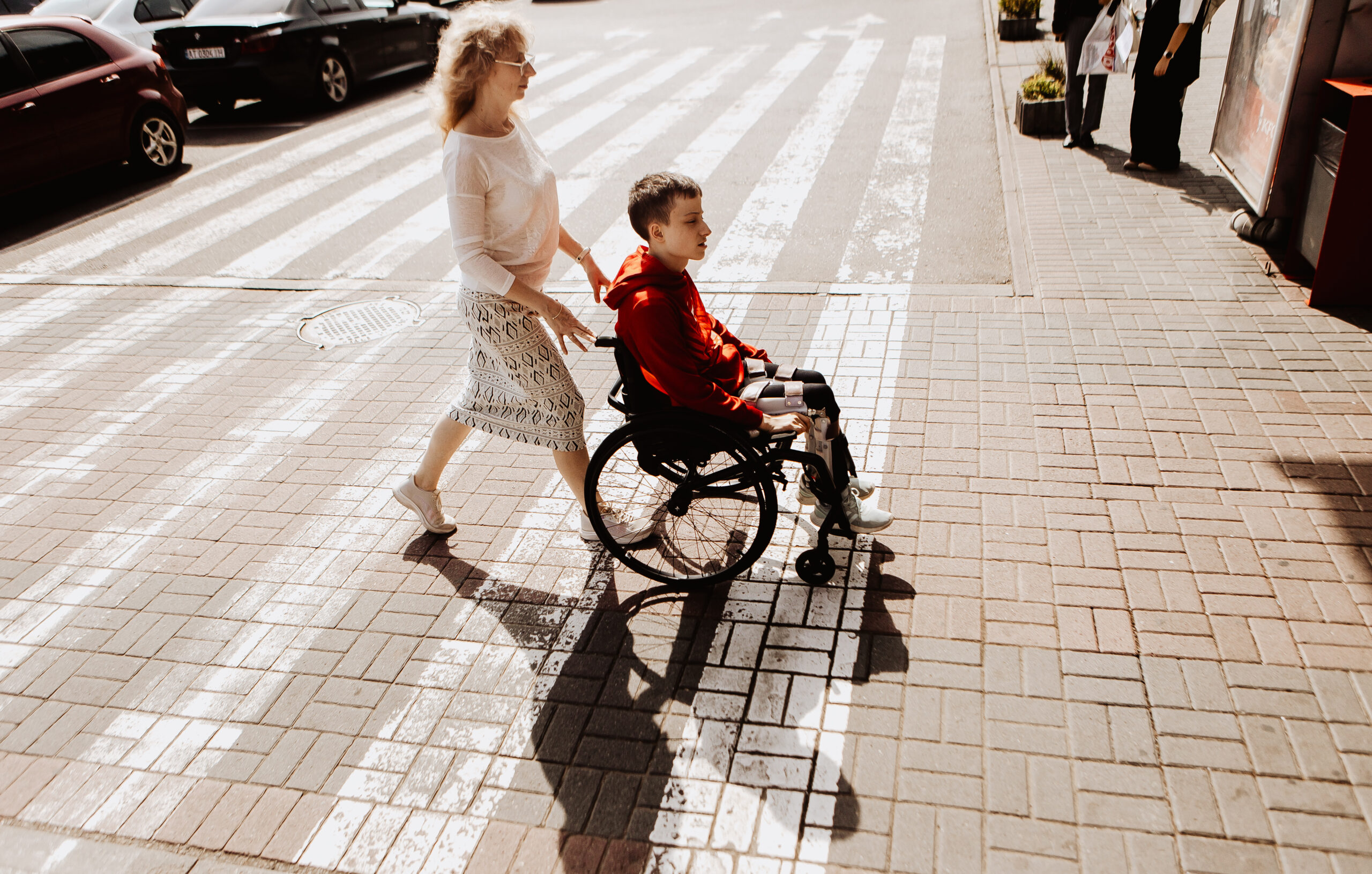
The woman adds that she did not give up and immediately enrolled her son in rehabilitation: exercises, massages and therapies became an integral part of his life.
They created an environment around the child that encouraged the boy’s development. A variety of rehabilitation methods were selected, exercise equipment, walking supports, verticalisers, bicycles, and orthoses were purchased.
“We even had a pony cycle, a training toy that simulates riding a horse. And we used to tie a walker to the treadmill, so my son could practice walking,” says Victoria.
That was a very difficult task for the boy, because he cannot feel his legs below the knees. He cannot stand and keep his balance on his own. Verticalisation is only possible with orthoses and support from a walker or other support.
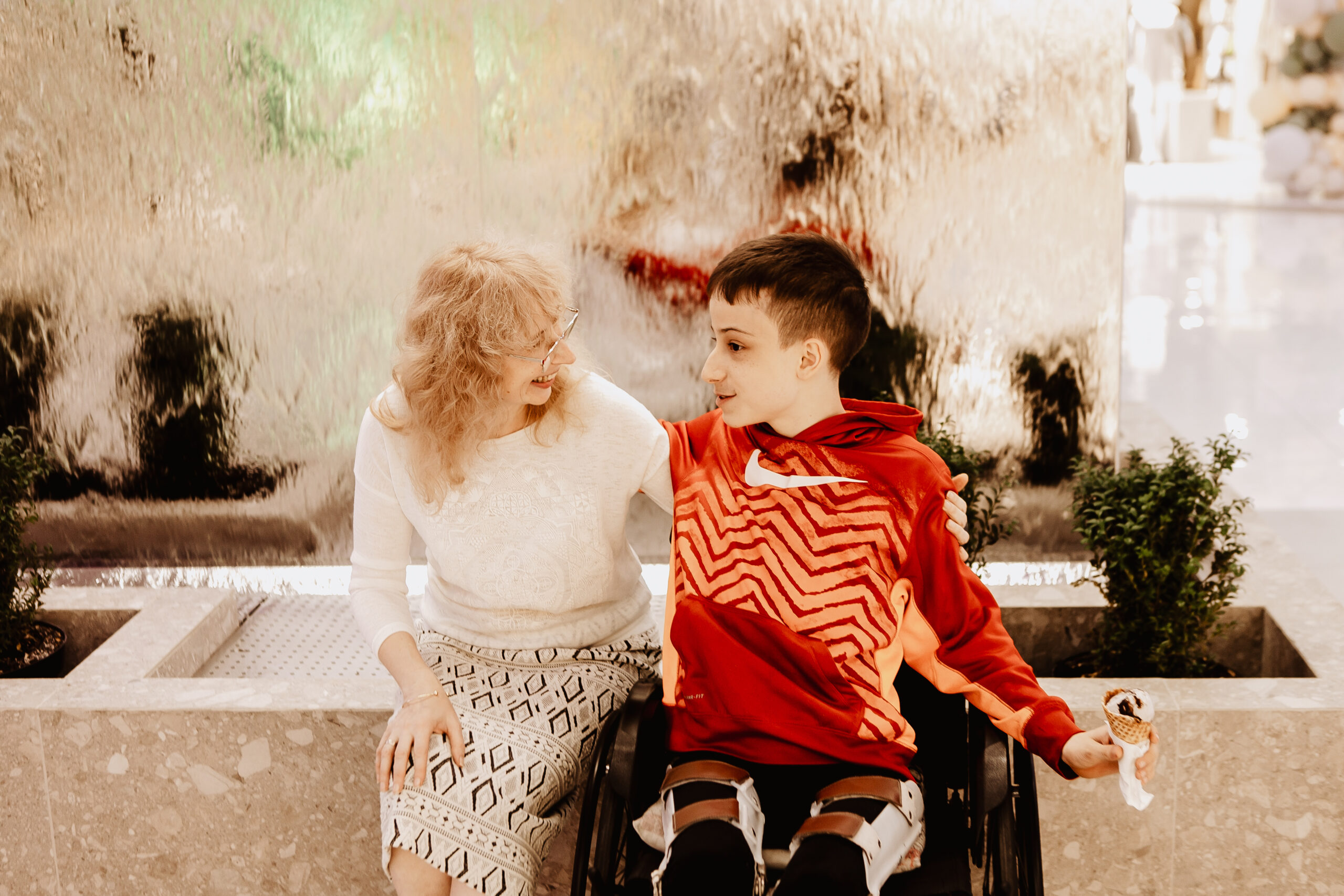
Victoria’s son was making some progress in coordination and development. But due to medical negligence, his condition ‘rolled back’ for several years.
Radomyr has been pain-free since childhood. But doctors ‘missed’ a leg fracture, which led to serious complications and the need for surgery.
“His leg was very swollen – it had doubled in size, but the doctors made the wrong diagnosis, thinking it was a lymphatic drainage disorder. Later, everything fused up, but incorrectly, so they had to break the bone and put it back together again, which meant a cast and spokes in the bones.
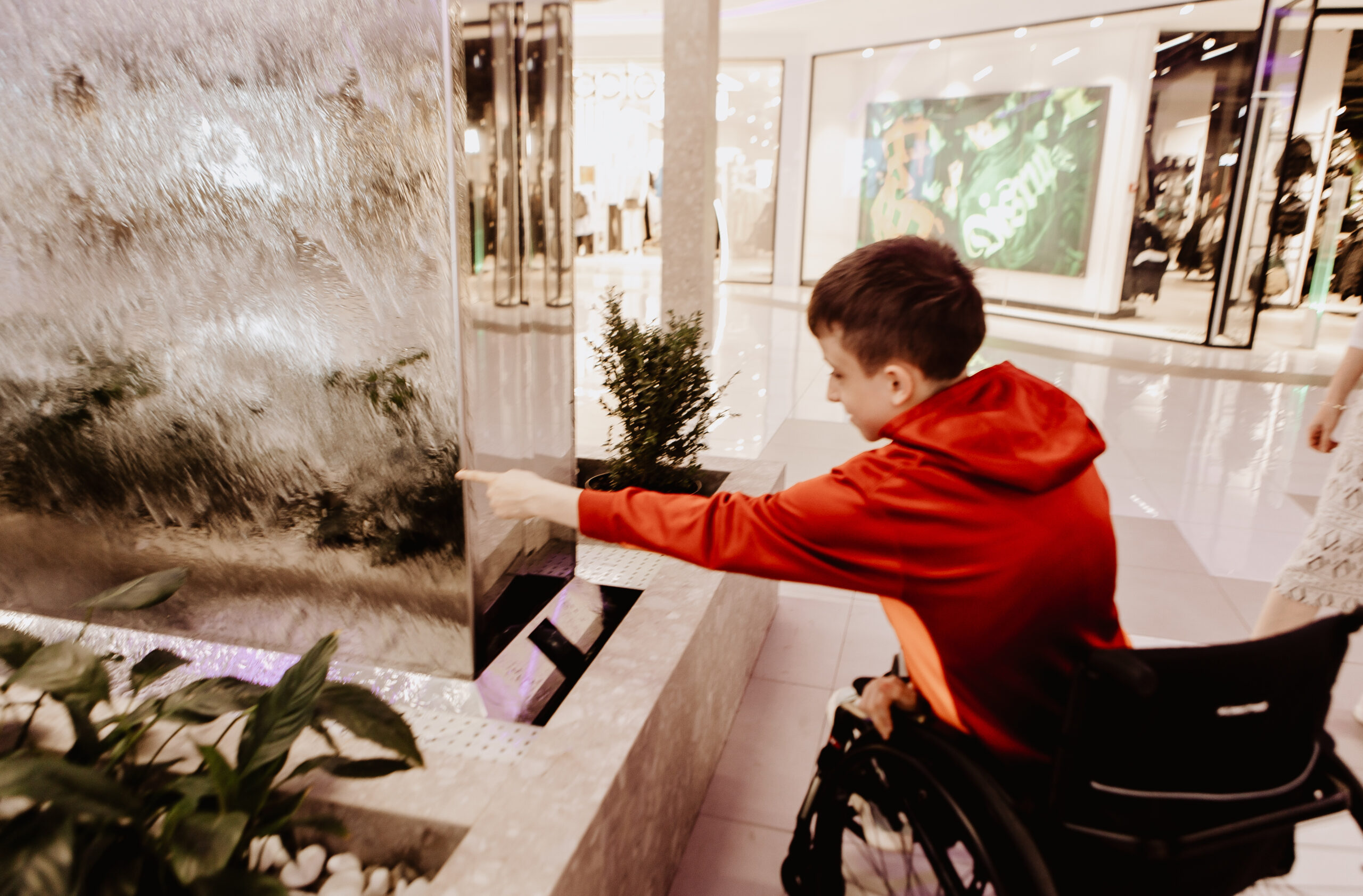
For six months, they did not allow him to move at all. They did not even warn him that contractures (restriction of mobility in the joint – ed.) could occur. As a result, Radomyr’s hip joints and knees stopped fully extending. So far, we have not managed to catch up with what was lost in development and rehabilitation,” says Victoria.
Government assistance
Since there was little information about patients with a diagnosis like Radomyr’s 15 years ago, Victoria searched for it on her own. She says she Googled in English and watched videos about what is practiced for such children in the world.
“I saw a back-supported walker in a video, found variations, printed a photo and went to the social security department. They said: “Oh, these are beautiful, we’ve never seen anything like them.” I searched through friends and acquaintances who were abroad, but eventually found a private organisation that brought second-hand children’s rehabilitation equipment to Ukraine. That’s how I got the first walker for my son,” – says the boy’s mother.
However, according to Victoria, she has no complaints about further cooperation with the social safety net.
“For 15 years, we have regularly received all the necessary orthopaedic products: orthoses, tutors, corsets, shoes. As well as special bikes, a verticaliser. Unfortunately, there used to be a compatibility table, and once we got the bicycle, an active wheelchair was no longer allowed. And my son is very mobile and other wheelchairs are not suitable for him at all,” – says the boy’s mother.
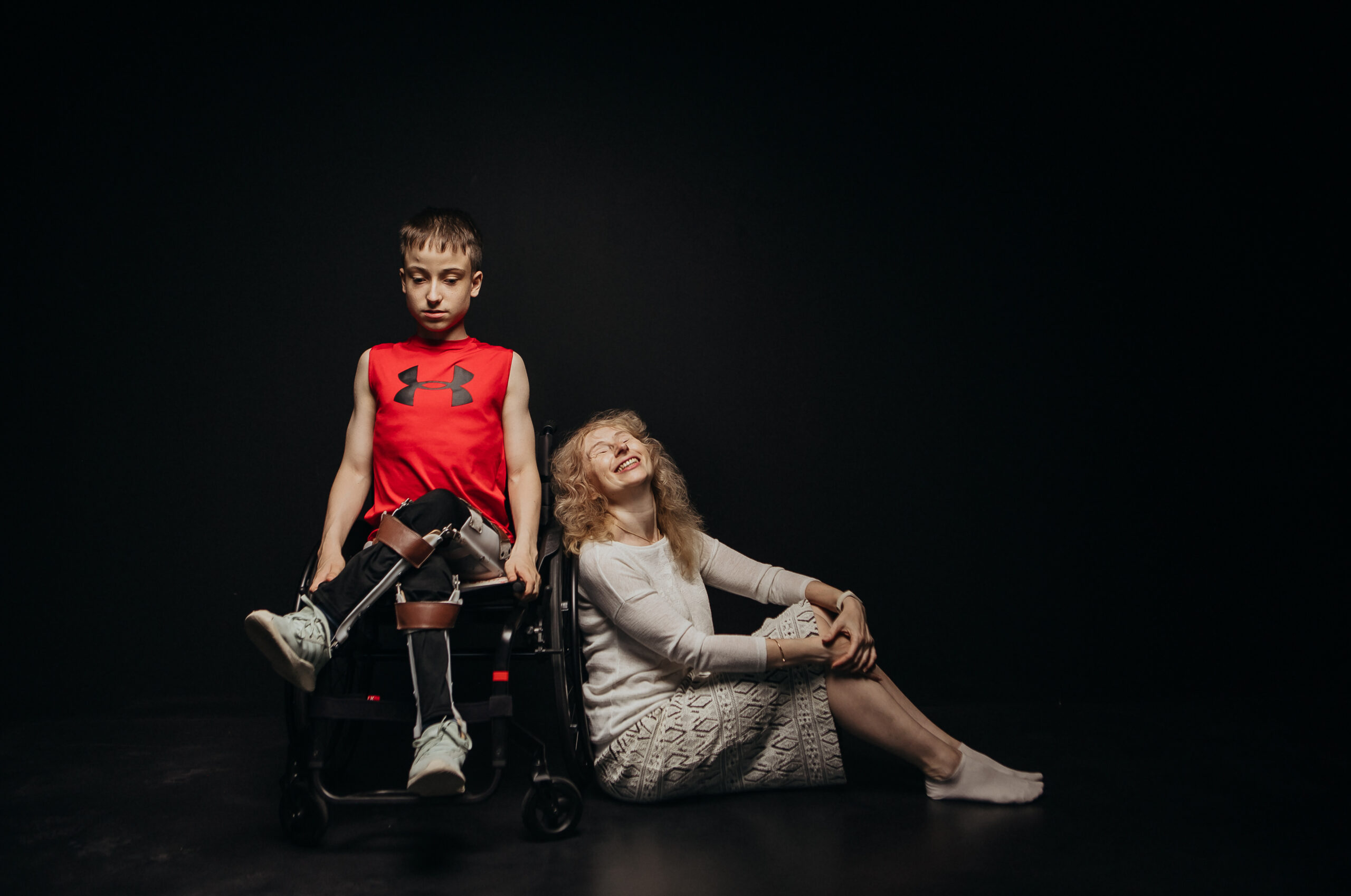
With the full-scale invasion, the choice of assistive devices (walkers, wheelchairs) has increased significantly. But Victoria notes that often the aid is simply handed out randomly: take what you can get.
The mother admits that she had to look for help for a long time and go through many obstacles, such as the wrong models of wheelchairs, their size, and problems with delivery.
“We turned to many organisations, where we were offered either adult models or the wrong ones, and we sent it all back,” – she recalls.
Help from the League of the Strong NGO
In one of the rehabilitation centres in Ivano-Frankivsk, Victoria and Radomyr got acquainted with the activities of the League of the Strong NGO. The boy’s mother left a request for a wheelchair.
Within a month, representatives contacted her and sent her photos of the available models.
“Unfortunately, the photo showed a model without handles, without mudguards, for clean Europe, not for our non-inclusive sidewalks and puddles. I wanted to refuse, but in the end I agreed to look at the model from the warehouse. It was sent unassembled by post in a branded box. When we assembled it, we discovered that it had both handles and mudguards. And this equipment is exactly what we needed,” – says Victoria happily.
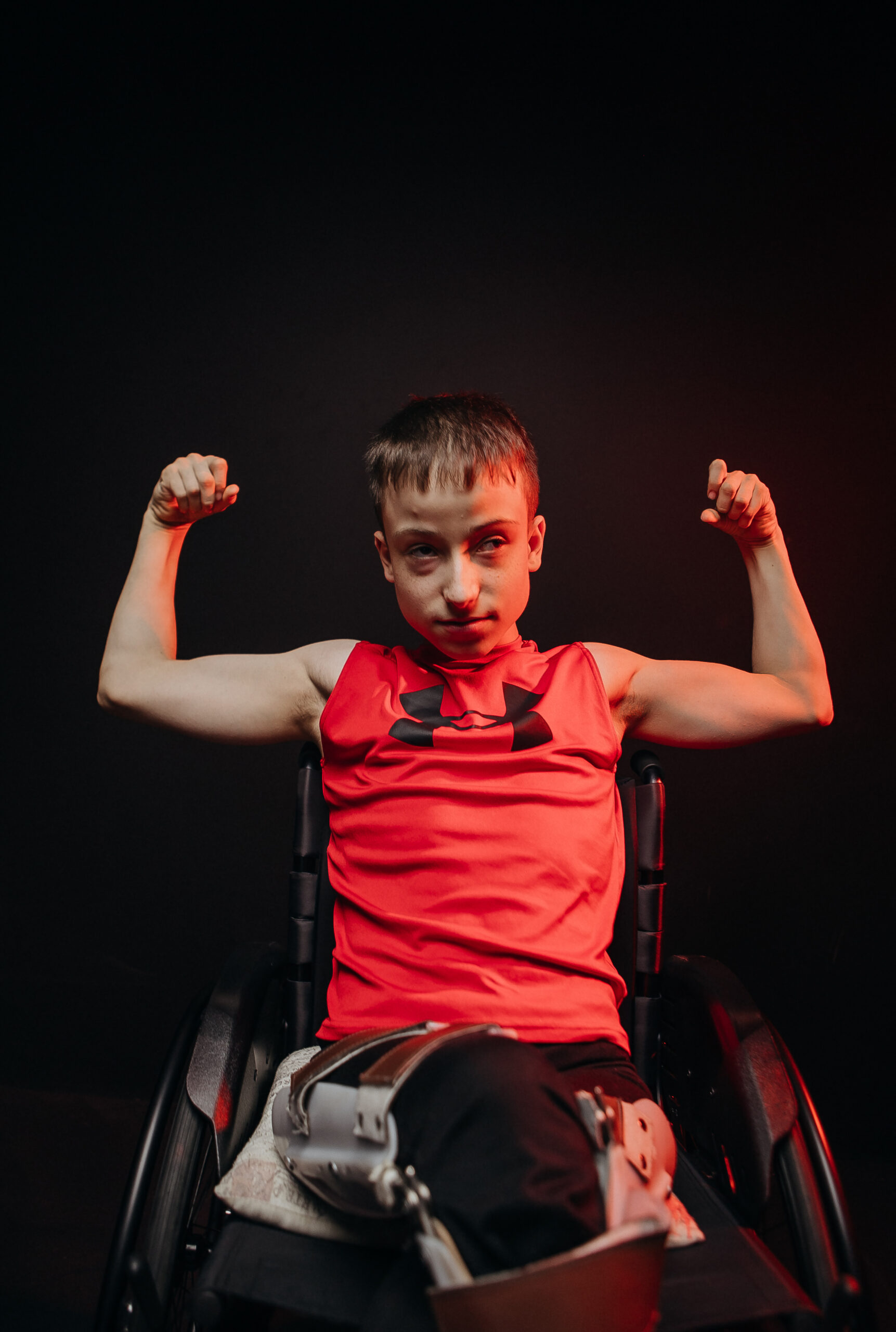
The weight of this wheelchair is only 7 kilograms, while the regular one weighs about 13 kilograms.
“I wanted a Zhiguli, but I got a BMW in the field of active wheelchairs. It’s also very easy for my son, he uses it everywhere, even races it sometimes,” – she adds with a smile.
How the League of the Strong processes requests
The League of the Strong NGO works in various areas: advocacy for people with disabilities, support for local organisations, consultations and support for local governments in implementing accessibility. In three regions, the union is implementing a humanitarian project with the support of the European Disability Forum – Empower Ukraine. Here, in Ternopil, Cherkasy, and Ivano-Frankivsk regions, the organisation has regional coordinators to contact and a special form on the website where you can leave information about your request.
“As a rule, each person knows one or another assistive device that suits them. For example, veterans who have recently received this status have an individual rehabilitation plan (IRP), which is a document that ensures the organisation of rehabilitation care. It is developed in the form according to the appendix and agreed by a multidisciplinary rehabilitation team. The IRP should contain the general goals and objectives of rehabilitation with the definition of approximate deadlines for their achievement, a list of necessary rehabilitation measures, quantitative needs for rehabilitation specialists, needs for rehabilitation and other equipment, possible needs for continued rehabilitation care in another rehabilitation facility, department, unit in accordance with the level of functional limitations, capabilities, wishes, expectations, aspirations of the person in need of rehabilitation,” – explains David Davtyan, project manager of the League of the Strong NGO.
When processing requests, the League of the Strong separates wheelchair requests from other assistive devices.
“Choosing a wheelchair is a complex process that requires a careful approach, taking into account many factors and individual characteristics. Depending on their functionality and the needs of the person, wheelchairs are divided into the main types: multifunctional, basic (room), active and electric wheelchairs. Depending on the type, wheelchairs can cost from UAH 20,000 to UAH 400,000. For people with disabilities, this is often the only way to maintain a decent life, to be able to go out, move around the apartment, etc.”, – he adds.
An individual examination and consultation with a specialist for each user is an important step in choosing this type of assistive device. The specialist helps to select a wheelchair that is tailored not only to the person’s anthropometric data (height, weight, arm length, pelvic width, etc.) and functional state, but also to their living, working, lifestyle, environment and individual needs.
The most important parameters in the selection process include the width of the seat (if the size is incorrect, a person will experience constant discomfort), the type of wheelchair (multifunctional, basic, active, electronic) and technical parameters, as well as the design of the seating system (cushion, backrest).
The most common type of wheelchair is a basic or room chair, says David. A person can move independently on such a chair, but mostly indoors and without obstacles. People with severe illnesses or a high level of spinal cord injury who cannot turn the wheels on their own and need constant support are usually recommended a multifunctional wheelchair. Wheelchairs of the active type are the most mobile, they allow a person to be as independent as possible from outside help.
Gunta Anca, Vice President of the European Disability Forum, praised the work of organisations representing people with disabilities, such as the League of the Strong, which provides humanitarian aid to Ukraine, including wheelchairs.
“Our motto is ‘Nothing about us without us’, and this work is a prime example of why this is so important. The staff of the League of the Strong have a deep understanding of the specific needs of people with disabilities: what kind of wheelchair is needed, how to choose the right one, how to train users to use it safely and effectively, and how to maintain it to ensure long-term use. It is extremely important that other organisations and charitable initiatives learn from people with disabilities to ensure that humanitarian aid is truly inclusive and meets their needs,” – said Gunta Anca.
Due to the fact that the selection of a wheelchair requires so many important stages, processing such a request is one of the most difficult and can take longer than others.
“If we receive a request for assistive devices that we have in stock (these can be crutches, walkers, bath and shower chairs, diapers, nappies, etc.), the request is processed quickly: from one week to three. If we receive a request for out-of-stock items, we start the search process accordingly. It all depends on the availability of goods and delivery time. As a rule, this process takes about a month. However, it should be noted that logistics also affects the time of distribution of aid, as we work directly in communities, and in remote areas from regional and district centres, which in turn also creates certain difficulties,” – explains David.
The NGO receives various requests, and the completion time can be completely different, depending on the nature of the request and the possibilities within the project. For example, a request for financial assistance can be closed within a month, while a request for transportation to medical facilities can be closed within a few days.
In total, in 2024, within the framework of the ‘Empower Ukraine. Disability rights’ project, the NGO received about 5,000 different requests. Over the course of the year, thanks to the work of the League of the Strong and the project, more than four thousand people were able to meet their needs: 501 people received assistive devices (wheelchairs, tablets, glucometers, blood pressure monitors, a rotating chair, crutches, walkers, anti-decubitus mattresses, canes, orthopaedic insoles, etc.); 561 people received financial assistance; 3219 people used transport services.
“In fact, we have closed most of the requests of 2024. We are now collecting and processing new requests, and the process of assistance is ongoing,” – David Davtyan summed up.
This material has been produced with the financial support of the German Federal Foreign Office (GFFO), CBM and the European Disability Forum. The views expressed in this material are those of the authors and can therefore in no way be taken to reflect the official opinion of the funding partner and the European Disability Forum.