
Several dozen participants, including people with disabilities, internally displaced persons, veterans and their families, have been meeting for six months as part of the ‘6 Conversations on Resilience’ initiative. This project was launched in Ivano-Frankivsk by the League of the Strong as part of the Empower Ukraine project. Participants of the initiative had the opportunity to communicate with experts and psychologists, as well as to talk and share their experiences of surviving the war. HLUZD finds out why such projects are necessary for society and how they help to overcome misunderstandings between the military and civilians in this article.
A place of understanding between military and civilians
“6 Conversations on Resilience” is an initiative aimed at supporting Ukrainians in difficult times. The project included a series of six free meetings between project participants and professionals in the fields of psychology, social work, and communications. The initiative started in Ivano-Frankivsk. The programme provides participants with the opportunity to learn how to take care of their mental health in the face of prolonged insecurity, overcome emotional losses caused by the war, and find ways to turn difficulties into new opportunities for personal growth. The format of the meetings is based on the principle of self-help groups, where everyone can get support and be inspired by the experience of others, guided by a peer-to-peer approach. It is not only about overcoming difficulties, but also about creating a community that unites people for the sake of mutual assistance and psychological balance.
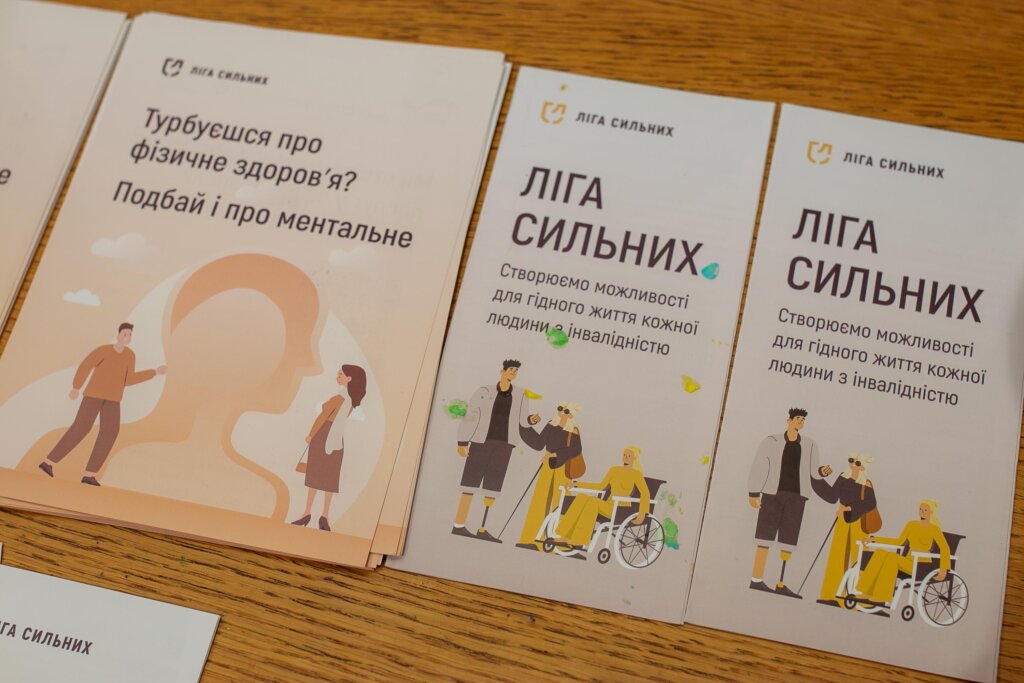
Nadiia Shegda, a communicator at the regional hospital and coordinator of the ‘Dream. Action’ space, emphasises that the 6 Conversations on Resilience initiative is extremely important because it reduces tension in society.
“Various formats were used during these meetings: psychological trainings, support circles, and analytical introductory dialogues on the topic of ‘literature of war’. Participants drew parallels between past and present events and analysed texts that reflect the consequences of war. If such platforms and meetings are held more frequently and in different locations, it will help reduce the tension that arises from the fact that veterans have serious psychological trauma that is difficult for society to understand. These events allow not only to support the military, but also to avoid serious social and psychological consequences due to the lack of dialogue and understanding between the military and civilians,” – explains Nadiia.
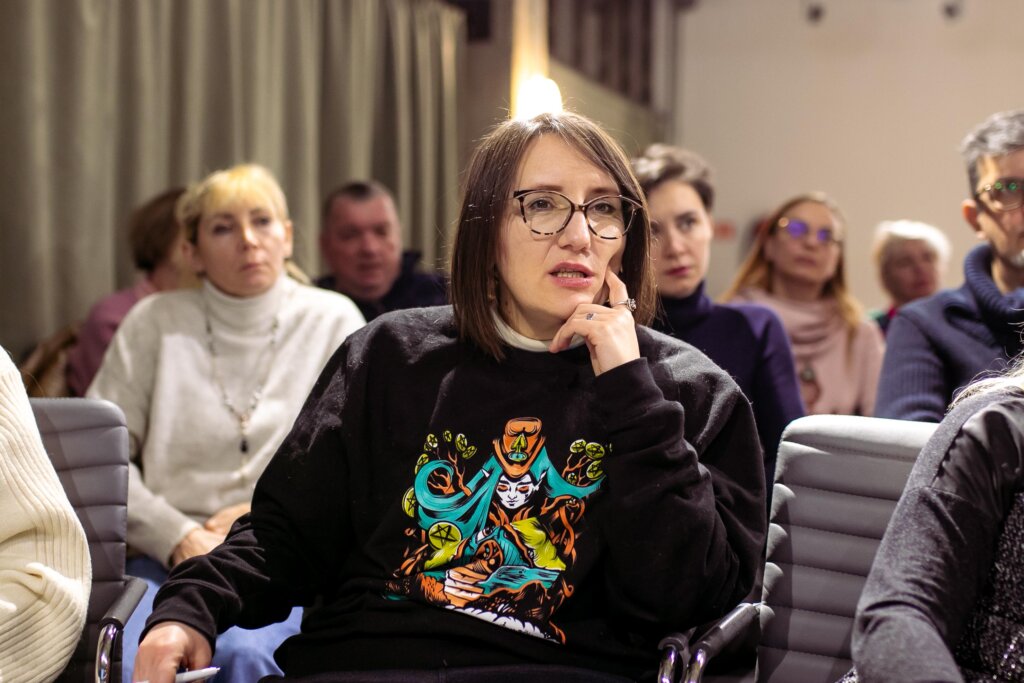
According to the communicator, thanks to this project, participants began to reveal their talents and share their emotions more.
“The participants noted at the meetings that the project was really necessary. It added resilience to everyone involved and opened up new horizons. For example, after the main part
of our first meeting, when the moderated circle ended, the participants stayed in an informal atmosphere. While talking, it turned out that three of them write poetry. They had never
spoken about it publicly before, but in that circle they felt inspired and decided to share their poems. So, at one of our meetings, we held an impromptu poetry battle. Among the
participants there were an IDP woman and two soldiers who started writing poetry in the trenches. It was a real eye-opener for everyone present and made the evening extremely special,” – shares her memories the regional hospital’s communicator, coordinator of the “Dream. Action” space.
This is how they started thinking about publishing a collection of works by the programme participants.
“One of the soldiers already has a significant body of work, so the idea of combining war poetry into a collection seemed very promising. We decided to collect such works gradually in
order to publish them and preserve them for future generations,”- says Nadiia Shehda.
The communicator was most touched by the activity of one mother who did everything possible to ensure that her child was in society and participated in conversations.
“Her son has a mental health disability. At such events, they received not only support but also the opportunity to be heard, which is extremely important for integration into society,” – the woman explains.
Participants shared their impressions of the initiative and said that they found people in the 6 Conversations on Resilience project with whom they would like to continue communicating after the project is completed, support from experts (including psychologists), and understanding of new topics for them.
“There was a sense of inclusion in a certain community”
The meetings were attended not only by veterans, but also by civilians, including internally displaced people who are looking for their community in a new environment. One of them is Volodymyr Gurich, a lecturer at Kherson State University.
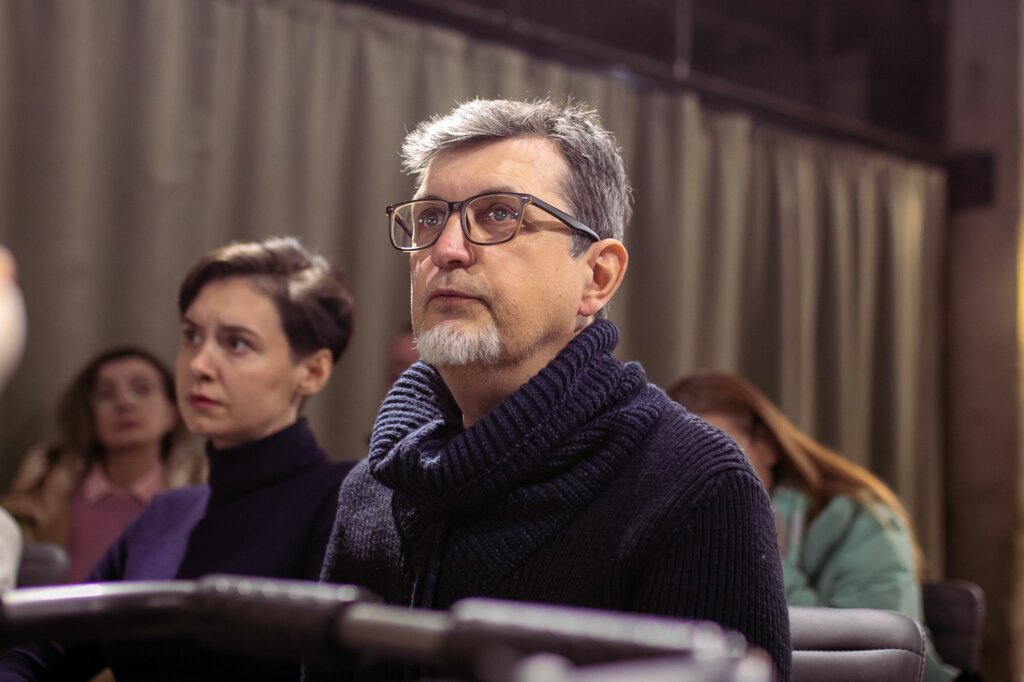
“At the all-Ukrainian forum held in Ivano-Frankivsk in 2023, I met Olha Maksymovych, the head of FrankoLytics (she is also the regional coordinator of the Empower Ukraine project of the League of the Strong – Ed.), the Carpathian Institute of Analytics at Vasyl Stefanyk Precarpathian National University. We exchanged views: I am a lecturer at Kherson State University who worked under occupation and was forced to leave, and she is a sociologist who leads a group of researchers and is looking for new research topics. Later, Olha invited me to a meeting with her colleagues and then suggested me to join the 6 Conversations on Resilience project. It was important to me because, as a professional who missed offline communication, I was looking for opportunities in a new city to share experiences and apply my knowledge. So I gladly accepted her offer,” – says Volodymyr Gurich.
The associate professor at Kherson University admits that what he liked most about the meetings was the lack of restrictions for participants.
“I participated in the meetings both as a moderator and a participant. The first thing that struck me was the diversity of people, both in terms of age and health, experience and level of communication. You could just listen to their stories or remarks and learn something, take something away for yourself,” – Volodymyr says.
According to Volodymyr, participating in the 6 Conversations on
Resilience project gave him self-confidence and a new understanding of the situations he encountered.
“You know, thanks to this initiative, people started recognising me on the streets or in shops. I felt included in the community. I realised that my problems are just challenges that life throws
at me. You can act as one person did or as another did. I began to better understand the logic of local behaviour: why something is acceptable and something is unusual. Where you need to treat a situation with humour, and where you need to clearly explain and defend your own boundaries,” – the associate professor explains.
Participation in the project allowed Volodymyr to analyse what his native Kherson and Ivano-Frankivsk have in common.
“Ivano-Frankivsk and Kherson have certain common points of contact in public life. The more we learn (both about cities and people), the better we understand each other,” – the lecturer
adds.
The associate professor also notes that these meetings helped him find himself in a new city.
“I need communication – I am an open-minded person. It’s not a problem for me to engage in small talk, it’s part of my integration into the local environment. When I observe a conversation from the outside and then join in, it’s like a feeding frenzy for me. During the meetings, I learnt to listen to other people’s stories, understand the reasons and logic of other people. I realized that empathy in a group is the basis of any conversation,” – Volodymyr says.
According to Volodymyr Gurich, such meetings are an opportunity for him to adapt to the new city.
“As a social worker, I could compare the conditions and reactions of people from different regions of the country. I could hear how they built their lives in a new city. It’s a kind of test of theory in practice. You have your own survival skills, but they can always be enriched. Learning from each other is a valuable lesson. At first, we were careful what we said at the meetings, but over time we discovered common memories, stories, and experiences. Emotional support was in the first place, informational support was in the second. And even after the project is over, we often meet participants on the street or communicate online. Life goes on, and you never know who can help or give good advice,” – Volodymyr emphasizes.
Thanks to his participation in the project, the associate professor was able to look at the current situation through the prism of history.
“I have a degree in philology, so I was interested in comparing the experience of veterans” adaptation after the First World War with the experience of modern Ukraine. Of course, the wars were different in nature, but the psychological trauma and changes in habits remain similar. This is something worth working on. The world already has practical experience in such matters, and it needs to be implemented systematically. We now have the opportunity to research the stories of both civilians and the military. However, the collection and analysis of such information remains uneven. Often, much is hidden for personal or social reasons. In addition, the war is ongoing, so we can only build models based on partial data. The more materials we have for analysis, the clearer the overall picture will be. In the meantime, the situation remains dynamic,” – the lecturer concludes.
The Kherson University lecturer admits that he was touched by various stories during the meetings. But most of all, he was touched by the willingness of the participants to communicate and discuss even difficult topics.
“I can’t single out any one story that stood out during the meetings, but when I saw parents with their children in wheelchairs actively engaging in discussions about issues that were not theirs, and how they worked as a team, I immediately got the feeling that your problems are not problems. They are challenges. You need to exhale and look at the situation without emotion. Do not hesitate to ask for advice or ask for help. Say that there are difficulties and that something is not working out. It’s important not to be shy about accepting help if you need it,” – says Volodymyr.
“While in Kherson I knew all the “undercurrents”, who was doing what in my field, who I should talk to, I had to start from scratch in Ivano-Frankivsk”
Volodymyr admits that participating in this project taught him not only to hear and listen to others, but also to be heard.
“In a new city, I usually do two things: buy a map and, if possible, go to the market or some ‘folk place’. There you can listen to people or become an interlocutor yourself. Over time, this circle needs to be expanded, which is why the 6 Conversations on Resilience project has become such a new niche for me to communicate. These meetings gave me the opportunity to find my people in a new city. While in Kherson I knew all the undercurrents, who was doing what in my field and who I should talk to, I had to start from scratch in Ivano-Frankivsk. I believe that such initiatives gradually build new connections, networks of contacts, and accumulate a database of information about what is happening, where and how. This opens up the opportunity to implement your ideas and ambitions in a new way. The other thing is that no one knows you here yet, and this is a challenge, because the locals seem to be very careful about recommendations through friends or family. Therefore, self-help groups can act as a kind of mini-community from which new projects or active initiative groups grow. I would really like to see this project continue, attracting more and more people to meet and communicate,” – says a lecturer at Kherson University.
“We should not turn a blind eye to their (veterans)
existence”
Liliia Protsak, a participant in the 6 Conversations on Resilience project meetings, learned about the initiative from project coordinator Natalia Basarab. She was convinced that such an initiative was necessary.
“I was interested in this topic because we live in unstable times. And now, more than ever, it is important to find your inner stability. I remember most of all the meeting with psychologist Myroslava Lyubinets, with whom we talked about the nature of stress. I learnt a lot of interesting information about how and why stress occurs and how to overcome it. The most important thing for me was to hear how to reduce the impact of stress on a person. Thanks to the project, Irealized that I need to take care of myself more, take into account my emotions and needs,” – says Lilia.
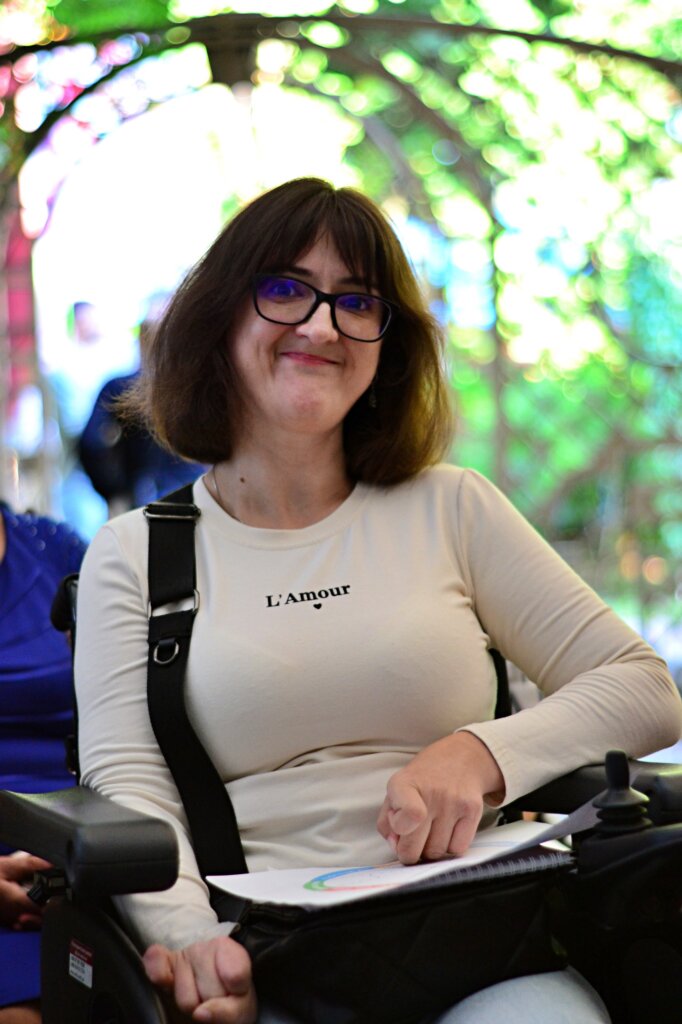
The 6 Resilience Meetings initiative helped the participant learn to overcome her anxieties and fears.
“I have remembered many of the tips given by the psychologist Myroslava and try to apply them. In particular, when I start to get nervous, I try to switch my attention to something else. For example, in moments of anxiety, I recall the plot of the last book I read. I think about the characters of the protagonists, their actions and deeds. And then gradually the anxiety fades into the background. My emotional state improved. Thanks to the psychologist’s recommendations, I feel calmer and have learnt to better control my emotions and feelings,” – Liliia Protsak says.
According to Liliia Protsak, Ukrainian veterans face similar challenges of adaptation in society as the protagonists in Remarque’s works. This is one of the examples of veterans’ adaptation through the prism of the “literature of the lost generation”.
“Nowadays, you can sometimes hear offensive statements about veterans, such as shell- shocked, emotionally unstable’. I also hear very often: “When the guys come back, they will put things in order”. In my opinion, this is a shift of responsibility. The military are doing their best – they are defending our country! And it is our responsibility to do everything we can to make sure that the economy works and that everyone abides by the law,” – she said.
During the discussions on military adaptation, the most valuable topic for Lilia was communication with the military returning from the combat zone.
“I have friends who have returned from the eastern part of Ukraine. And it is important to understand what you can and cannot ask these guys and girls, what topics you can talk about and what points you should not touch upon. This topic is very important for society. After all, we all need to understand that there is a war in our country. And veterans live next to us. We should not turn a blind eye to their existence. On the contrary, we should do everything in our power to provide them with a comfortable life, with accessible infrastructure, jobs and a tolerant attitude. I think that such a programme should also include consultations with representatives of the legal sector, educational services and employment centres,” – emphasizes Liliia.
“Life goes on, and we have to fight for them”
Tamara Kutsyk, a resident of Ivano-Frankivsk, also joined the 6 Conversations on Resilience initiative thanks to the coordinator Natalia Basarab. These meetings helped her feel more confident and comfortable.
“Ms Natalia helped me get financial assistance, as I am a widow and am raising a son with a group I disability. I agreed to this offer, and my son and I attended meetings. During the conversations with the psychologist, I felt confident in myself. In addition, I was very interested in the trainings, which helped each participant to open up,” – says Tamara.
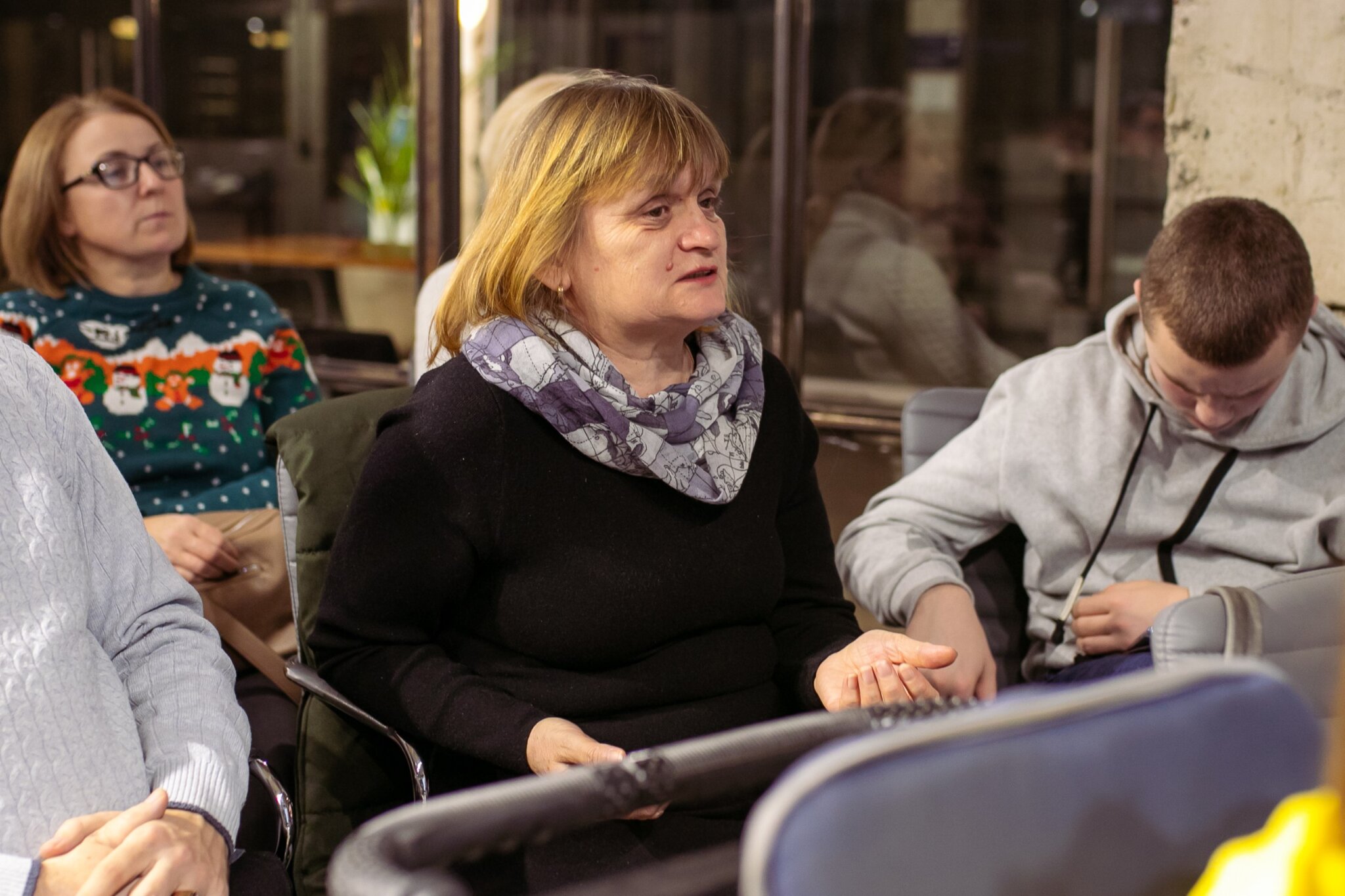
At these meetings, the woman not only learned about the stories of other participants but also had the opportunity to share her own experiences.
“Thanks to this project, I met parents and young people who had similar stories and problems as my son. We could not only listen to each other, but also share advice. It was very valuable because we supported each other,” – Tamara emphasizes.
The woman particularly remembers a meeting when the group was visited by a soldier from Kolomyia.
“Just imagine: this man read us his own poems written at the frontline. It was extremely touching, exciting and interesting! Each training left me with fond memories,” – Tamara says.
The woman dreams not only of participating in similar projects in the future, but also of creating a space for people with disabilities and their families.
“I really want us to have a room or office where we can meet for a cup of tea or coffee, and our children with disabilities can have their own playrooms. It is also important that parents can relax and children have their own social circle. This is extremely important for development and socialization. We should not give up, because we have children who need our support. Life goes on, and we have to fight for them,” – Tamara emphasizes.
Tamara notes that this project is not only about communication between participants, but also about valuable help and advice from experts.
“One of the most memorable experiences for me was meeting with rehabilitation specialist and massage therapist Oleksandr. He taught us how to do exercises with rubber bands to strengthen our muscles. He also gave massages to young people undergoing rehabilitation. I remembered a few exercises and recommendations for using the exercise bike and the stretching band, which I will use in practice when I give my son a massage,” – says Tamara.
The woman also found the meeting with Mykhailo, a soldier, interesting and enlightening.
“He very accurately showed the parallels between the experience of post-war adaptation of veterans in modern society and the works of the ‘literature of the lost generation’, in particular, Remarque’s books. Together we analysed these stories and became convinced that our military also face inequality and insufficient welfare. This once again shows that society should pay more attention and support to veterans in civilian life,” – Tamara concludes.
“Build Back Better”
Catherine Naughton, Director of the European Disability Forum, is convinced that the 6 Conversations on Resilience project, implemented by the League of the Strong in Ukraine, demonstrates how important it is to adhere to the principle of “Nothing about us without us” when planning, developing and implementing humanitarian aid programmes.
“Creating spaces for people with disabilities and mental health experts to communicate, learn and share experiences helps to overcome stereotypes and discrimination. It also has a positive impact on both the individual and community level. By using a local approach, we build more resilient individuals and communities, which is a vital goal in these times. Mutual understanding must be a priority, as it plays a key role in ensuring independent living for people with disabilities in Ukraine. As the number of veterans and civilians with war-related disabilities grows, we, as disability organisations, will continue to advocate for their rights, including the right to make their own decisions and live independently. Healthcare professionals who understand these issues and rights will be able to work more effectively with people with disabilities to protect their rights and freedoms. This is especially important as we work on the “Build Back Better” plan for Ukraine,” – emphasizes Catherine Naughton.
From the Editor:
Initiatives such as the 6 Conversations on Resilience are undoubtedly an important foundation for mental health and understanding in society. That’s why we should support such projects and do our best to ensure that as many people as possible attend them. Here are some important reasons why we should continue to organise similar initiatives:
- Providing support to vulnerable groups: People with disabilities, veterans, IDPs and their families receive a safe space for communication, emotional support and the opportunity to share their stories. This helps reduce isolation and creates a sense of community.
- Reducing social tension: Such projects promote understanding of the problems of people who have experienced difficult life situations and help society integrate them better. This reduces tensions and conflicts between different social groups.
- Rehabilitation of veterans: Participants are given the opportunity to adapt to peaceful life through creativity, psychological support and discussion of literature that reflects their experiences.
- Development of creative potential: Such initiatives open up new horizons for participants’ self-expression , such as writing poetry, participating in creative events or joint projects, such as publishing poetry collections.
- Learning new skills: Through trainings and workshops, people gain knowledge and practical tools for physical, psychological and social rehabilitation.
- Creating a culture of support: Such meetings create an atmosphere of mutual support and empathy, which is the basis for building a sustainable society.
- Preventing emotional burnout: It is important to give people with difficult life experiences the opportunity to relax, discuss their problems and find ways to solve them in a supportive environment.
This material has been produced with the financial support of the German Federal Foreign Office (GFFO), CBM and the European Disability Forum. The views expressed in this material are those of the authors and can therefore in no way be taken to reflect the official opinion of the funding partner and the European Disability Forum.
The journalist: Mariana Hnot
Photos: archive of the League of the Strong