
For over a month, meetings entitled “The Power of Communities” were held in Ivano-Frankivsk for young people with disabilities. They were organized by the public association “League of the Strong” to help participants feel that they can influence change and become part of a community that acts as a driving force for inclusive change.
According to Olga Maksymovych, regional coordinator of the League of the Strong in Ivano-Frankivsk region, their goal was to create a space where young people with disabilities, their families, and anyone interested in the topic of accessibility could work together and grow in a friendly and informal atmosphere.
Each meeting was accompanied by experts who work in the public sector and often interact with local authorities. The events were structured so that by the final event, ideas and plans had already been formed that everyone could implement independently over the coming months.
In total, there were five such events. The first was devoted to getting acquainted and exploring what communities are, as well as a small survey on support from public organizations and local authorities. At the following meetings, they explored the challenges faced by people with disabilities and planned in more detail what they were ready to work on. According to the participants, the community lacks educational institutions adapted to the needs of different groups of young people, and there are not enough ramps and other accessibility features. Although the community is large, they are still “invisible” to part of the population.

How events became a space for interaction and support for young people with disabilities
Victoria attended almost all of the events in the series with her mother Angela. The girl is now 25 years old. She has cerebral palsy and can only move around in a wheelchair. Although the journey to such events is quite difficult for the family, the women go anyway.
According to Angela, until recently they received a lot of support from the state: training and rehabilitation. When her daughter turned 18, almost all doors closed for them and the girl was forced to stay at home most of the time.
Victoria has many interests: she has favorite movies and music. Meetings organized by the League of the Strong are also on her list of favorites. The family has been participating in them for the second year in a row. The main reason is that here the girl has the opportunity to meet with her peers.
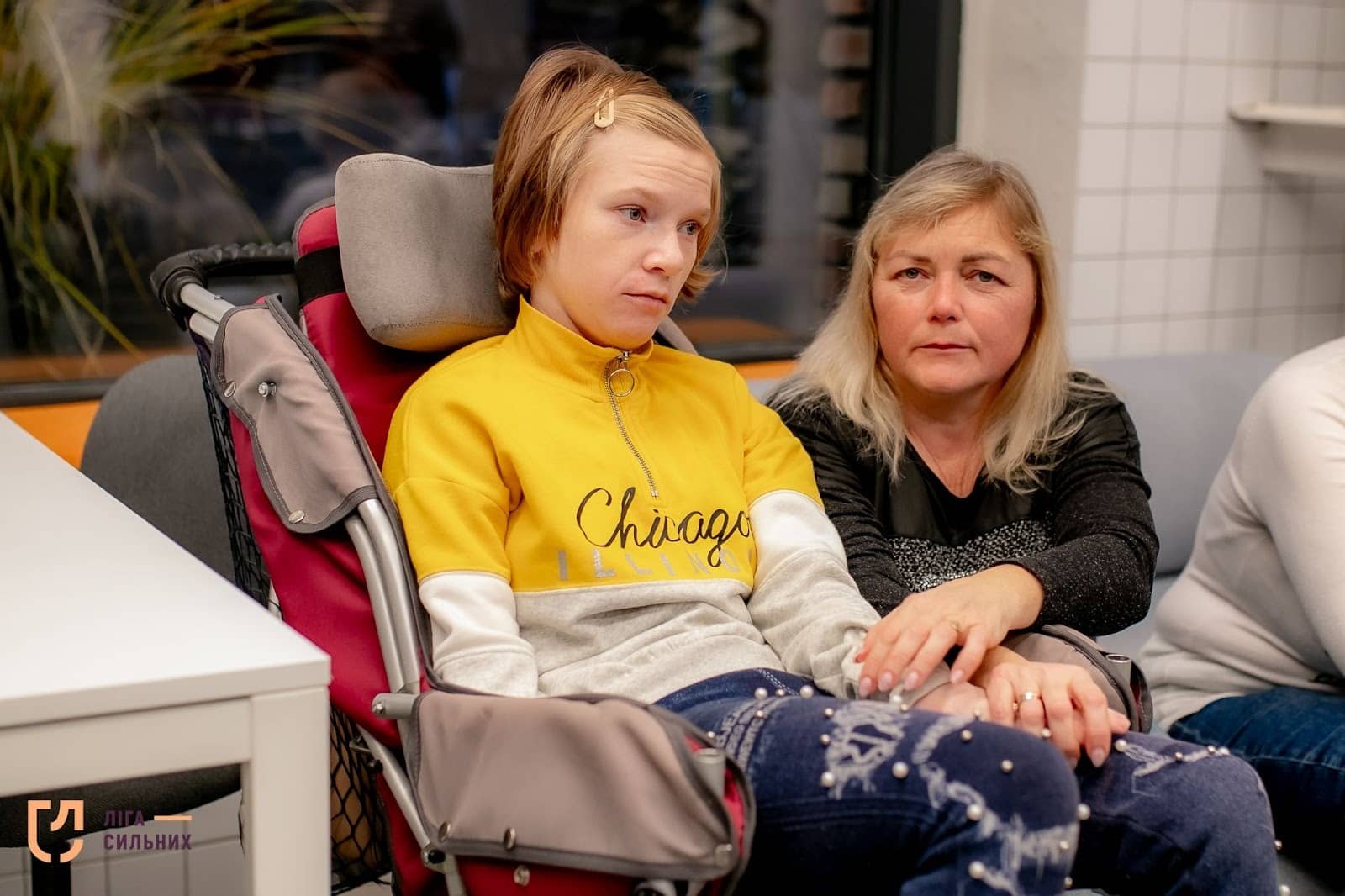
“My daughter listens attentively and observes the students who come to these events. I explain to her that they are speech therapists. That is, they do the same thing as the people who visited her when she was in school. At home, she has her sister, mother, and grandmother, and here she has friends,” says Angela.
Victoria was unable to attend the last meeting due to illness, but her mother joined in so that she could tell her at home about everything that happened and what ideas were planned. Angela also says that it is here that they can hear useful advice from others about where there are still opportunities for them.
Volodymyr and his mother Tamara attended most of the events. Volodymyr lives with cerebral palsy. Through long-term rehabilitation, he learned to walk independently. Now, in order to maintain his achievements, he regularly attends the gym. He wants to be active and is looking for new hobbies. That is how he mastered artistic embroidery on fabric.
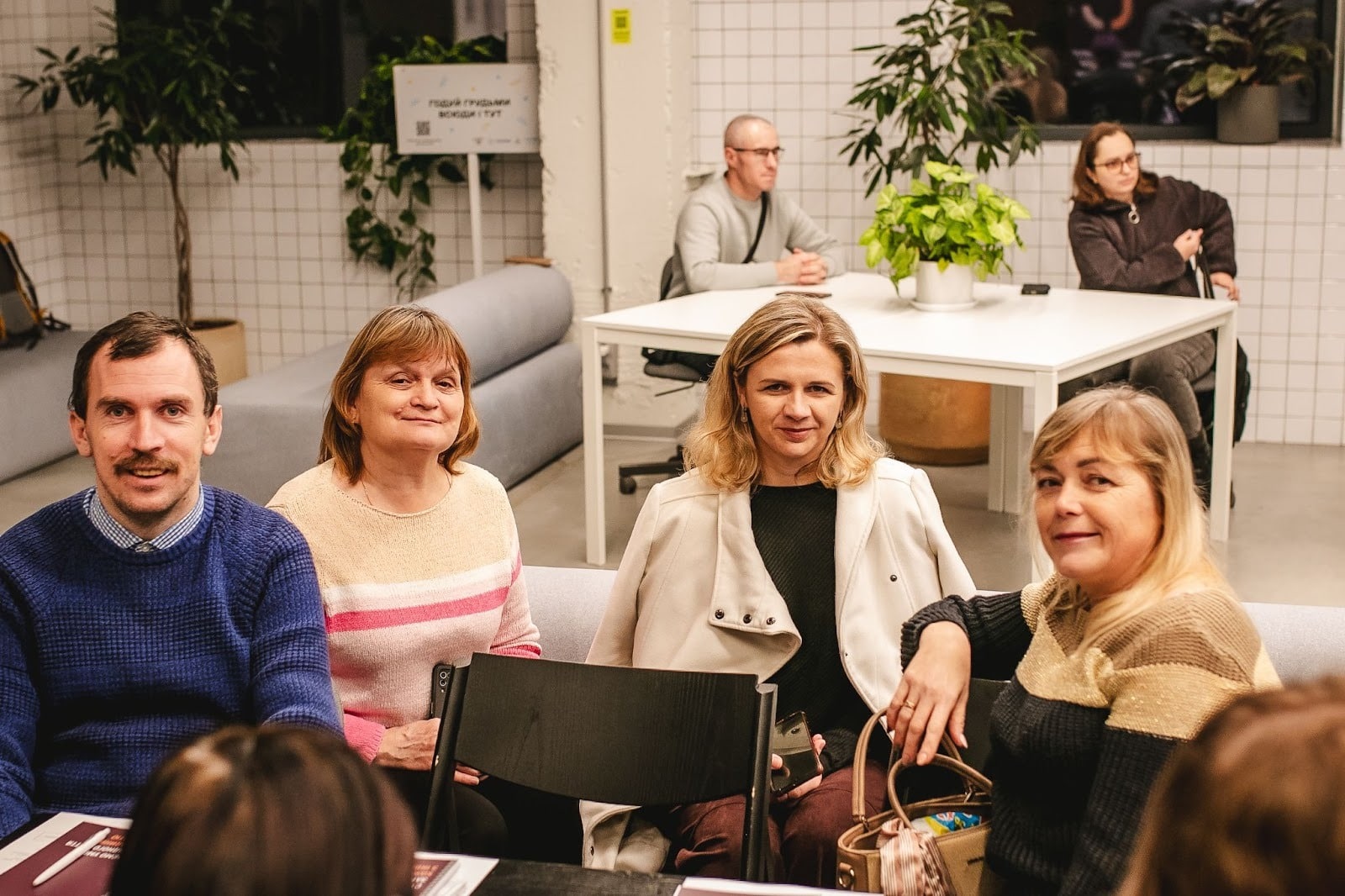
“We are constantly on the move, trying to realize ourselves in some way. Volodya usually doesn’t talk to people he doesn’t know at events. However, he listens to everything. He doesn’t understand some of what he hears, but he asks about it at home. We have been coming to such events for two years now, because we learn something useful for ourselves here. I listen to young people and enjoy their ideas. It wasn’t like that before. Young people are more courageous now,” says Tamara.
The meetings were attended not only by young people with disabilities and their families, but also by future specialists who are also interested in issues of inclusion. Among them were students from the speech therapy department.
Anastasia is 18 years old and is currently studying at the Vasyl Stefanyk Carpathian National University. She says that participating in the events was a very useful experience for her:
“Speech therapists work with people with different needs, and these meetings help improve communication skills. We formed groups, listened, and tried to hear and understand each other’s views.”
Anastasia adds that she has now started to pay more attention to which buildings are accessible and which have problems with accessibility. For example, her university has some accessibility features, such as a ramp and an elevator with Braille. However, it is still quite difficult for students to move between buildings. So, the institution still has work to do.
From ramps to educational games: what changes the youth are proposing
The main goal of the meetings was to help participants develop ideas that could be realistically implemented. This resulted in three small projects.
A team of future speech therapists in the group worked on an action plan to install a ramp at the local Lyceum No. 23. The students believe that the first step is to approach the school administration and propose that they join efforts. The next step will be to create a working group consisting of parents of schoolchildren, students, and teachers. Together, they will prepare a collective appeal and collect signatures from teachers and parents. With these documents, they will go to the Ivano-Frankivsk City Council and ask for budget funds to install the ramp.
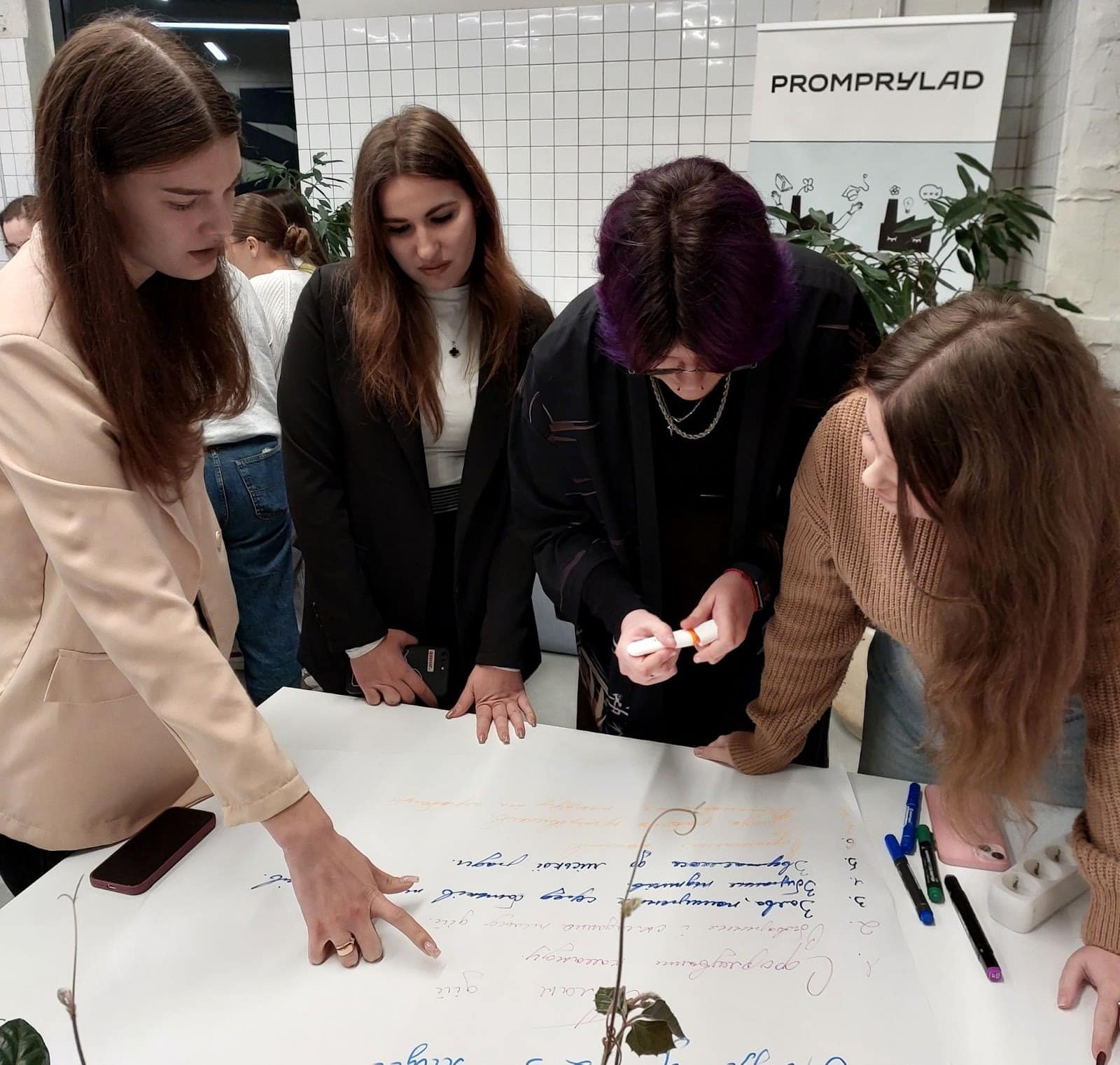
The second group of young people focused on the problem of the Ivano-Frankivsk Regional Children’s Clinical Hospital. They claim that the emergency room does not have a restroom that meets accessibility standards, and therefore many patients are deprived of decent conditions.
“We intend to start by contacting the regional representative of the Human Rights Ombudsman to have him inspect the hospital for accessibility. This will help us obtain clear, documented confirmation that the restrooms do not meet the necessary standards. Next, we plan to make the problem public through bloggers and non-governmental organizations that would respond to our request and join the initiative. Finally, we will prepare and submit an appeal to the Ivano-Frankivsk regional and city councils with a request to allocate funds for the construction of an inclusive toilet,” says Anastasia, a student of the Department of Therapy and Rehabilitation, who presented the mini-project to other participants.

The last group focused on educational work: they planned to develop an inclusive board game for schoolchildren. It should develop tolerance in children, bring them closer together, and highlight the barriers that people with disabilities face on an almost daily basis. In addition to the game itself, the team plans to organize tolerance lessons and training sessions.
At the end of the meeting, the participants shared what they thought was valuable so that the ideas could be implemented later. They believe that the next step could be to look for resources that could support them or provide expert guidance or mentoring during the implementation of the mini-projects.
This material was created with the financial support of the German Federal Foreign Office (GFFO), CBM, and the European Disability Forum. The views expressed in this material are those of the authors and cannot be considered the official opinion of the financial partner and the European Disability Forum.
Author: Vita Grynechko