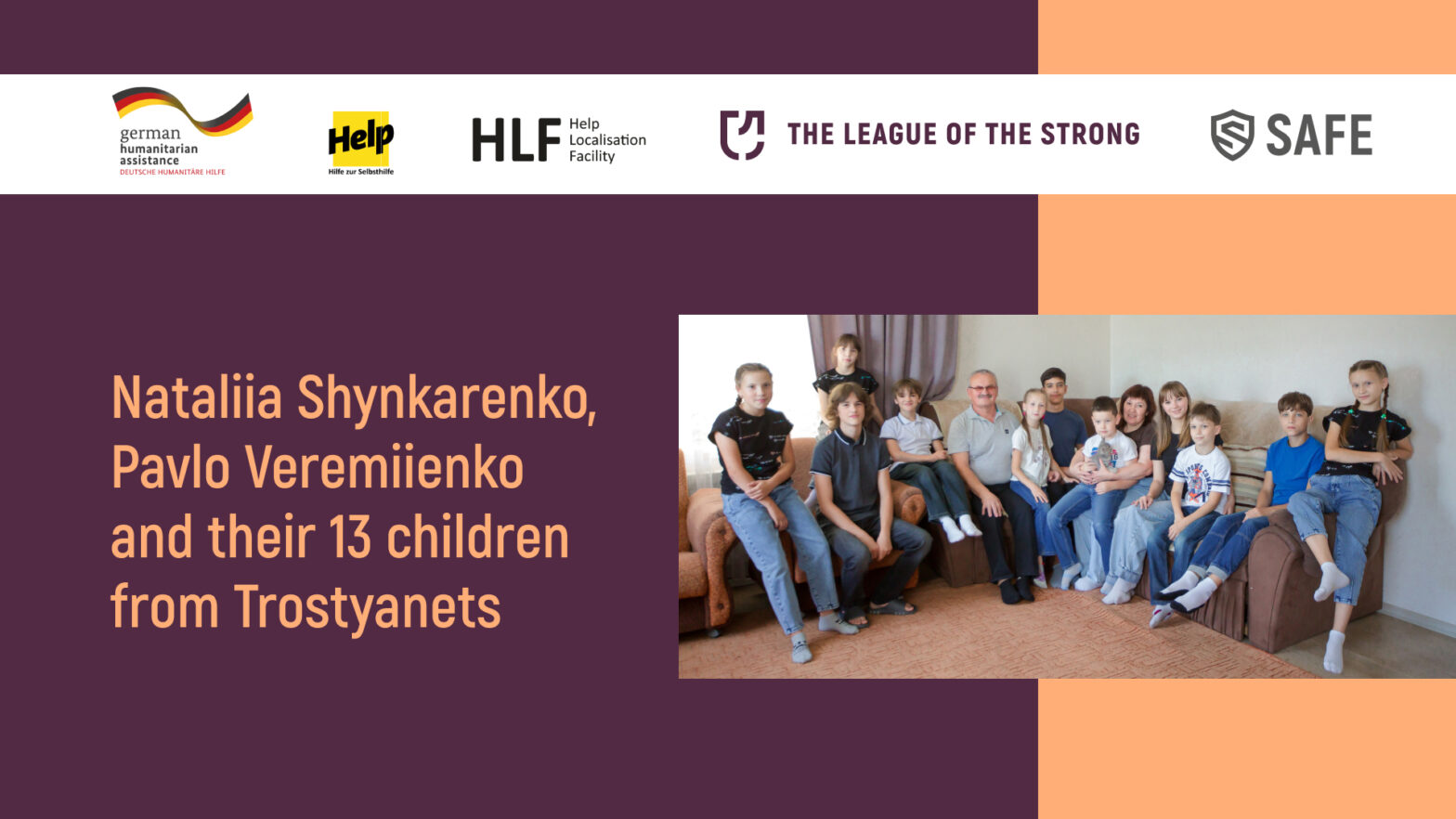
Natalia was an only child in her family. Just as her mother had been in hers. There were no traditions of a large extended family. And suddenly, she herself has fourteen children. Today, Natalia Anatoliivna Shynkarenko and Pavlo Ivanovych Veremienko have four biological children of their own, one adopted child and eight children in their care. One son was killed in the war whilst defending the skies over the Kharkiv region against Russian aggression.
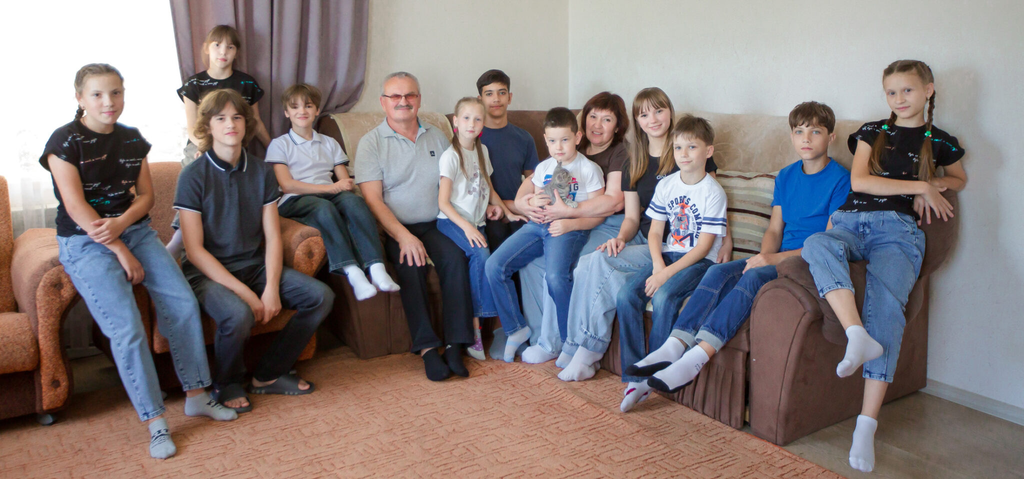
Building a large family was a joint decision by the couple, one that had been nurtured over years of married life. Each new child did not deter them, but inspired them to welcome another. And the war only strengthened their desire to offer family warmth to orphaned children.
Natalia was born and raised in Trostyanets. She had two older sons from her first marriage. She continued to bring them up on her own. Later, a new source of support came into her life – she met Pavlo. A faithful and dependable husband, with whom she felt as though she were behind a stone wall.
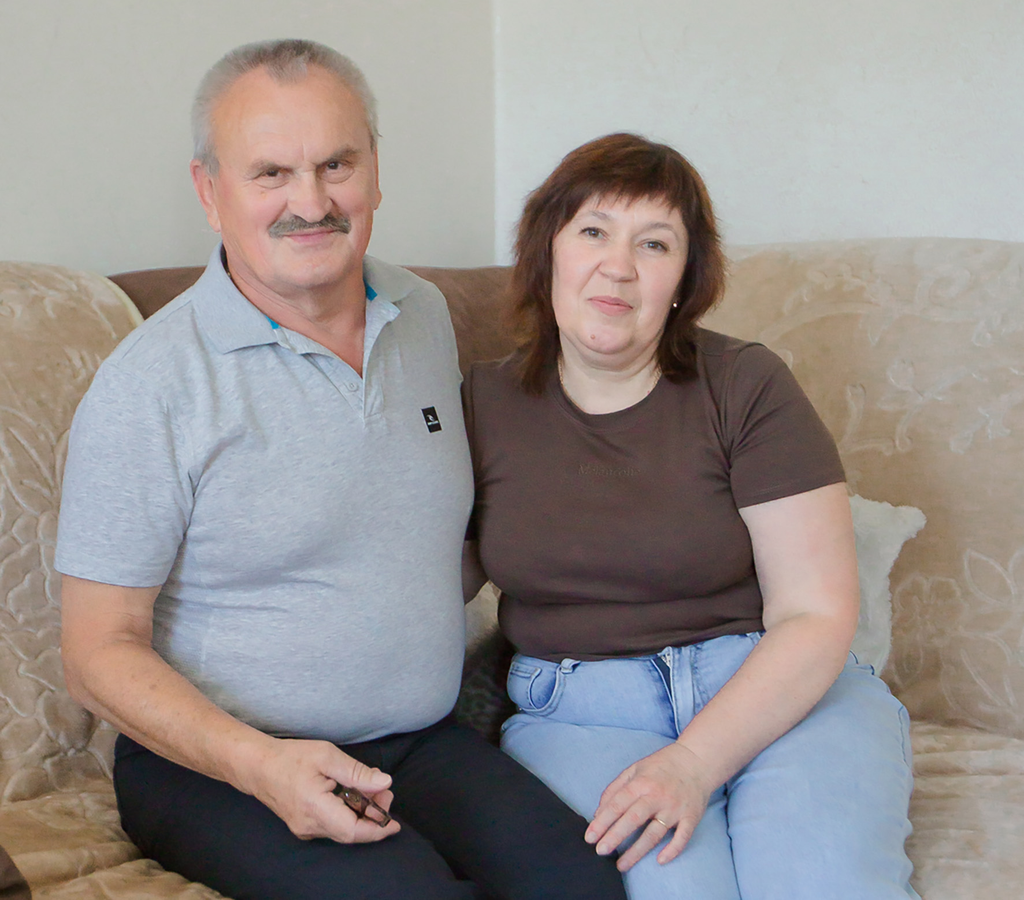
Some time later, the family welcomed their third, long-awaited son.
The brothers never stopped dreaming of having a little sister. Their parents shared this dream too. So the news of a fourth pregnancy in two years was met with great joy by the family.
But it was another boy. Not a hint of disappointment, just joy at the new addition. But the sons had a wish for the future: “We want a little sister.”
It was then that Pavlo first uttered the words that would later prove prophetic: “Why don’t we adopt a girl?” At first, this suggestion was met with a smile. Later, family conversations turned to enquiries about homes for orphans and children deprived of parental care.
The final decision to take a child into their family was influenced by a conversation between Natalia and her son, Igor. It was 2014 – the first year of Russia’s aggression against Ukraine. At that time, Igor was already serving on a contract basis in the Armed Forces of Ukraine and had spent some time in the Donbas, where fighting was ongoing.
One day, he rang his mother and told her how their unit had helped to evacuate a children’s home in the Donetsk region.
“Mum, we have you. But those children have no one. Everyone longs for the warmth of a family, a mother’s love, a father’s care. I’d love to have a little sister like that,” recalls Natalia of that conversation.
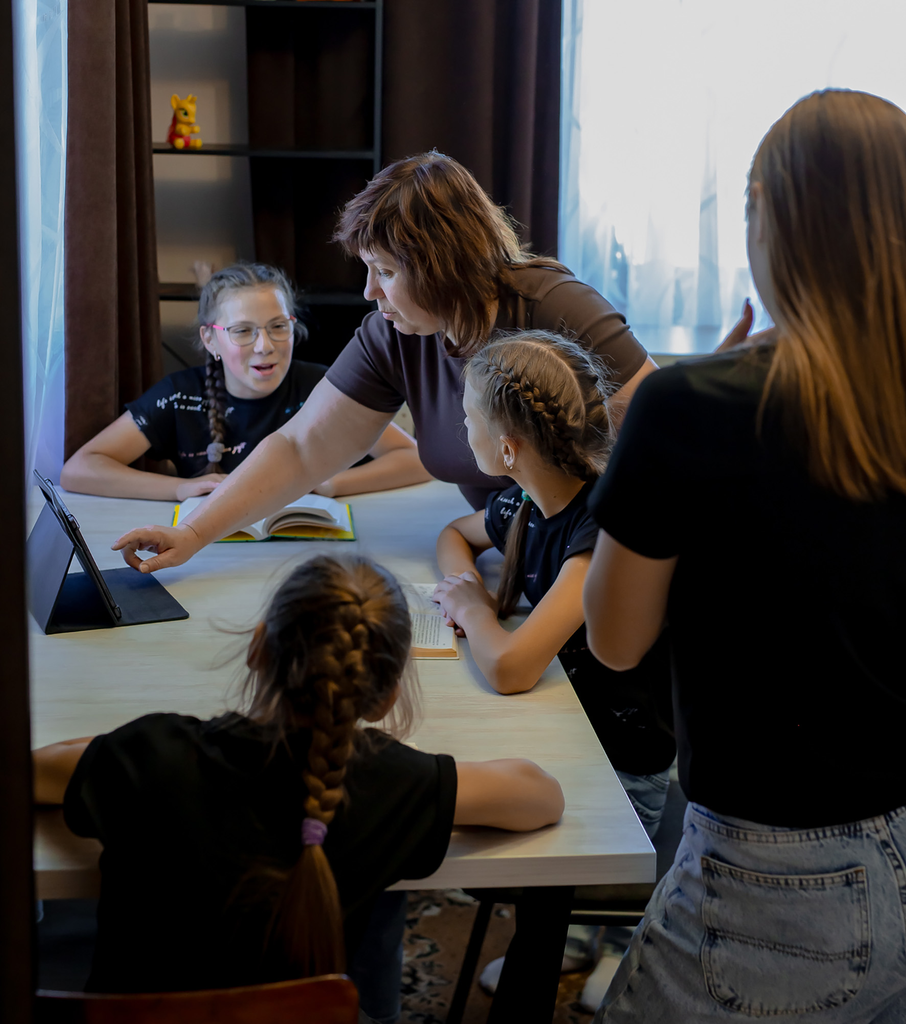
Following that conversation, the family’s discussions turned into concrete plans. At a family meeting, they decided that if they were to adopt, it would be a girl from Donbas – a region where the war had already shattered children’s lives. They began to prepare: they gathered the necessary documents and became prospective adoptive parents. They phoned around and searched everywhere…
Nine months later, Natalia met her future daughter, Anastasia, for the first time at the children’s home. The little girl was not yet a year old.
“She was frail, absolutely tiny. She was lying in an isolation ward, unwell and crying often. There she is, my long-awaited daughter! I was jumping for joy, almost reaching the ceiling,” says Natalia.
It was September 2015. They were returning home as a family. Outside the window, war-torn Donetsk Oblast rolled by: ruined houses, soldiers with weapons, blown-up bridges, pontoon crossings.
From the very first days, the war had an impact on Pavlo and Natalia’s family. Both their eldest sons had completed their higher education and taken up arms in the ranks of the Armed Forces of Ukraine. But military service never stood in the way of their communication with their family. The parents always consulted their sons before making important family decisions, particularly those concerning expanding the family.
“We cannot imagine how, having loved and raised a child, you have to “share” them with someone else,” explains Pavlo Veremienko, figuratively but clearly.
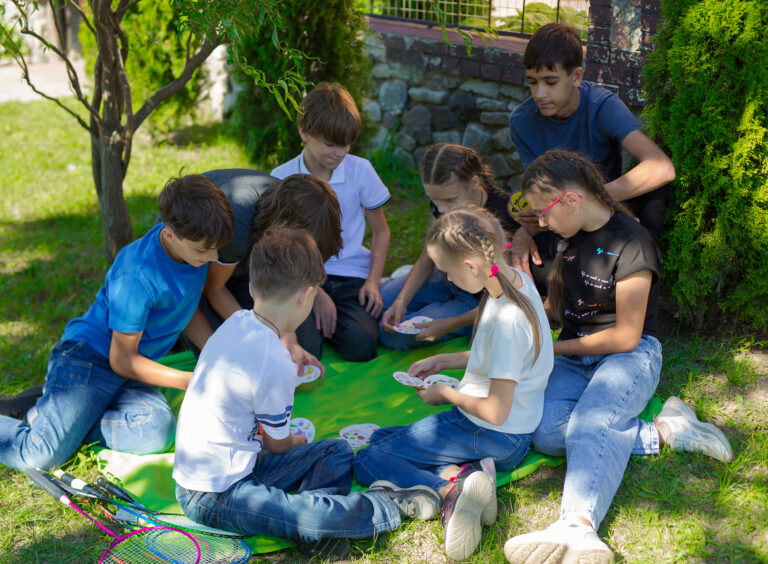
The five of them lived together for a year. They decided that wasn’t enough. So another girl joined them — Varvara. She was twelve at the time. What struck her parents most was that the child didn’t know some very basic things. In fact, the girl turned out to be very talented – she finished secondary school with almost straight top marks and enrolled at the Ivan Kozhedub Kharkiv National Air Force University. After graduating, like her older brothers, she joined the Armed Forces of Ukraine. She is currently serving at air defence positions.
In May 2017, Marina – originally from the Luhansk region – joined the family. Following her evacuation, she had been living in a children’s home in another region. It was from there that the girl was taken in by the family. The family was delighted to welcome another daughter.
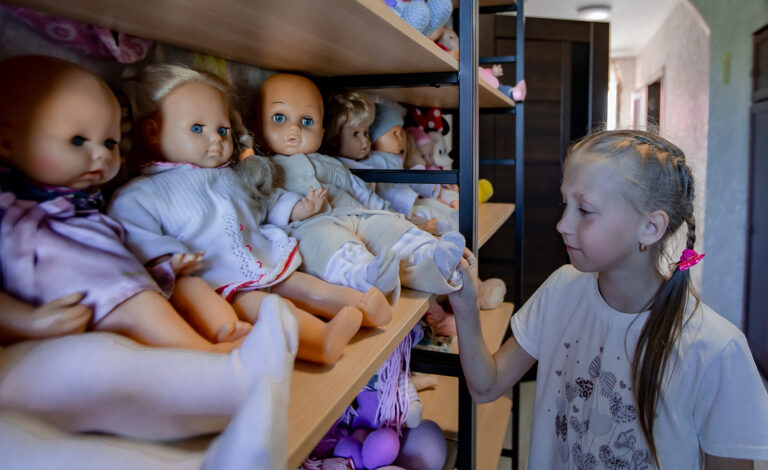
Less than a year later, the family welcomed another child—nine-year-old Sofiika. She graduated from high school here with a gold medal and is now studying Spanish philology at Odesa National Mechnikov University.
A year passed. The family was offered the opportunity to take in three children from a family group.
We discussed it at a family meeting and decided to take them in.
The older children were growing up and leaving the family home: some went off to study, while others started their own families. When Varvara left for college, Sofiika was left with much younger brothers and sisters. That’s when she began telling her mom more and more often:
“It would be so nice if I had a sister my own age.”
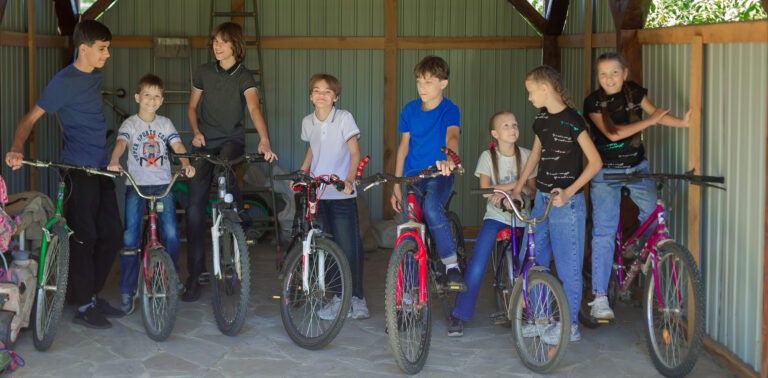
The family discussions began again: “Should we take him in or not?” They asked both the older and younger children if they had any objections, and they asked Dad what he thought. When everyone supported the idea, they decided to welcome another child into their family. Two biological brothers crossed paths in their lives.
But then the bureaucratic red tape began: sometimes certain documents were missing, sometimes a certificate had expired, and sometimes there wasn’t enough living space for such a large family. So they not only had to get the paperwork in order but also had to look for a new, more spacious home.
All of this lasted from 2019 until early 2022. During that time, the boys got to know their future brothers and sisters. They were already calling Natalia and Pavlo “Mom” and “Dad.” In order to bring the children into their family, they had to give up their dream of a new, spacious car — which they had been saving up for — and go into debt to buy a bigger house.
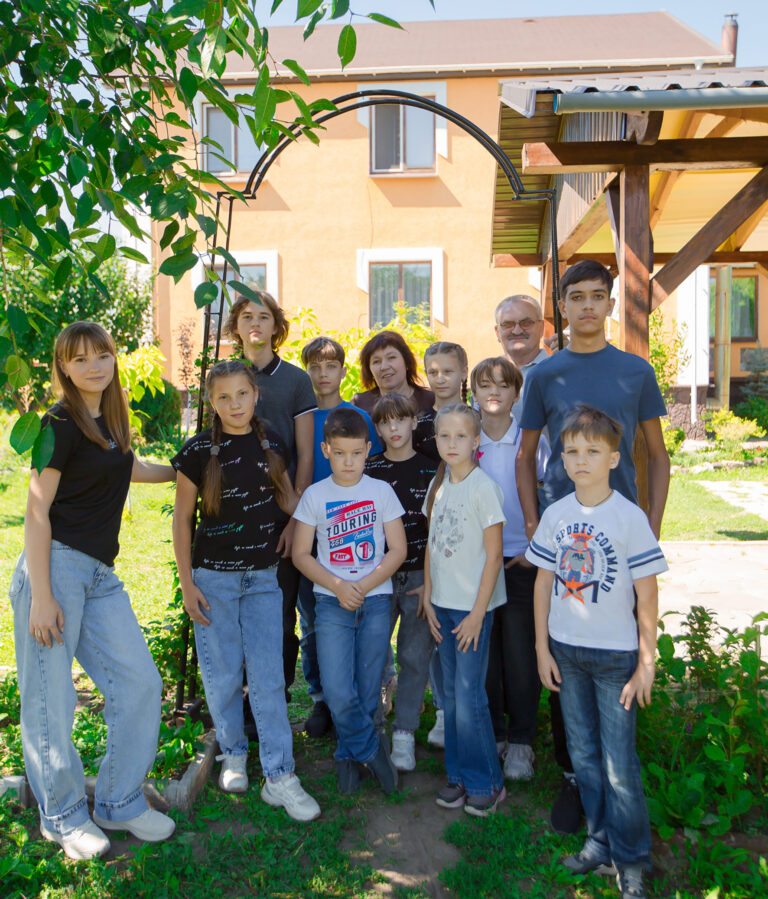
After moving into a two-story house—which was not yet fully completed — in the Neskuchansky neighborhood and celebrating their housewarming, the family finally took in two young brothers. This happened two weeks before the start of the full-scale war. From the very first day of the war, Trostyanets found itself under Russian occupation.
…Today, there is no other family in the Trostyanets community with as many children — 13 in total, nine of whom are still in school. They receive no additional assistance from the government — only the standard child benefits.
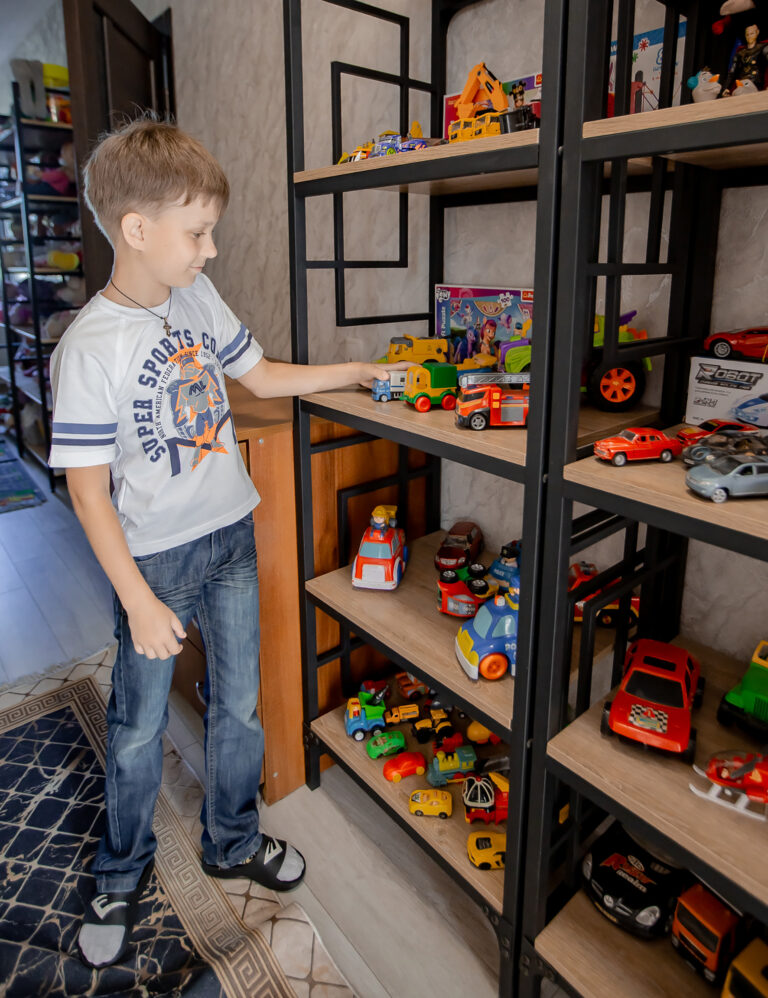
There are also children in the family who need extra support. Two of them have special educational needs, and one of them has a disability.
“I’ve had to learn not only how to be a cook, a caregiver, and a laundress, but also a doctor. One needs a shot in the arm, another in the stomach or leg.” “By now, both my children and I know our ‘medical’ schedules by heart, and sometimes they even remind me when I get too busy,” says the mother.
Sometimes, community organizations help this large family. In particular, this year, the public association “The League of the Strong” provided financial assistance in the amount of 8,991 UAH. The family will use these funds to meet the needs of the children, particularly those with disabilities. But even this amount doesn’t cover all the family’s needs.
However, despite the challenges, the members of this large family enjoy their lives. They live in an atmosphere of love among the children and respect for their parents; they take a realistic view of life and rely more on themselves.
“When we moved into our new home, one of my sons said, “Mom, no matter where we are, no matter where you live — on this street or that, in this house or that—know that our home is you and Dad; it’s all of us — our family, which is our shared value.”
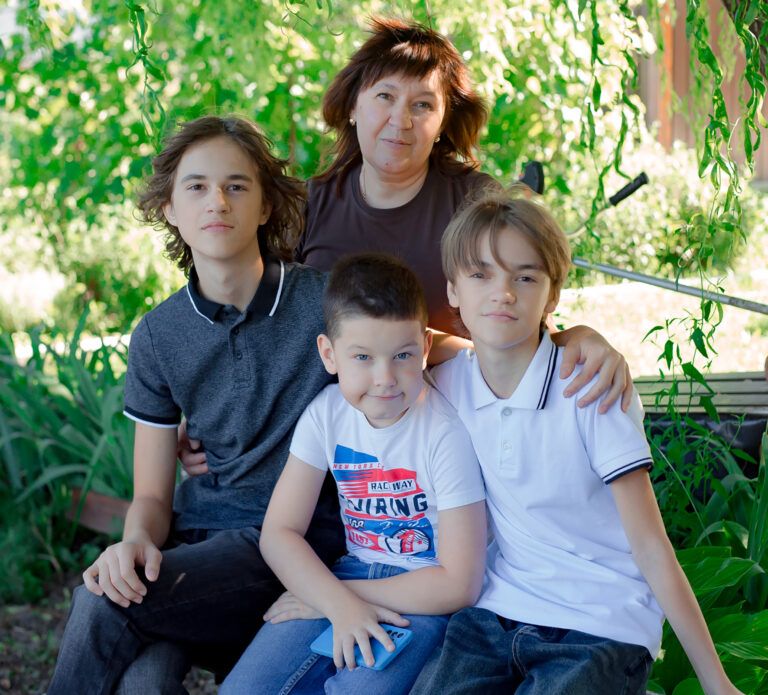
This text was created as part of the “Safe: Help and Support for Everyone” project. This project is implemented by “The League of the Strong” with financial support from the German Federal Foreign Office and coordinated by Help – Hilfe zur Selbsthilfe and the Help Localization Program.
Author: Pavlo Zlenko.