

Oleksandr Kit is a young man from the city of Chortkiv. He learned how to create diamond mosaics and became one of the volunteers for Ukrainian defenders. His works are exhibited and sold at auctions in Ukraine and abroad, and all proceeds go to help the army.
Oleksandr mastered this new type of handicraft at about the age of eight. It all started with another trip to the city of Truskavets, where he regularly goes for rehabilitation. The boy has had cerebral palsy since childhood. His mother, Iryna, says that at first her son could not stand at all, but now he can walk a little at school or at home. This is all thanks to the rehabilitation he has undergone.
In Truskavets, before the farewell evening organized by the curators for the children, everyone made something with their own hands to present and receive a gift for their work. At first, Oleksandr did not know what to do. His mother helped him by finding a small picture in a local store. It had to be filled in according to a pattern by gluing small colored rhinestones.
Diamond mosaic — therapy and volunteering
“I asked Oleksandr if he would glue it, and he said, ‘Yes.’ We took the picture, even though we had never seen anything like it before. It was on ordinary cardboard. My son did it and liked it so much that he asked for another one right away. I remember it like it was yesterday, I bought a bear, a dragon, and a fish,” recalls Iryna.
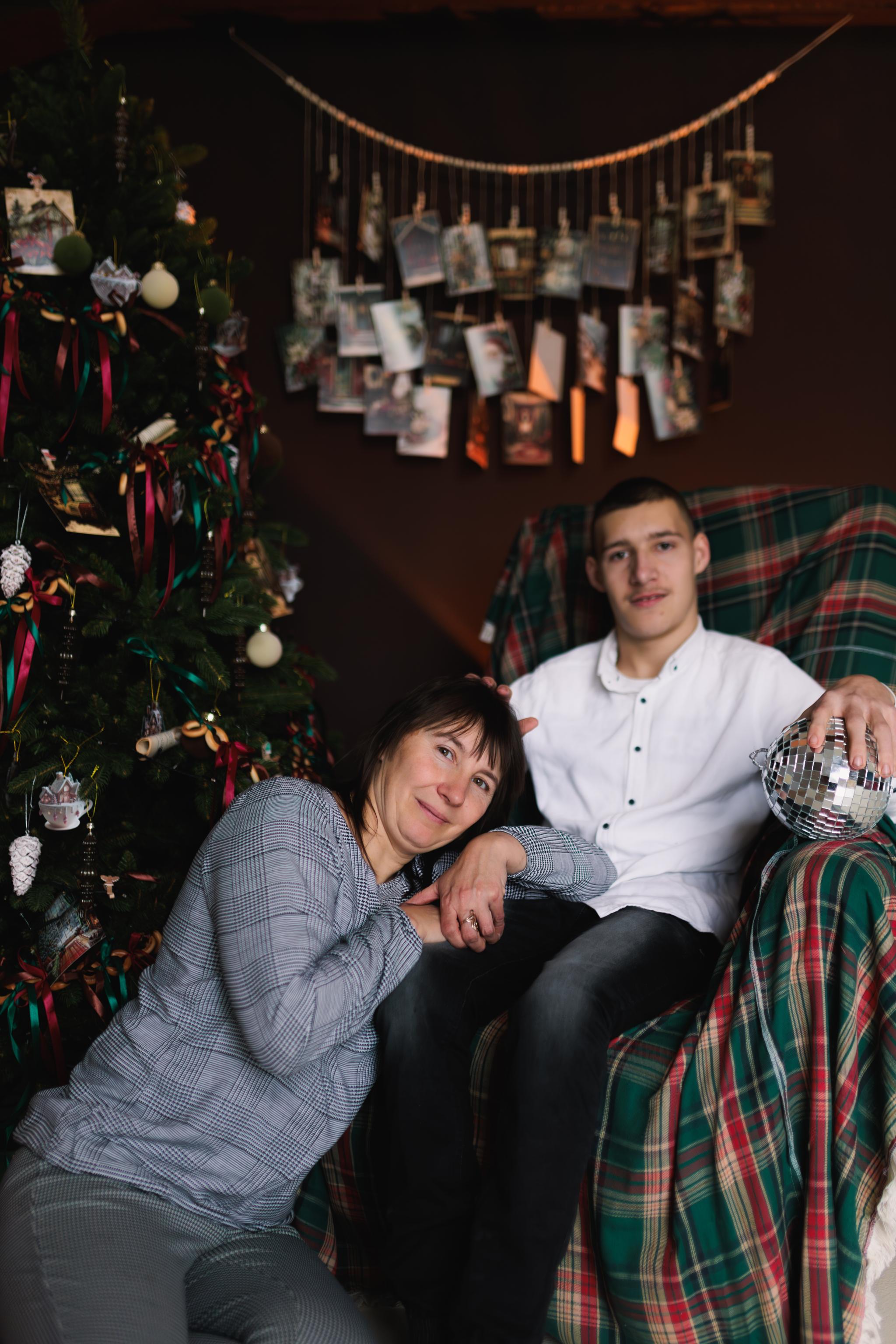
The young man completed half of one painting that evening, even though he had undergone lengthy and exhausting rehabilitation procedures beforehand. He finished the rest over the next two weeks in Truskavets.
His mother says that once home, he often took up his work to calm his emotions. The small details quickly fell onto the canvas and at the same time calmed the boy when he was irritated. His new hobby also helped the young man improve his concentration.
With the outbreak of full-scale war, the Kit family’s acquaintances left for Germany and joined volunteer and charity organizations there, including markets to raise funds for the Armed Forces of Ukraine. Oleksandr decided to help too, offering to send them his paintings to sell. The relatives then used the funds raised from charity events to purchase a car and generators.
Later, the young man began to donate his paintings to auctions organized in Chortkiv itself. He does not always know where and for how much they are sold, because regardless of the amount, he feels only one emotion — joy that his work is beneficial.
This year, a local charity fund and the head of the Chortkiv community solemnly presented the young man with a letter of appreciation for his volunteer work. Iryna says that this came as a surprise to him: “He was embarrassed and did not plan to attend the ceremony at first, but he gathered his courage and went anyway. He asked me to go with him when they presented the award, but I told him that it was his achievement, so he should receive it himself. “
One of Oleksandr’s biggest works was the painting “Victory” for the auction held on December 6 to mark Ukrainian Armed Forces Day. In order to get it ready in time for the event, Oleksandr worked all his free time for three weeks. The lot was sold for 25,000 hryvnias. In total, the young man has already donated about twenty of his works to charity.
In January 2026, the community is planning another charity auction, and Oleksandr intends to prepare a new lot on a patriotic theme.

About his dream of programming, soccer, and cats
The young man is now in 10th grade and already dreams of getting a degree related to computer technology. Before St. Nicholas Day, Oleksandr wrote a letter saying:
“I want a laptop. Even an old one, any laptop, so I can study, because I want to become a programmer,” he wrote.
According to Iryna, her son has a well-developed visual memory. He is very good at navigating his phone and quickly finds everything, and he also remembers many details from his early childhood.
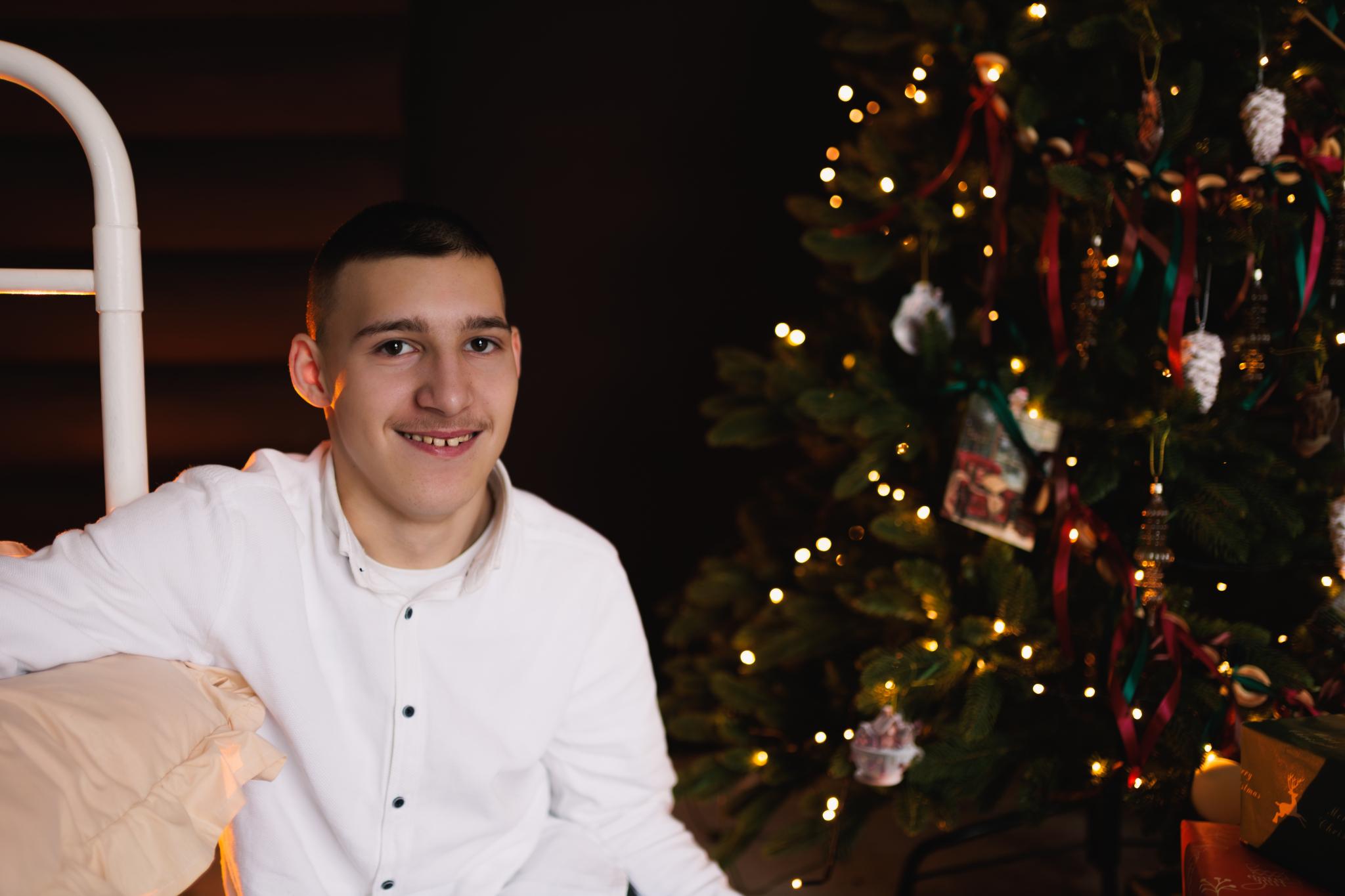
He is also passionate about soccer, just like his younger brother, who plays for a local children’s team. Oleksandr sometimes comes to his brother’s training sessions and watches from the sidelines. He always goes to his brother’s competitions to support him. The boy was also bought a uniform and socks. The only thing is that his legs are not strong enough to play. So for now, he is just a fan, but once, after his brother’s football match, he took a chance: he went out onto the field, held onto the goal and tried to make a pass.
From an early age, the young man was quite shy, but he managed to overcome this, says his mother. Now he is not afraid to ask questions that interest him, not only to acquaintances, but also to strangers. Once, while walking in the park, he met an elderly man with a small dog and started a conversation, asking about the breed.
Animals are another of Oleksandr’s great loves. They have a Pekingese, a miniature pinscher, and two cats at home. The boy also feeds the stray cats that come into their yard.
“He comes home from school, and one cat sits on the doorstep, while the others stay on the road and only peek in when he comes out to them. If my younger son or I go out, the cats run away. But as soon as Sasha comes out, they slowly approach him. There was one cat that first sat at the entrance to the yard, then near the well. Over time, it started waiting at the front door, and in the fall it even ran into the kitchen,” says the woman.
His father is an example for the boy. Together, they are constantly repairing something, working in the garden, picking apples. The main thing is that now Oleksandr can move around on his own.
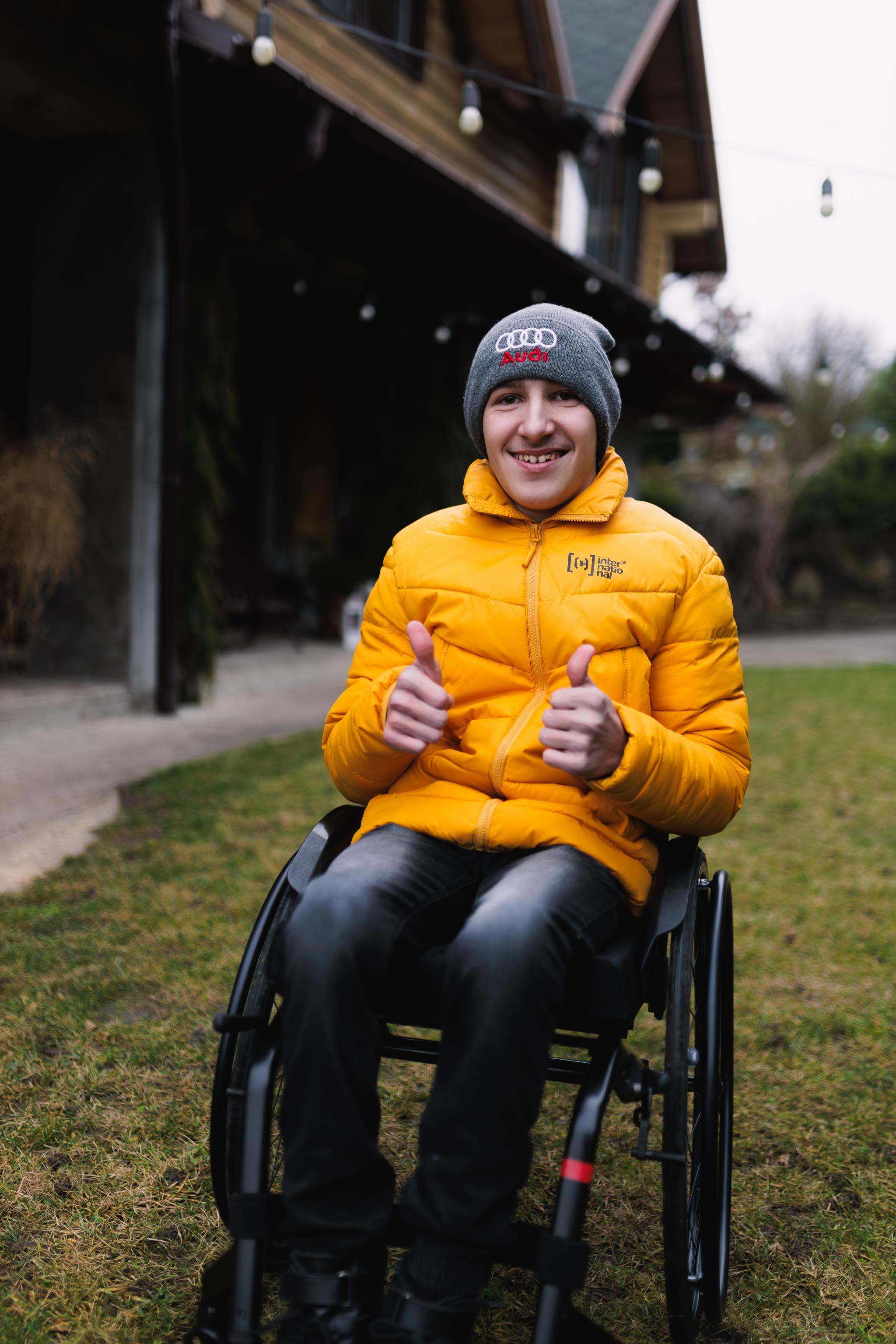
With the onset of adolescence, the young man grew about 10 centimeters in six months. So the stroller he used to get around in was already too small. The district social services department provided a tricycle so that the boy could ride on his own. He rides it when the weather is warm or during walks. But when the question of a wheelchair became urgent, his mother was refused.
“You already have a bicycle. You can only have one thing: either a wheelchair or a bicycle,” they told Iryna at the time.
A sudden growth spurt affected Oleksandr’s legs: he couldn’t walk for long and even a rollator didn’t support him properly.
“Sasha crouched down a lot and walked in such a way that he curled his toes, rubbing his sneakers, and stumbled,” his mother notes.
The family was able to get a wheelchair by contacting the public association “League of the Strong.” This happened by chance, just after another return from rehabilitation. The boy went to school, and the association brought tablets and other support for young people with disabilities there. Representatives of the League of the Strong met Oleksandr, took the family’s contact details, and soon purchased and delivered a new wheelchair to him.
“He’s like Schumacher on it: he sits down and no longer calls out, ‘Mom, push me up the hill.’ He went out onto the street on his own without any problems, rode around, visited the neighbors’ houses, watched his younger brother play there, and came back. Now he has become completely independent,” his mother shares.
Until now, when the boy planned a walk or a trip, he had to be accompanied by an adult. According to Iryna, when her son sits in the wheelchair, he smiles sincerely. He drives out of his parents’ yard on his own and only glances at the adults to see if they will say anything to him about it.
This material was created with the financial support of the German Federal Foreign Office (GFFO), CBM, and the European Disability Forum. The views expressed in this material are those of the authors and cannot be considered the official opinion of the financial partner and the European Disability Forum.
Author: Tetiana Pihurska