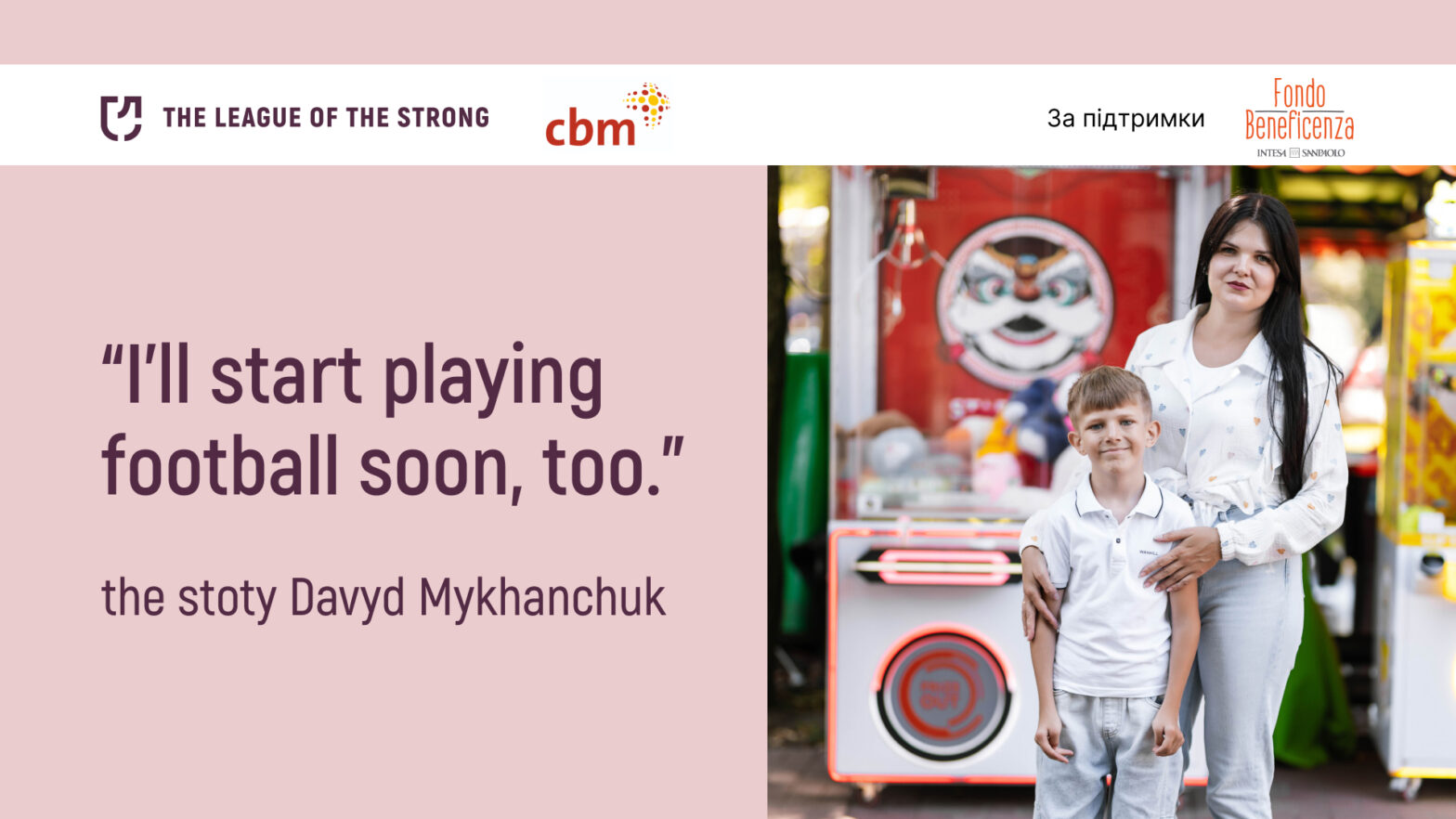
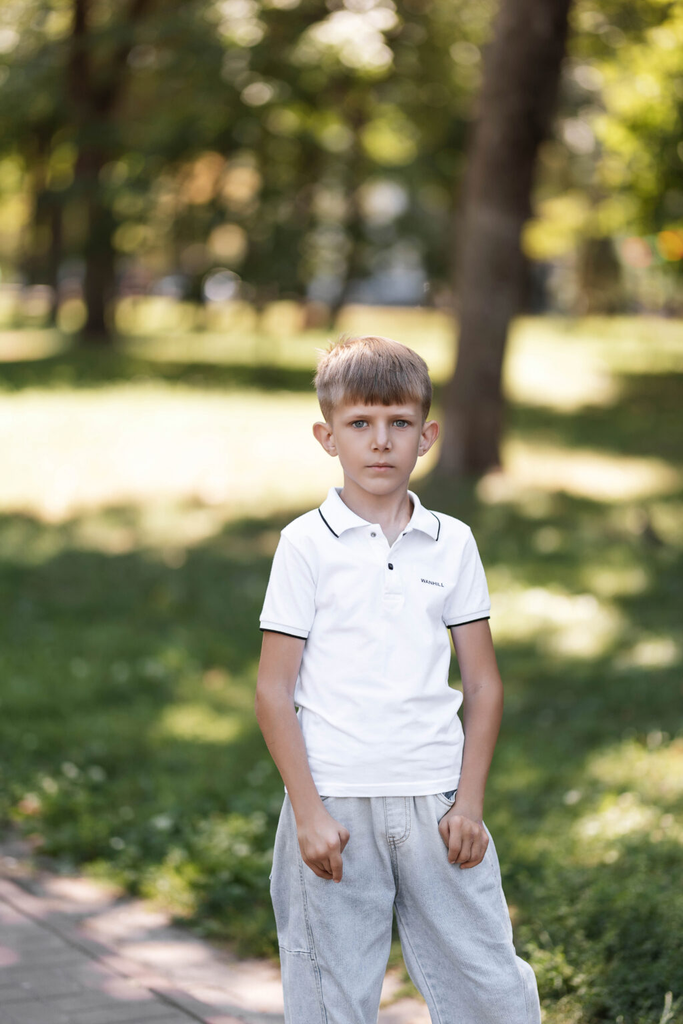
Eight-year-old Davyd Mykhanchuk from Pryluky dreams of becoming a footballer. He also loves doing tricks on his scooter and drawing. And he does all this despite having a rare illness. To improve at the things he loves and get closer to realising his dream, Davyd, overcoming pain and fatigue, constantly does therapeutic exercises.
— My mum’s called Alina, my dad’s called Vova, and my sister’s called Diana – she’s 16, — Davyd tells me, listing the other members of his family.
— Are you close with your little sister?
— Yes. She used to go for walks with me every day.
— Diana practically looked after Davyd, — adds 37-year-old Alina Mykhanchuk. — Although when my daughter first saw her little brother, she was so scared she burst into tears. My son was covered in plaster casts; he was crying because he was in pain and felt uncomfortable. But then Diana got used to it and was a great help to us with Davyd: she put him to bed, rocked him, and stroked him. She even shooed us away, saying, “Don’t get in the way”.
— Why was he in plaster casts from birth — was it due to some kind of injury?
— It’s definitely not hereditary; genetically, everything’s fine with us. I had various tests done whilst I was pregnant — they were all normal. But when Davyd was born — what a ‘surprise’. Arthrogryposis…
It’s a rare congenital disorder of the musculoskeletal system, characterised by multiple contractures (restricted movement) of the joints and deformities of the limbs.
— I gave birth naturally, not by caesarean section. But they didn’t show me my son straight away (they must have suspected a medical condition). They said, “Just rest; he’ll stay with us overnight, and we’ll bring him to you”. Only my husband had seen Davyd and noticed that his leg was a bit squashed, but they told him: “That can happen”. Our eldest had a slightly flattened ear, but it sorted itself out later.
And the next day, when I looked at my little boy, I couldn’t believe my eyes. It was as if his right leg wasn’t there at all; his left leg had pressed down on it so hard that his foot had folded inwards… Neither the ultrasound nor the tests for abnormalities during pregnancy had shown any sign of this.
Arthrogryposis is a condition characterised by joint deformities, shortened muscles and tendons. If left untreated, a child with this condition will not be able to walk. We were referred to the paediatric pathology department at the Chernihiv Regional Children’s Hospital. Then we travelled to Kyiv to the Institute of Orthopaedics and Traumatology, where he was put in a plaster cast. Davyd was diagnosed with hip dysplasia, and he was fitted with stirrups. Splints were applied to his arms because he couldn’t straighten them — the contractures were that severe.
Once a week we went to have the plaster cast changed. At first there were 10 casts, then a break. I could see that my son’s leg still wasn’t quite as it should be.
On the programme “I’m Ashamed of My Body”, I saw the paediatric orthopaedic surgeon Oleg Pylypchuk. I found his contact details, and we went to see him. Oleg Rostyslavovych is a very good doctor! Davyd’s ankle was misaligned; medically speaking, he had a vertical talus (with this diagnosis, the foot is flat or convex on the underside, and the sole resembles a rocking boat. — Author). They managed to correct the position of his foot with a plaster cast, but surgery was still needed. Oleg Rostyslavovych operated on Davyd, and afterwards our son had a further seven plaster casts.
We also had an operation on his left hand. Now, when it’s open, you can see that the fingers are straight. But on the right hand they aren’t yet, so Davyd still has more operations ahead of him. In total, we’ve had 17 plaster casts and 4 surgical procedures.
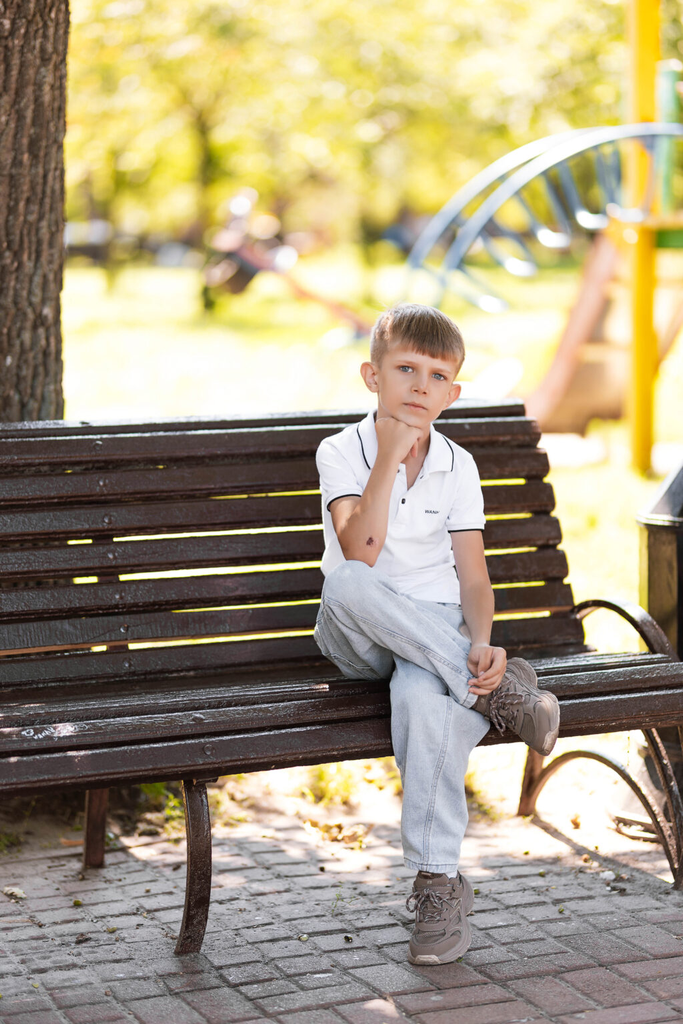
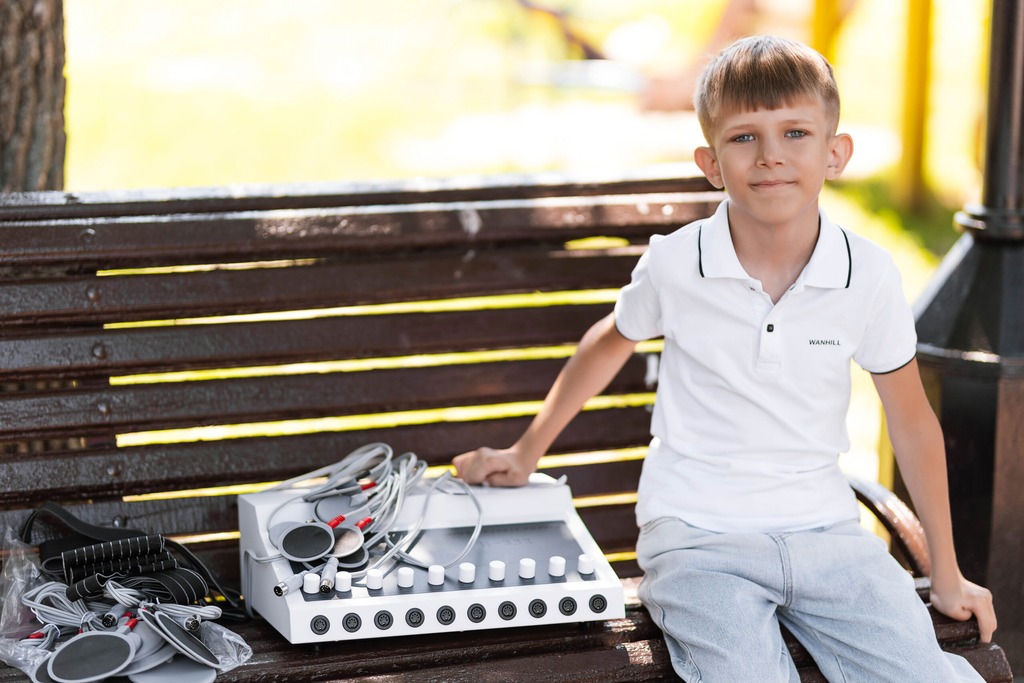
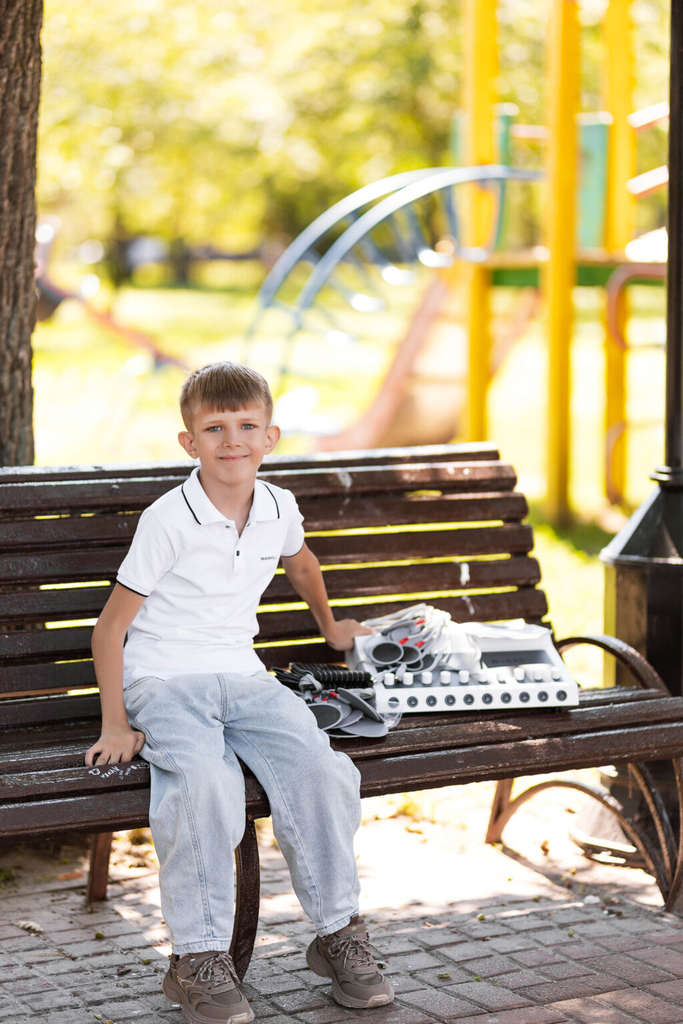
And we have to do physiotherapy exercises all the time. We used to see a physiotherapist here in Pryluky, and we travelled to Chernihiv to the “Vidrodzhennia” rehabilitation centre; now, however, we do the exercises with our son ourselves. “The League of the Strong” community organisation gave us a muscle stimulation device (it works for both relaxation and strengthening). We tried a similar one at the physiotherapist’s, and now we have our own. It’s a huge help. Every day we go to the stadium to train. We’ve put together a set of exercises; Davyd knows exactly which ones to do and on which machines and gymnastics equipment.
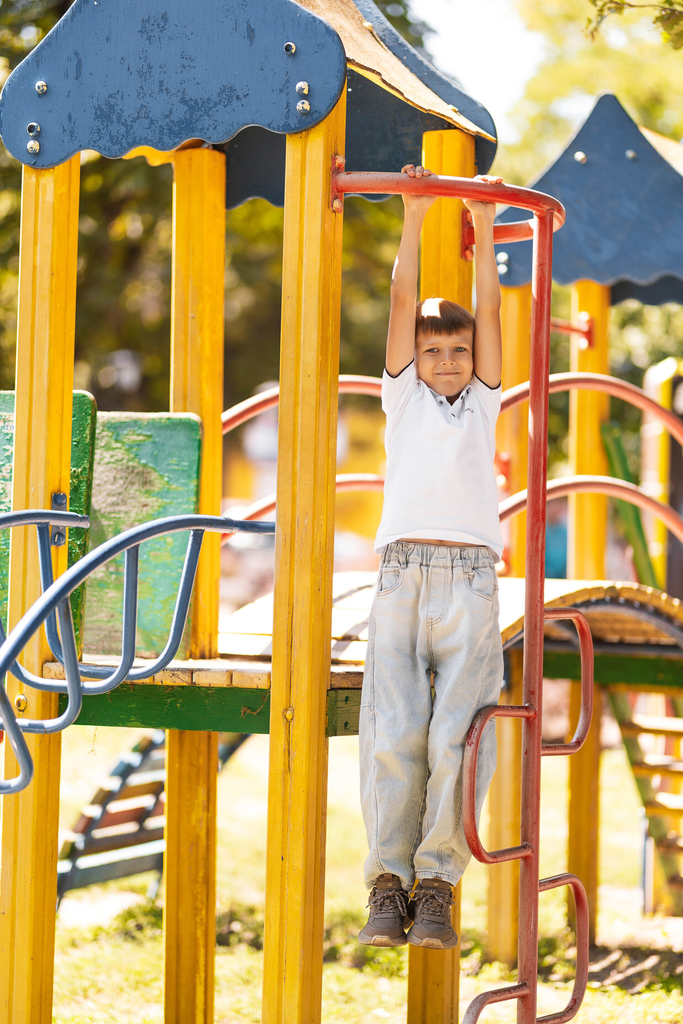
He showed me some of the exercises. Overcoming the pain. He told me he loves riding his scooter and doing tricks on it that he’s seen on YouTube and TikTok. The day before we met, Davyd fell and grazed his arms. You could tell it was painful for him to do pull-ups on the horizontal bar, but he kept trying again and again until he got it just right. According to his mum, Davyd generally endures all his treatments and training sessions with great courage.
He shows no signs of developmental delay — the condition does not affect his mental abilities.
— My son is in Year 2. Although the little finger on his right hand bends slightly to one side, he writes well and his handwriting is quite good. Davyd also loves to draw. Our Diana is very good at it, so he wanted to try it too. Last autumn, he took part in an international drawing competition and won first prize with his entry “The Light of Children’s Dreams”. He depicted a boy standing by a street lamp that was shining.
— Who or what do you like drawing the most? — I ask Davyd.
— Comics.
— And what do you want to be when you grow up?
— A footballer, — Davyd replies confidently, naming his favourite players: — Ronaldo, Messi, Neymar, Yamal, Ronaldinho. I’ll be taking up football soon too.
— You certainly will, once you’ve got a bit stronger, — his mum promises encouragingly.
Author: Alina KOVALOVA, Pryluky.
We would like to thank the Intesa Sanpaolo Charitable Foundation for its support of the project “Emergency response for people with disabilities affected by the conflict in northern Ukraine”, which is being implemented in partnership with CBM Italia.