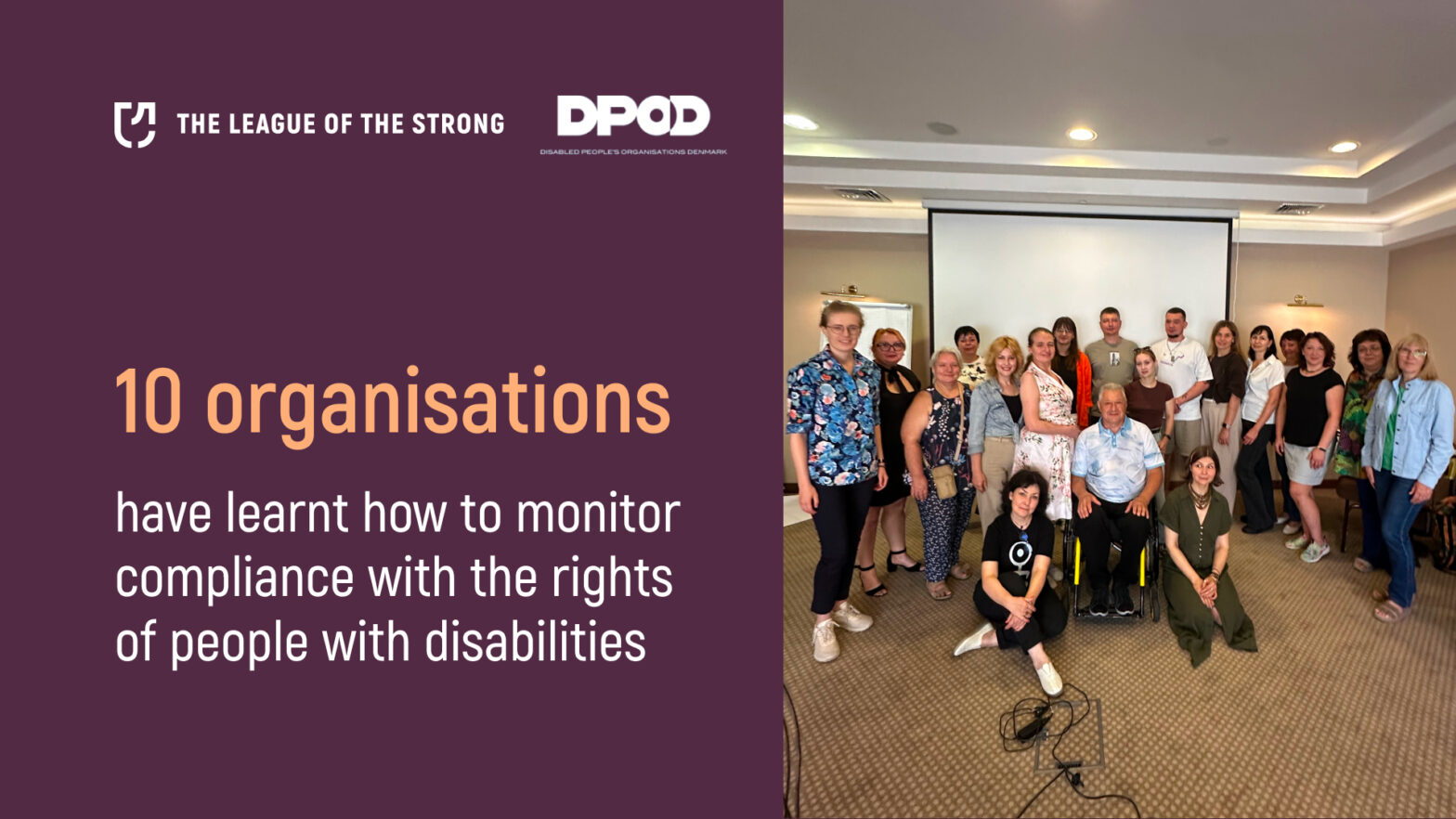
“The League of the Strong” conducted a three-day training session on monitoring human rights compliance for representatives of 10 organizations that have joined a joint initiative to monitor the rights of people with disabilities in Ukraine. The training took place on August 19–21 in Kyiv.
The training served as a practical step in preparing the organizations to conduct local monitoring. Its goal was to provide participants with a shared understanding of monitoring approaches, tools for collecting and verifying information, and the skills necessary to conduct high-quality research.
“People and organizations lacked a specific, easy-to-understand toolkit that could be quickly mastered in a few days—a real “toolkit”: if there’s a problem, you already know how to professionally investigate it, write a report, and make recommendations. The participants showed great interest and enthusiasm. We provided organizations representing people with disabilities with a monitoring tool so they could track for themselves how well Ukraine is fulfilling its obligations—from inclusive education to employment for veterans with disabilities. “This tool is versatile, but we’re deliberately focusing it on European integration because that’s particularly relevant right now,” commented Kateryna Dayneko, an analyst, advocate, and trainer at the Kyiv School of Human Rights and Democracy, and a board member of the “The League of the Strong”.
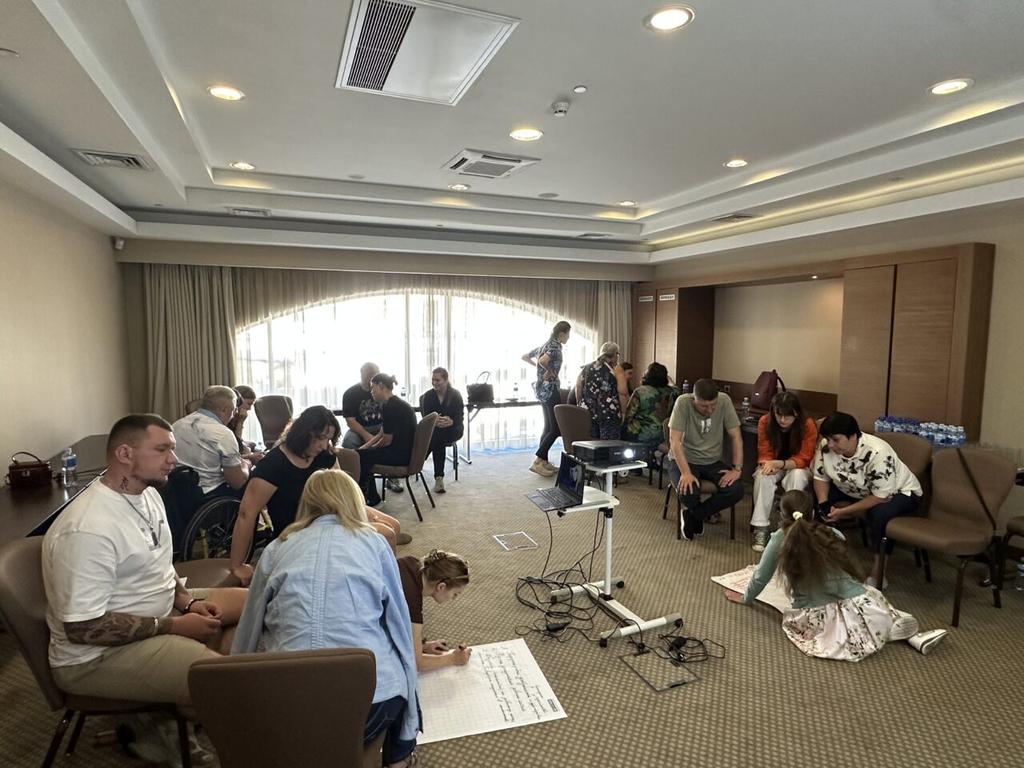
Over the course of three days, participants examined the human rights-based model of disability and sources of law, and discussed advocacy and the role of monitoring in the protection of rights. Individual sessions focused on research planning, setting goals and research questions, legal analysis, data sources, and data collection methods.
“We have experience with advocacy campaigns, but we hadn’t used monitoring as a tool that precedes advocacy. That’s why it was important for me to understand how this process works and how to use monitoring to correctly identify a specific aspect of a larger problem—one we can focus on and where we can bring about change. It was especially valuable that during the training we didn’t just listen to theory but immediately applied it to real-world problems. I worked on the topic of inclusive education, which I’ve been dealing with for many years, and saw how this tool helps structure the problem and identify exactly what can be changed. For me, this is a very practical addition to my professional knowledge and experience,” said Yevheniia Polinichevska, a social work instructor at the Igor Sikorsky Kyiv Polytechnic Institute, communications director of the international youth organization “Child with a Future,” and director of the nonprofit “Scientific Society of People with Disabilities ‘No to Discrimination.’”
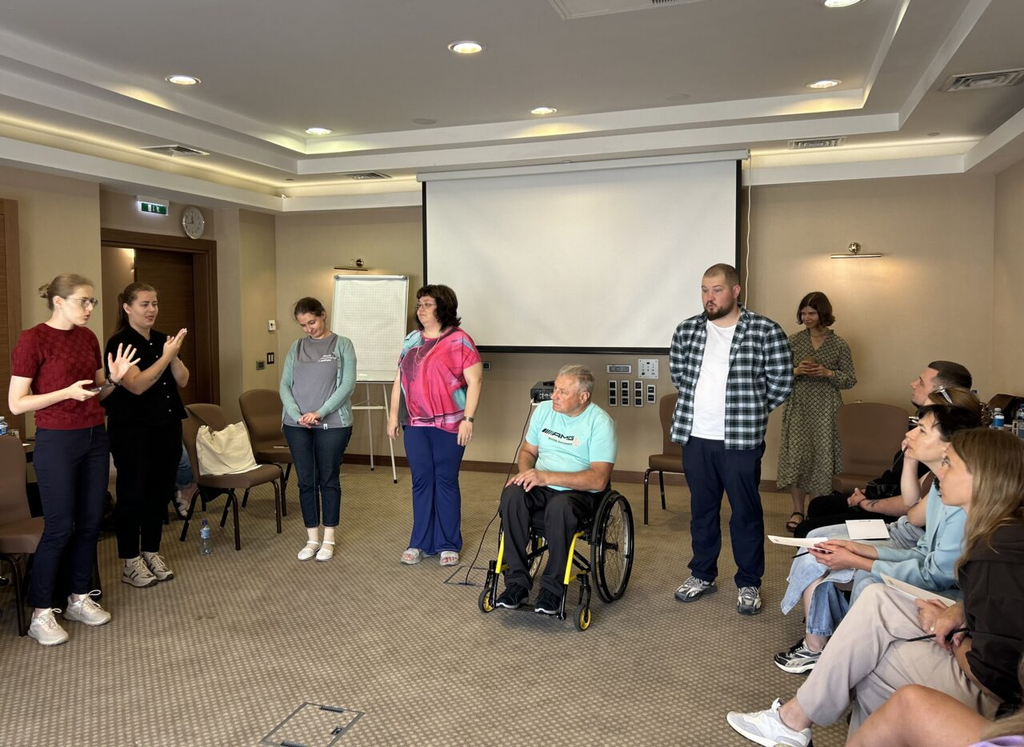
Yevheniia Polinichevska, lecturer in the Department of Sociology and Law at the Igor Sikorsky Kyiv Polytechnic Institute, communications director at the international youth organization “Child with a Future,” and director of the nongovernmental organization “NTI Institute of Social Policy.”
The practical part of the training also covered data verification and secure storage, risk assessment and organizational capacity, as well as the preparation of reports and recommendations. On the final day, participants worked in small groups, received feedback, and discussed their own approaches to future monitoring activities.
“It’s important for me to master all the nuances and subtleties of monitoring work, since I constantly encounter tasks of this nature in my work. My impressions of the training are positive: the instruction wasn’t detached from real life but was based on specific practical examples. I was able to organize my existing knowledge and gain new, important tools. I will apply them in reports on accessibility monitoring, in evaluating project implementation, and when preparing recommendations for local government bodies and national-level institutions,” said Serhiy Chumak, accessibility ambassador and chair of the Poltava regional branch of the NGO “All-Ukrainian Organization Union of Persons with Disabilities of Ukraine.”
The organization will apply the knowledge gained during the training during local monitoring of compliance with the rights of people with disabilities. They will investigate the situation in their communities by collecting and verifying data on the implementation of the rights of people with disabilities.
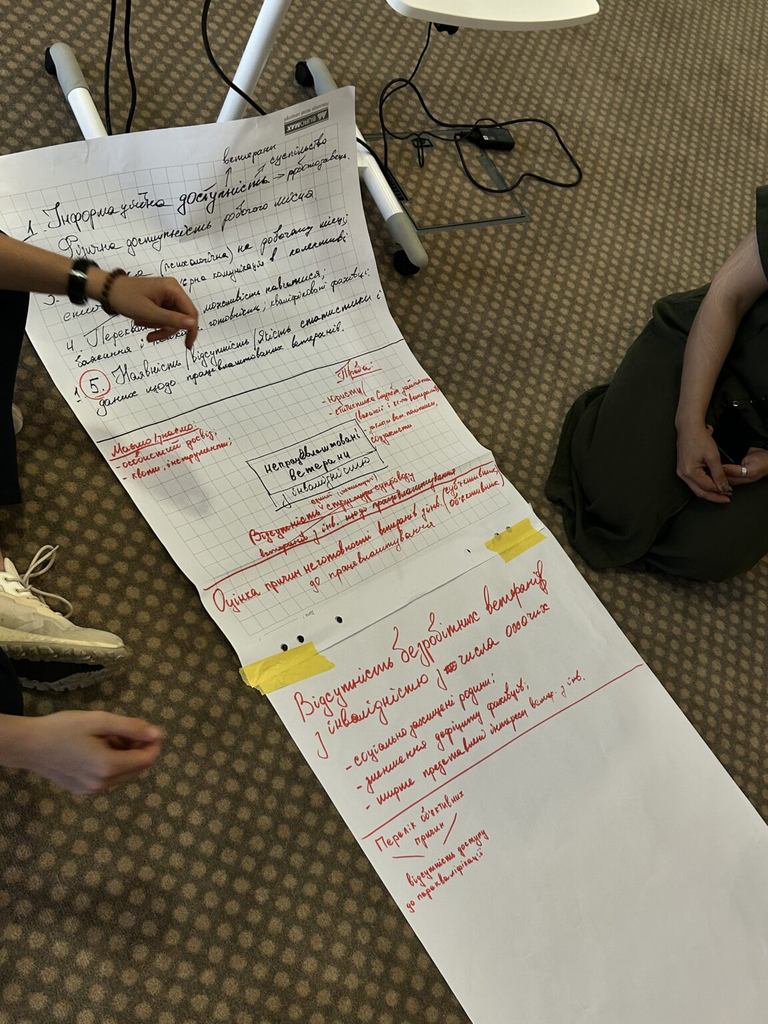
“The League of the Strong” plans to compile the results of these organizations’ work into a single, independent report. It is intended to help identify systemic barriers and challenges in the realization of the rights of people with disabilities in various regions of Ukraine, as well as to formulate recommendations for future changes.
“The reports will primarily be useful to the government—after all, it is the government’s responsibility to fulfill its obligations and ensure human rights. At the same time, together with the participants, we will compile the findings and prepare an alternative report on how Ukraine is progressing in the European integration process and to what extent the rights of people with disabilities are actually being upheld. This information can be used by both the government and the European Commission,” commented Kateryna Dayneko, an analyst, attorney, trainer at the Kyiv School of Human Rights and Democracy, and board member of “The League of the Strong”.
This monitoring is part of “The League of the Strong” efforts to strengthen the participation of organizations of people with disabilities in Ukraine’s European integration processes. The collected data will also be used to assess Ukraine’s fulfillment of its international obligations regarding the rights of people with disabilities.