Renat Potichev dances, swims, walks the catwalk, travels, helps out at home and is gradually becoming more and more independent. His mum, Svitlana, explains why she never forced her son to be ‘like everyone else’ and which parenting principles helped him to realise his strengths.
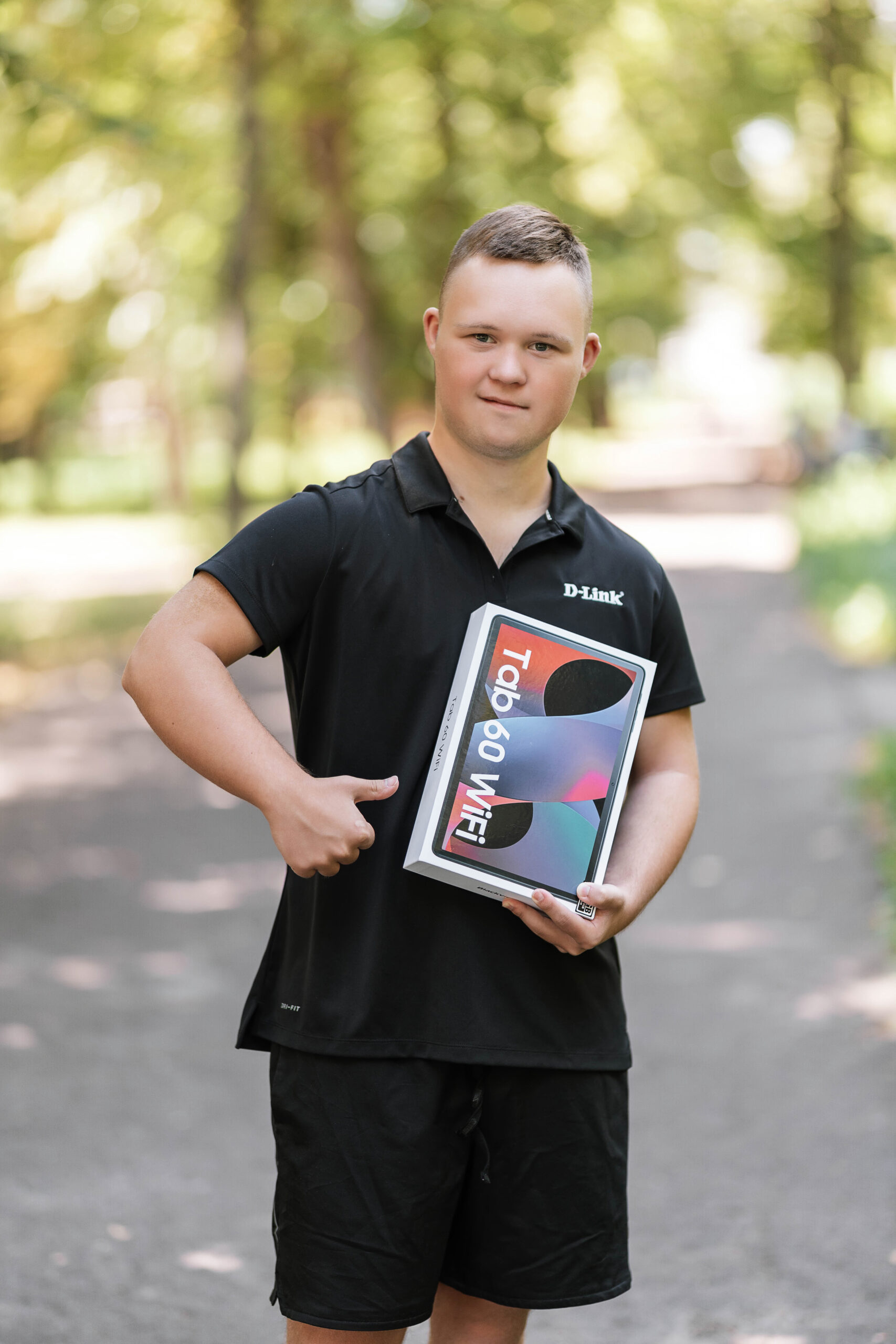
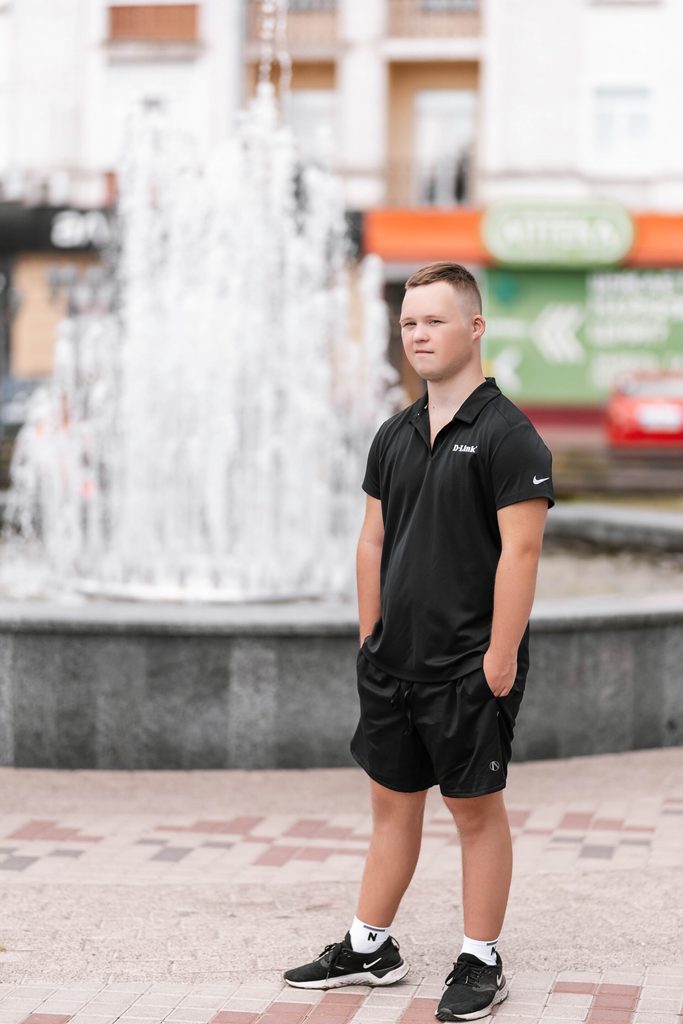
This is Renat Potichev. He is 16 years old, has finished Year 9 and has Down’s syndrome. Renat leads an active life: he dances, takes part in sports competitions and fashion shows, and loves swimming and travelling. He is fascinated by technology, quickly gets to grips with new gadgets, films and edits his own videos for TikTok, and is constantly coming up with new ideas for content. Renat loves to dress well, enjoys performing on stage, adores applause and always puts his heart and soul into whatever he does. He is also gradually becoming more and more independent: he gets around town on his own, attends his classes and is happy to help his family.
Renat grew up in a large family. As well as him, there are three older brothers in the family, and his mum now has a one-and-a-half-year-old grandson. The eldest son is 30, and the other two are 28 and 26. One of his brothers is currently serving in the army.
After Renat was born, his older brothers became his mother’s main source of support. She explains that they all helped to look after their younger brother together: the older brothers helped a great deal with his care and supported her through a difficult time.
“I always say to my older sons: ‘Thank you for Renat. You helped me bring him up. Now it’s your turn to have children, and I’ll help you just as you helped me back then,’” says his mum, Svitlana.
“It’s a daily struggle, but it’s paying off.”
“Renat has completely changed my life. I love him so much — it’s hard to put into words just how much.”
On the third day after the birth, the doctors suggested this diagnosis, which was later confirmed. In the maternity ward, she recalls, the medical staff treated the family very warmly and attentively.
The news came as a huge shock to her. It took her almost a month to accept and come to terms with what had happened. She found it difficult to understand why, after three older children without Down’s syndrome, it was precisely her fourth child who was born with this condition.
Over time, her attitude changed completely. She says that Renat turned her life on its head in ways she could never have imagined, and today she cannot imagine her life without him.
“From then on, we immediately started working on his development. I gave him massages and helped him practise at home. As a result, he started walking at one year and three months — almost like most children, although children with Down’s syndrome often start walking much later,” says his mum, Svitlana.
Now that his older siblings are grown up, his mum and Renat have more opportunities to travel together. They often go on trips and enjoy discovering new places.
Renat loves the sea most of all. He isn’t afraid of the water at all, is a good swimmer and, together with his mum, can swim out far, even beyond the waves. According to her, travelling with him is easy and enjoyable.
Renat is very tidy and loves order. He looks after his own things: he folds his clothes neatly, puts his shoes away, and keeps his room clean. According to her, he loves cleanliness so much that he sometimes even takes a shower several times a day.
Ever since he was a child, Renat has loved helping out. During holidays, he happily took part in group activities — for example, helping to pitch and take down the tent. He enjoys being useful and feeling like a full member of the team.
“He’s very quick on the uptake, and I’m convinced that if you work with children like this consistently, you’re bound to see results. It’s a daily effort, but it pays off.”
From around the age of 13, his mum began teaching him to get around town on his own: first just one stop, then further and further. In the same way, step by step, he learnt everyday skills. The family even prepared him to go to the shop on his own — the local shop assistants already know Renat and are ready to help if needed.
Since the outbreak of full-scale war, the family has become more cautious. Because of the air raid alerts, Mum feels more at ease when her son is nearby. At the same time, she tries not to let fear rule their lives, as she wants Renat to grow up without a constant sense of anxiety.
He now does a lot on his own: he walks to the town centre by himself, comes home on his own, and opens the door. His mum is very proud of the level of independence he has managed to achieve.
“If he had the chance, he’d be dancing all the time”
Physical activity has been an integral part of Renat’s life since he was a child. His mum deliberately paid a lot of attention to this, as her son is prone to putting on weight. At home, they regularly did physical exercises, and later Renat started attending a boxing club. He is also keen on football, although it wasn’t easy for him to fit in with teams of his peers. To build up his muscles, his mum taught Renat to swim. He later learnt to ride a scooter and now enjoys riding it, including a stunt scooter.
“The only thing he hasn’t managed to get the hang of yet is cycling. He simply didn’t enjoy it, so he wasn’t keen to learn. Perhaps we’ll come back to it in time.”
Renat took part in Special Olympics competitions, which were held in Kyiv for children with Down’s syndrome and other special educational needs even before the full-scale war began. In one of the races, he completed the 200-metre distance and won a medal. For the family, this award became a symbol of his perseverance and an important personal achievement.
Then came his participation in an international sports camp, to which only ten children from Ukraine were invited. Although Renat did not win a prize, the very opportunity to represent his country at such an event was incredibly valuable to him and his family. The camp brought together participants from various countries, and the Ukrainian children had the chance to show that they were active, sporty and talented.
“I remember that period very well. Before the full-scale war, there really were lots of different events organised for children with Down’s syndrome and other children with disabilities: sports camps, trips, competitions and festivals. Now, unfortunately, because of the war, there are far fewer such initiatives,” says his mum.
He also went to a sports camp in Zalizny Port once. For ten days, the children followed a packed sports programme: early mornings, runs along the seafront, push-ups, training sessions and various competitions. There were participants from different countries at the camp, and this was a wonderful opportunity for him to make new friends, develop his skills and have an unforgettable experience.
“At the “Vira” centre, he also takes dance classes. Their teacher is brilliant with children, and he really enjoys attending the sessions.”
Together with the dance troupe, they perform at various concerts in Nizhyn. They used to travel to Chernihiv for competitions as well. He is the only boy in the troupe – a real soloist amongst the girls – and he really enjoys it. They already have three wonderful dance routines, which are always very warmly received by the audience.
“Dancing is one of his greatest passions. If he could, he’d dance all the time. He loves being on stage, loves the applause, and takes great pleasure in bowing to the audience. And after a performance, he often calls out from the stage: “Mum, I love you!’ And that always brings smiles and genuine emotion to the audience.”
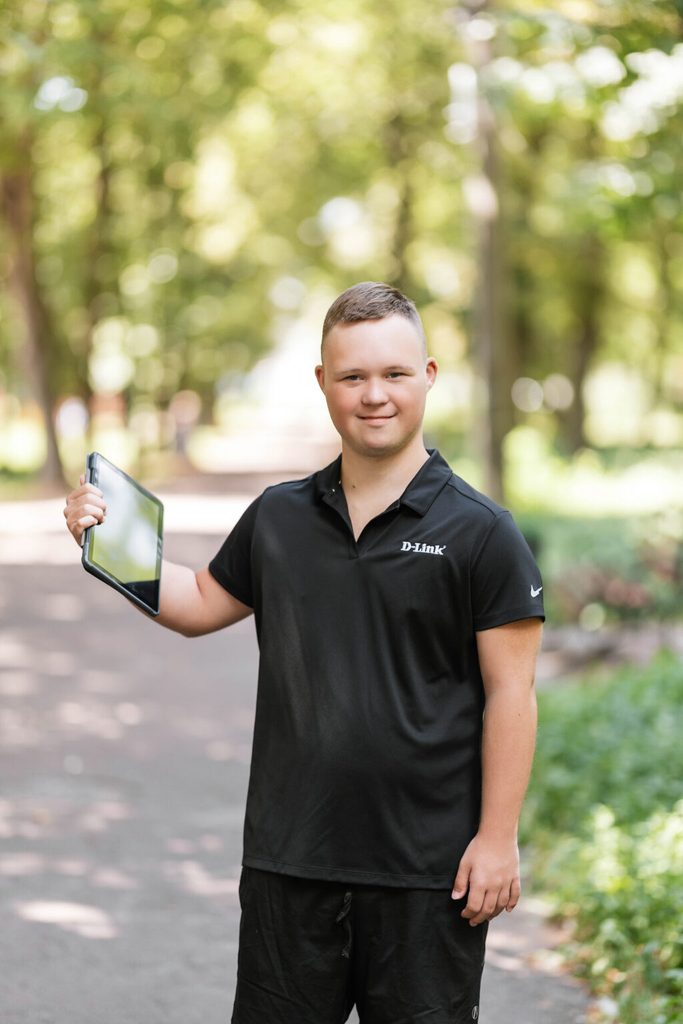
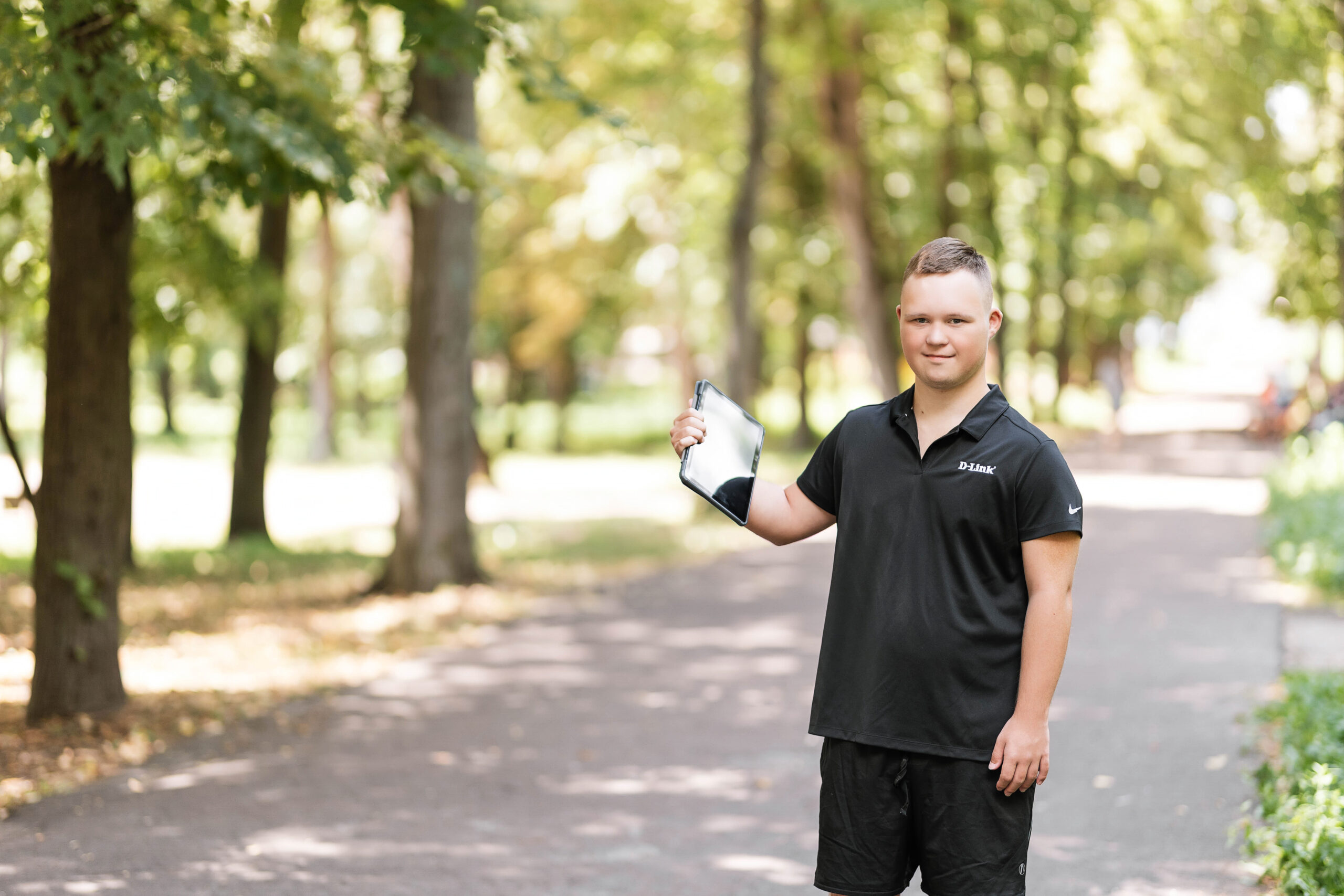
Renat recently received a tablet from the ‘League of the Strong’. For Renat, it has become not only a source of entertainment but also a useful tool for learning and leisure. According to his mum, he got to grips with the new gadget very quickly: he found the features he needed all by himself, installed games and apps, and immediately began using it actively.
The tablet has proved particularly handy when travelling. Thanks to its compact size, it’s easy to take with you, so Renat always has something interesting to do whilst on the move. His mum, Svitlana, expressed her sincere gratitude to “The League of the Strong” and the Intesa Sanpaolo Charitable Foundation, as this has made visiting public places much easier for them.
“Yes, we still have some difficulties with speech, but when it comes to technology — he’s a real whizz. That’s very heartening.”
“You need to talk to children”
According to his mum, Renat has been lucky with his school. The teachers helped his classmates understand his unique way of perceiving things, so he easily became part of the class and felt at ease amongst the other children.
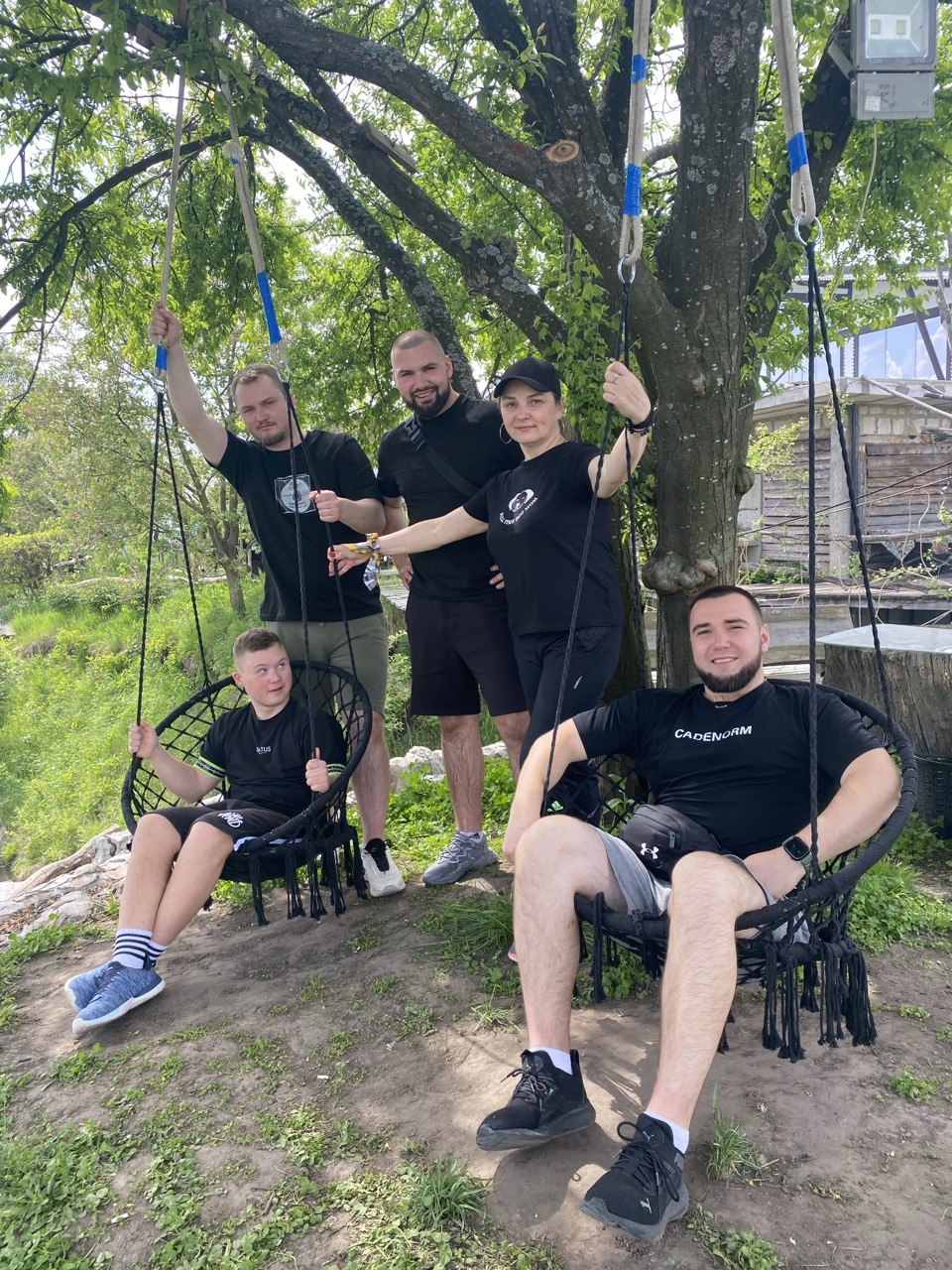
Renat spends most of his time with his older brothers, around whom he feels calm and confident. They might spend several hours walking around town, popping in for a pizza or some ice cream. When he’s not at home, his mum admits she misses her son, and when he returns, they always have long chats about how his day went.
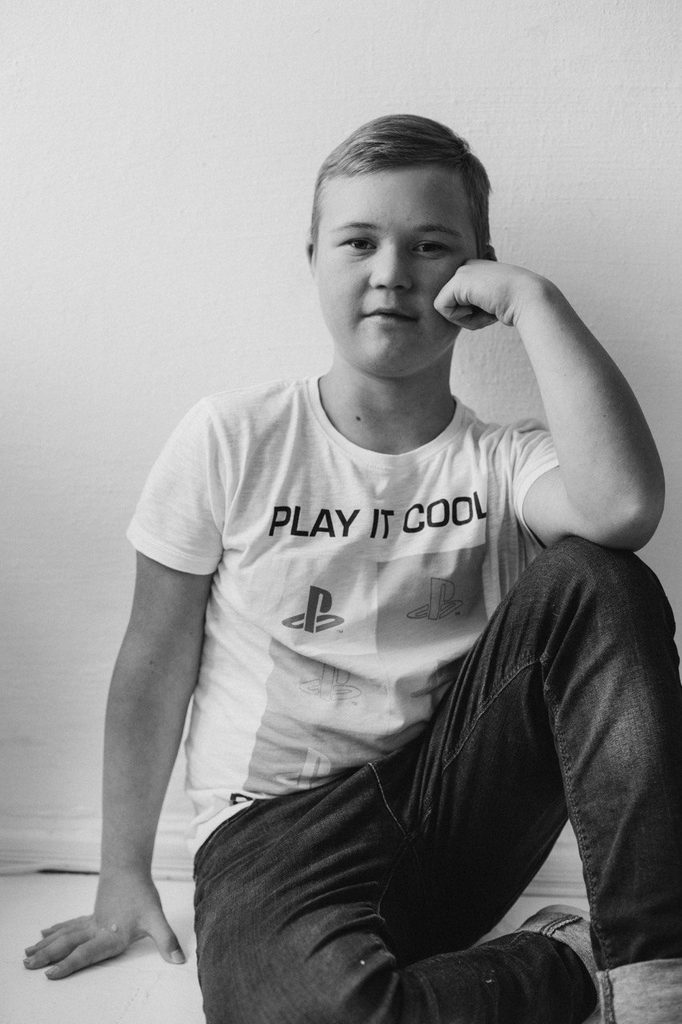
People often say that teenagers can be difficult. But, his mum admits, she hardly ever has any such difficulties with Renat. She’s convinced that you can always come to an understanding with him if you explain things calmly and talk to him a lot.
“I’m constantly explaining things to him, telling him stories, and discussing various situations with him. Sometimes friends are surprised and say they wouldn’t have had the patience for it. But I can’t imagine doing it any other way. You need to talk to children — both those with Down’s syndrome and those without. They all need attention, explanations and genuine communication.”
Every time he comes home, he announces loudly to everyone: ‘I’m home!’. His mum says he’s genuinely delighted every time he returns, and his cheerful mood instantly fills the house.
According to his mum, Renat is very considerate. Sometimes he doesn’t even tell her about unpleasant situations or arguments so as not to upset her. She finds out about them from other parents and sees this as a sign of his thoughtfulness towards his loved ones.
“I always say that’s a sign of intelligence. I really like the fact that he doesn’t want to upset me unnecessarily and tries to spare me any worry.”
Renat also loves going for walks. His mum jokes that if she let him, he’d spend the whole day outside.
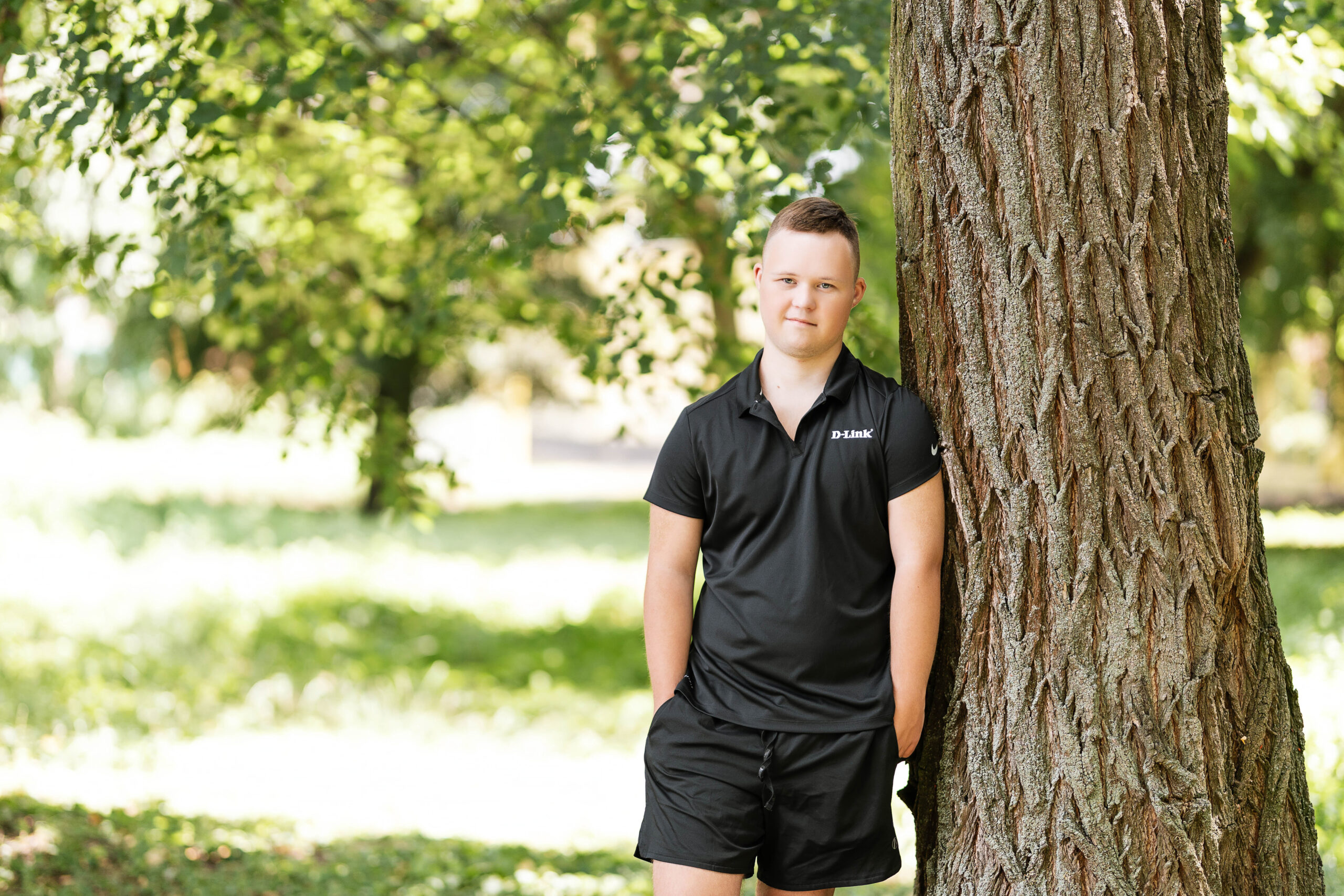
“He enjoys the attention; he loves posing.”
The family always tried not to miss a single opportunity for Renat’s development and took part in competitions, sporting events and other activities for children with Down’s syndrome. One such event was a photography competition in Chernihiv, in which Renat took part when he was about ten years old.
“We were invited to take part; we sent in a photograph at the very last minute — and, to our surprise, won first place. It was a great joy for the whole family,” recalls his mum, Svitlana.
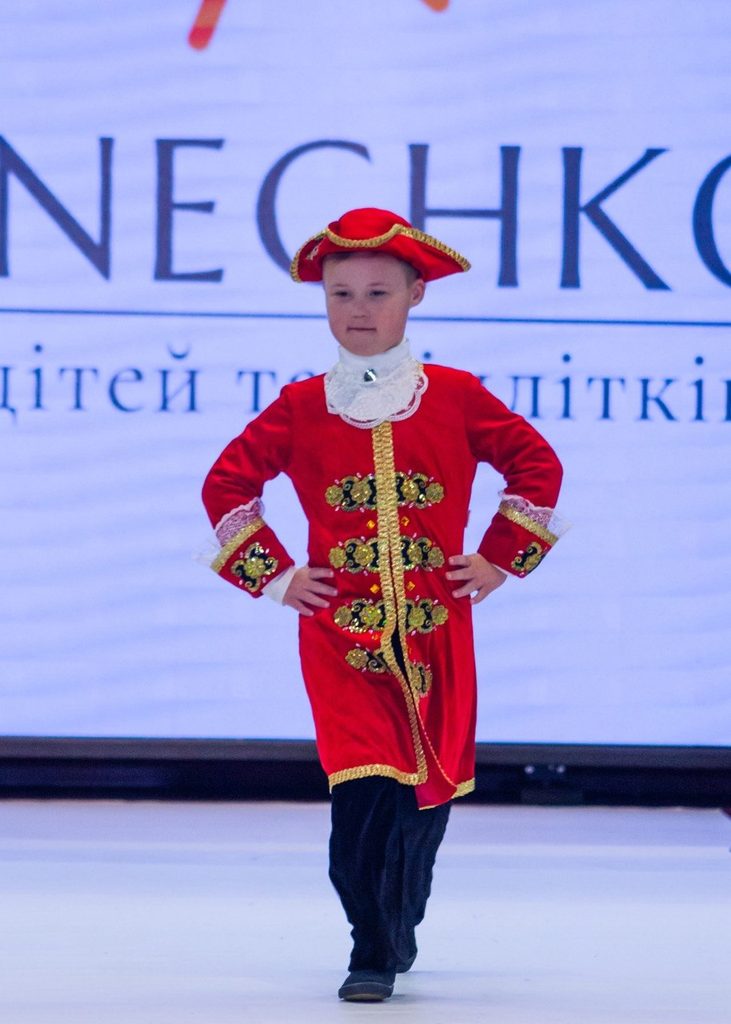
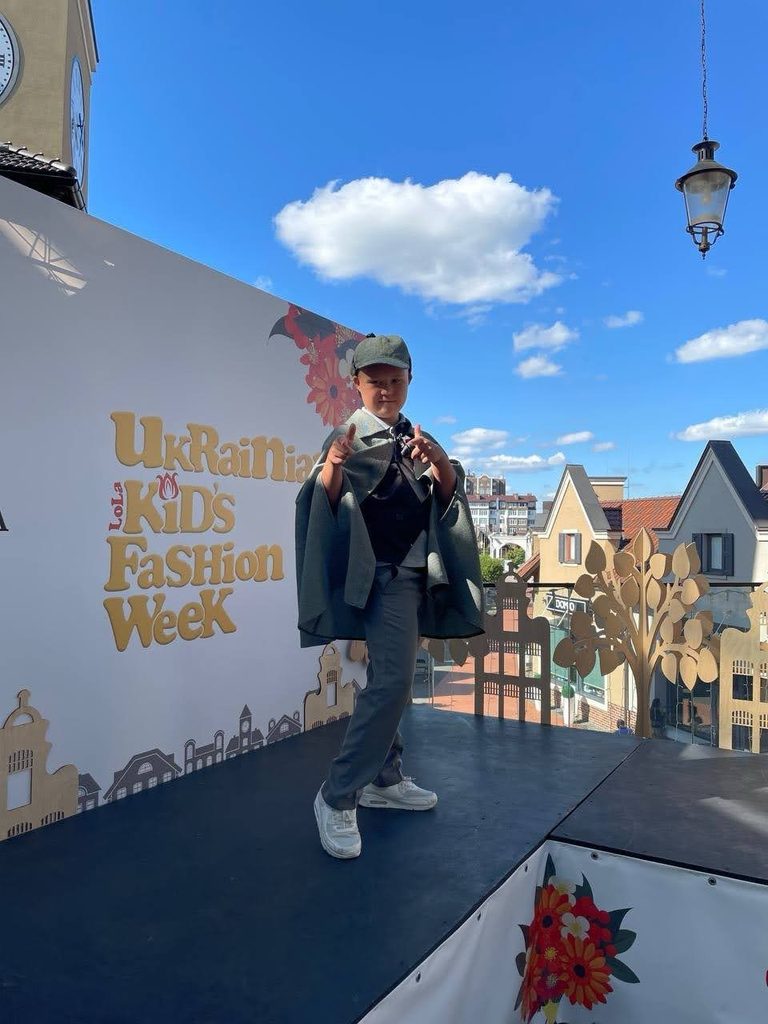
On one occasion, Renat passed the auditions for a modelling agency for people with Down’s syndrome and was among the ten children from across Ukraine invited to take part in the fashion shows. The first show took place at a hotel on Khreshchatyk in Kyiv. Before taking to the catwalk, the children were coached by instructors who taught them how to walk the catwalk and stage presence.
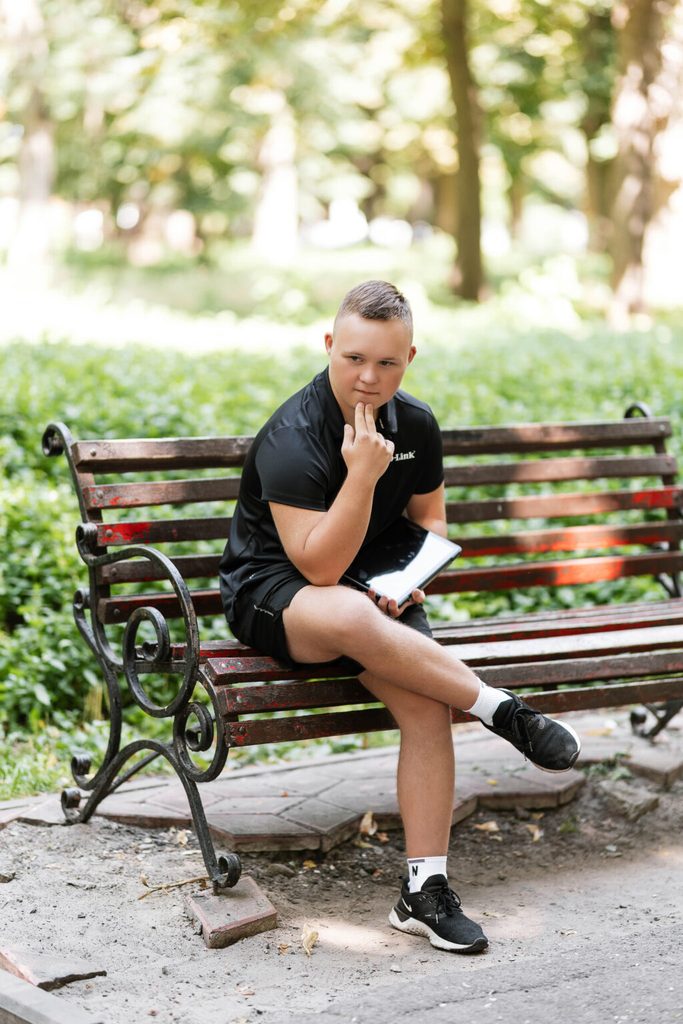
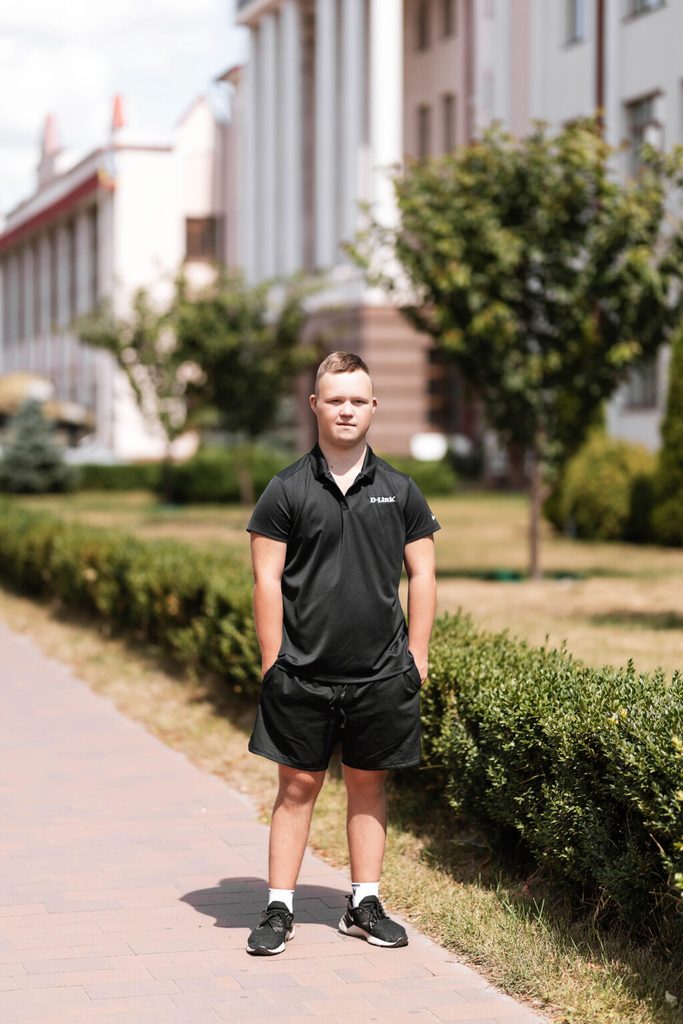
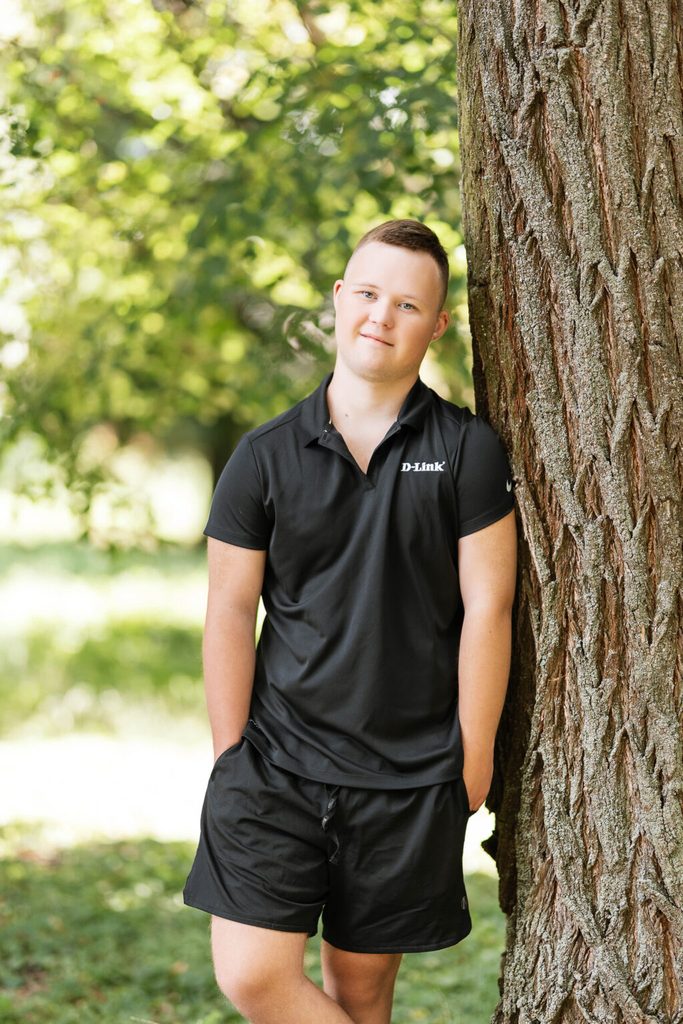
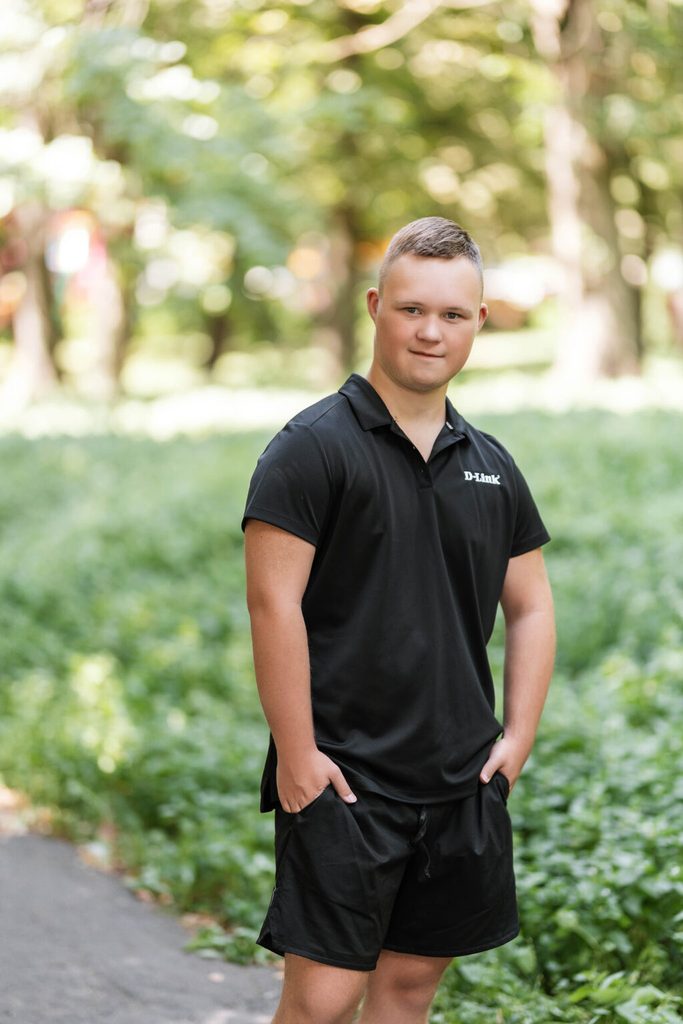
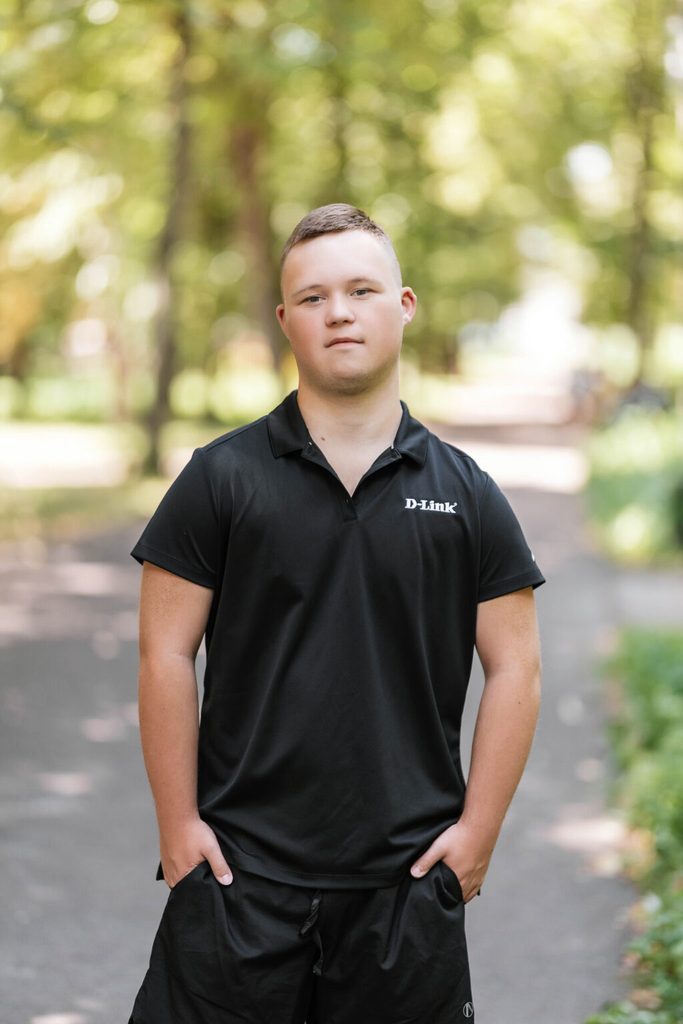
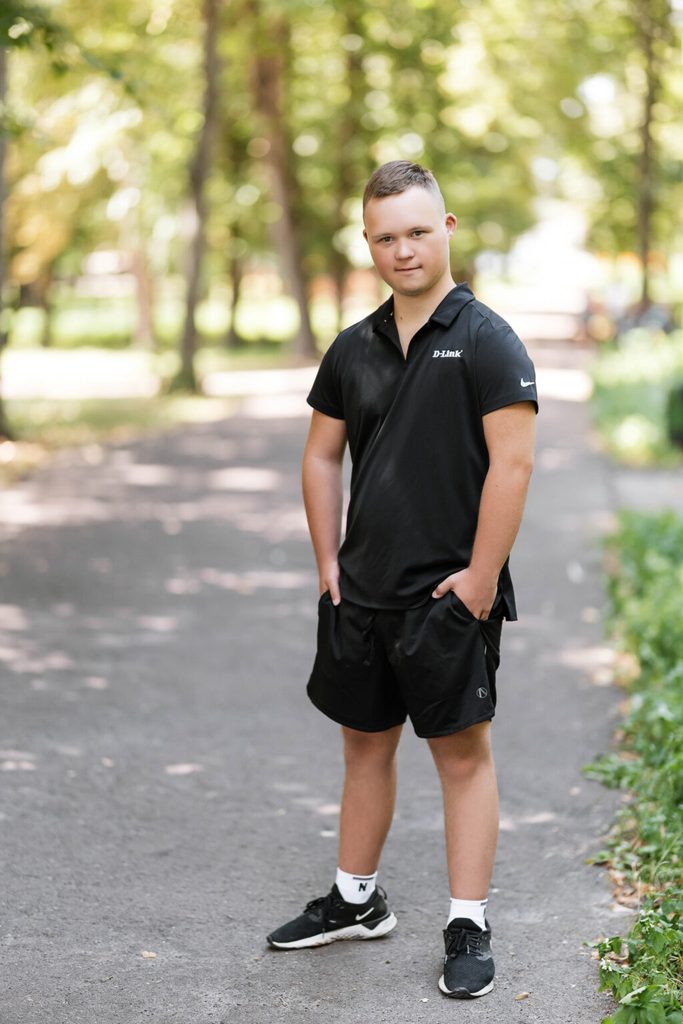
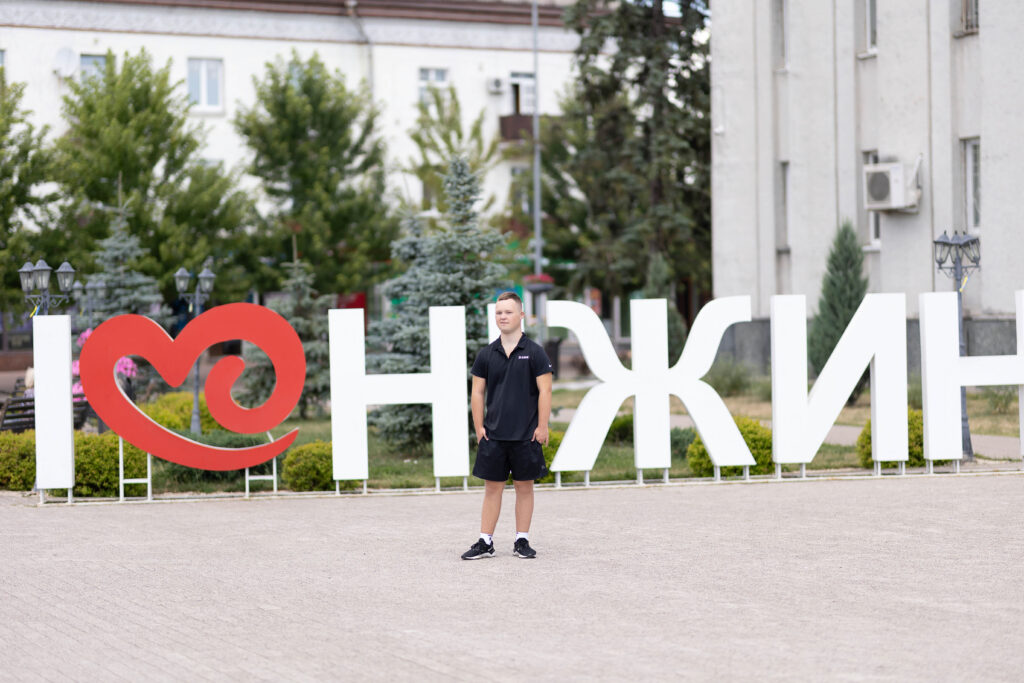
“He really loves having his photo taken and feels completely at ease in front of the camera. When he found out there was going to be a photo shoot for this article, he was immediately delighted: “Oh, brilliant!”. He enjoys the attention; he poses with pleasure and does so with genuine enthusiasm. He walked the catwalk so confidently and with such focus, as if he’d been doing it all his life.”
Since his debut, Renat has walked the catwalk three more times, including at a show at “Manufaktura” in Kyiv. In total, he has taken part in four shows.
One of them made a particular impression on his mum: whilst some of the children were nervous and afraid to go out onto the catwalk because of the large number of photographers, journalists and spectators, Renat felt confident and helped the girls with Down’s syndrome to overcome their fear — he took them by the hand and led them onto the stage.
“I asked quietly, “Son, will you help?” And he agreed without hesitation. First, he led one of the twin girls out: he took her by the hand, guided her along the catwalk, stood her next to him, and posed beautifully himself so that she would feel more confident. Then he helped her sister in the same way. After that, other parents started coming up to us and asking, “Please, could you bring our daughter out too?’ So Renat helped several more girls in turn, and they were able to walk the catwalk.”
“The most important thing for us is that he is happy”: education and future career
At first, he followed a personalised programme at school. He has now completed Year 9, but has been home-schooled for the last two years.
“We are very grateful to the teachers. They managed to create an atmosphere in which his classmates accepted him warmly and were genuinely friendly towards him. That was incredibly important to us. He enjoyed going to school, playing with the other children during break times, running around with them, playing football and using the sports ground,” says his mum.
His mum, Renata, deliberately did not force him to learn skills which, in her view, would have no practical use in the future. She is convinced that education should not be a source of stress for either the child or the parents, so she focused on developing the skills that would help her son to be independent in everyday life.
In his senior years, due to the difficulty of certain subjects, particularly chemistry, Renat switched to home-based learning. This year, he finished Year 9.
Renat hasn’t yet decided on a future career, as he is only 16 years old. At the same time, his family are already considering employment opportunities. One option could be helping out at his older brother’s café in Kyiv, where he happily carries out simple tasks: helping to move things, serving drinks and keeping the place tidy.
According to his mum, Renat loves being useful. He willingly takes on household chores too: he walks the dog himself, takes out the rubbish and happily helps his family with everyday tasks.
“His greatest dream is for all his brothers to be together”
One of Renat’s dreams was to visit a nightclub. It came true whilst they were on holiday in Turkey: the entertainment staff invited them to a disco. According to his mum, Renat was thrilled by the atmosphere, the music and the dancing.
What impressed her most was the attitude of the staff. When they saw Renat, they seated him in a VIP box, served him separately, and a security guard made sure no one disturbed him. Throughout the trip, his mum says, the Turks treated him with particular warmth: they greeted him, chatted to him and gave him small gifts, which came as a pleasant surprise to the family.
Now Renat dreams of having his own car and sincerely believes he might be given one for his birthday. His mum has to explain that such a purchase requires far more money than his saved-up pocket money.
“More than anything, he dreams of all his brothers getting together. Almost every other day he says: “I want Kirill, Borya and Ilya to come. Let’s all go to the cottage together.” We used to go on trips as a family quite often, and he really misses those times. His brothers practically grew up with him and helped a lot with bringing him up, so now he really looks forward to every time he sees them.”
We would like to express our gratitude to the Intesa Sanpaolo Charitable Foundation for its support of the project “Emergency Response for People with Disabilities Affected by the Conflict in Northern Ukraine”, which is being implemented in partnership with CBM Italia. As of July 2026, 302 people with disabilities had received assistive technology as part of this project, including 57 tablets.