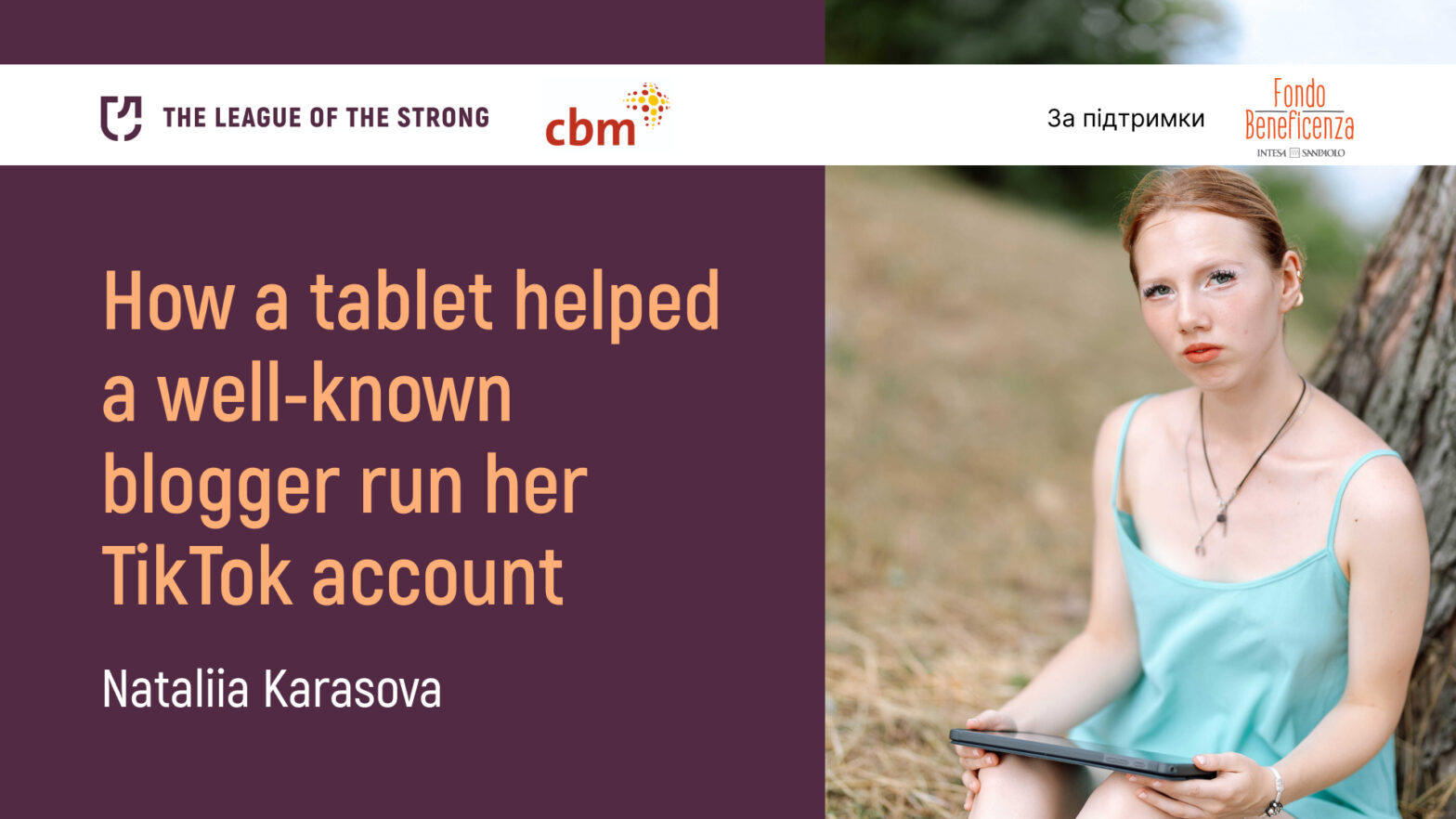
Nataliia Karasova lives in Chernihiv. Living in a frontline area forced her to adapt her skills and, despite her visual impairment, to keep moving steadily towards her goal. She is now a well-known blogger and an expert in various dance styles. She is currently continuing her studies and confidently making plans for the future.
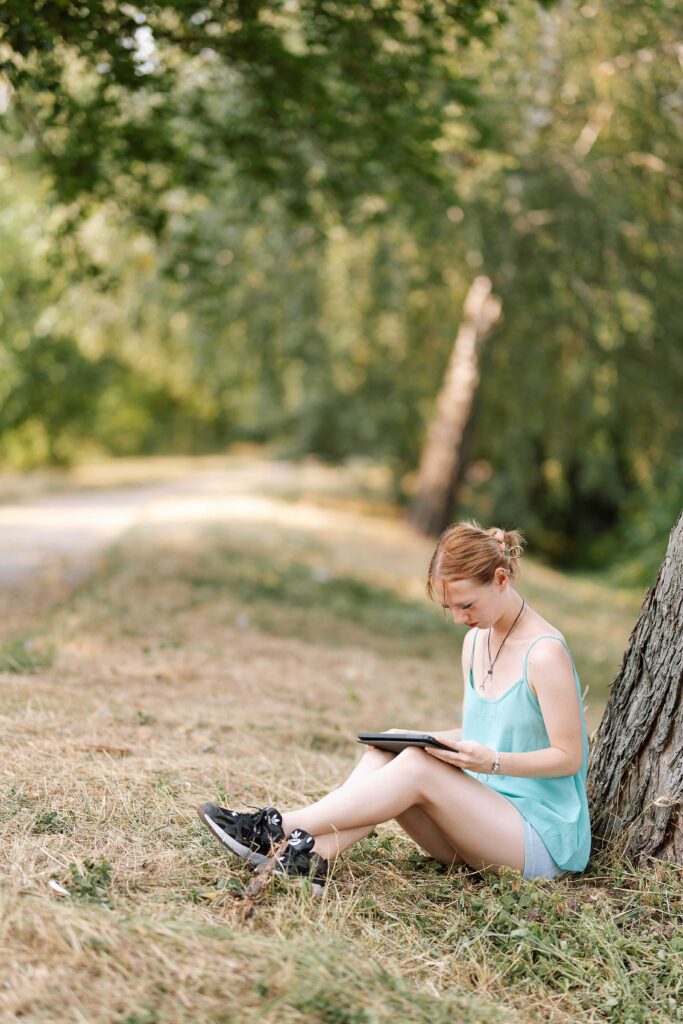
Nataliia excels at creating trending videos on TikTok. Preparing new videos involves writing and editing text – previously, she had to do this work on a computer. The desktop operating system did not allow her to change fonts, let alone the application menus. Thanks to a tablet provided by “The League of the Strong” public association, her interaction with content has become much easier, and her new videos bring joy to her 13,000 followers more often. Now she can prepare material, upload content and carry out other routine tasks anywhere, without being tied to a desktop.
Alongside her dancing, the girl writes prose and plans to publish her own book in the future. From time to time, she has ideas about how she might improve or expand her work.
“Sometimes I think, why not write a full-length story about a “good” mafia that takes down bad people and saves ordinary citizens from drugs and the like. I’m writing about various incidents involving the struggle between clans. The story isn’t finished yet; I’ve only got halfway through. But I’m working on it. So it was very timely when I received the tablet. Thank you so much; it saved me, because it’s difficult to read and edit text on a computer if there are mistakes in it,” says Nataliia, describing her experience.
Education at a specialised school in Chernihiv
In Chernihiv, Nataliia attended a special school for children with visual impairments. The classes were small — with up to twelve pupils — and the teaching was tailored as much as possible to the children’s needs. Pupils were seated according to their visual impairments; teachers wrote in large letters, used large screens to display materials, and textbooks and exercise books were printed in large type. For children with severe visual impairments, there were special electronic magnifiers, whilst those who were completely blind studied using Braille.
Nataliia recalls that the school became a comfortable and safe environment for her. She did not live at the school but attended lessons there every day; however, she was well aware of the daily lives of her friends who stayed there. According to her, the carers and teachers treated the children with care, and the school itself was well-equipped, including shelters for safety during air raid alerts.
But the main difficulties were not related to the school, but to her health. Doctors had advised her to reduce her physical activity, so she was unable to attend many extracurricular clubs. Despite this, she did not give up on her hobbies. She taught herself to play the piano, practised yoga and ballet, and is now keen on hip-hop and choreography.
“I learnt to do all this on my own, without any clubs, even though doctors advise me to be careful. That sort of advice doesn’t stop me from dancing for four hours straight — it’s just part of my daily routine,” the girl recalls.
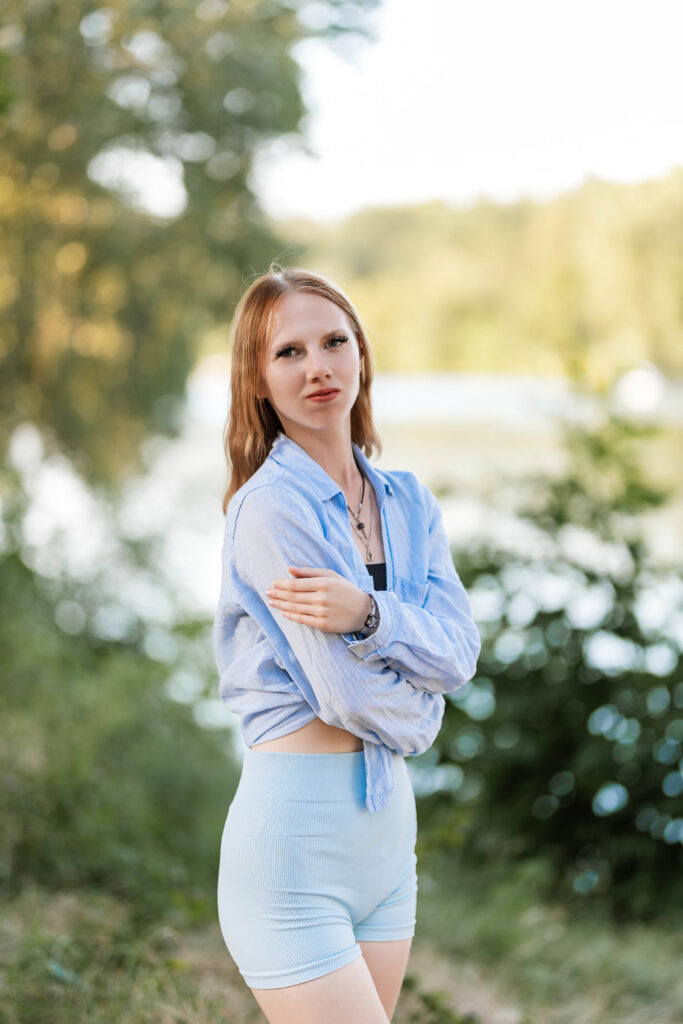
She speaks highly of her experience at school, recalling the support from teachers, the accessible teaching materials and the atmosphere in which children could receive an education tailored to their needs. In her view, it was precisely thanks to such adaptations that she was able to focus fully on her studies and the development of her talents.
Evacuation and the difficult adjustment to a new reality
Nataliia recalls the first few months after her evacuation to Poland following the full-scale invasion as a period of immense stress. Because of this, she can barely remember many of those moments. The hardest part was gradually returning to normal life, as her emotions had, as it were, ‘switched off’ after the war began.
Being forced to part with her family added to her troubles. At first, Nataliia lived only with her aunt, but she missed her dad, who had stayed behind in Ukraine, the most. Later, her mum joined her, which made the adjustment much easier. Despite the difficulties, life abroad taught her independence, enabled her to learn Polish and gain her first work experience.
Schooling proved to be an additional challenge. Polish schools were not sufficiently adapted for a pupil with a visual impairment. At the same time, the teachers were understanding towards Nataliia: they allowed her to stand closer to the blackboard so that she could copy the notes down herself. After a while, the family realised they had to return home.
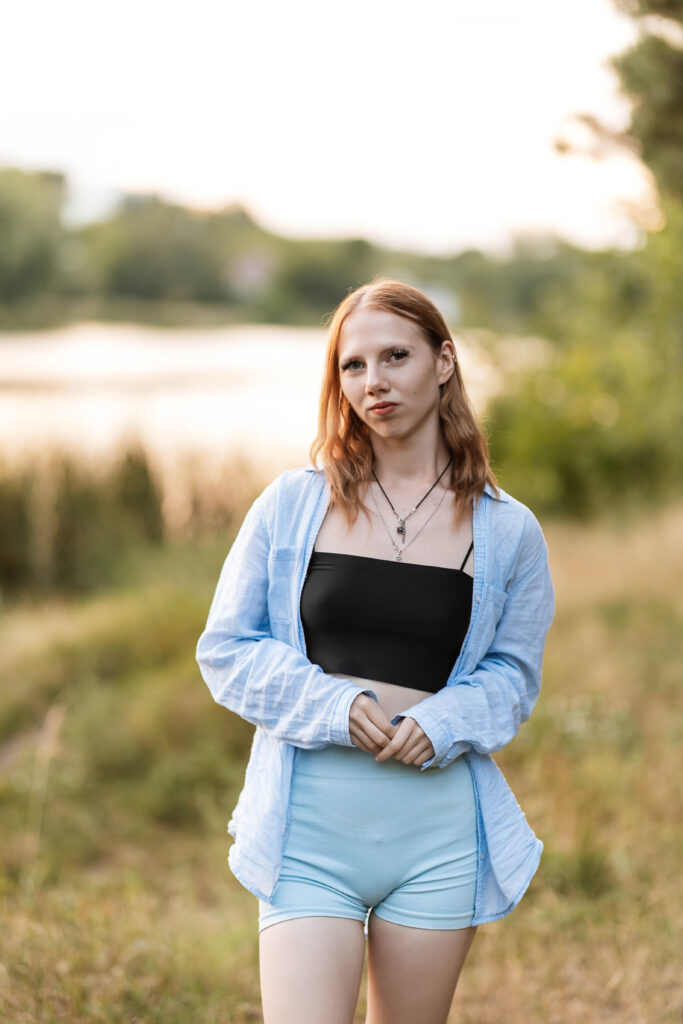
The path to making dreams come true — what’s next
Before Nataliia chose her blog topic, she attended UNICEF’s “XIT Season 1” courses, which helped her understand video editing techniques, learn how social media algorithms work, and discover what exactly interests audiences today. There, she met well-known bloggers and, in particular, learnt from Tanya Yasty.
“On these courses, I learnt to understand social media algorithms and edit videos in a way that would engage viewers. And I drew on the experience of my tutors,” she recalls.
But the world doesn’t stand still, and Nataliia plans to explore new horizons. As monetising social media cannot yet be her sole source of income, the blogger wants to train as a psychologist or beautician. Anticipating potential future obstacles, she says that determination and accessible assistive technologies are the only way to overcome the barriers standing in the way of her dreams. She already has some practical experience – the tablet from “The League of the Strong” has significantly improved her video editing and information processing, allowing her to focus more on creativity than on technical details.
We would like to express our gratitude to the Intesa Sanpaolo Charitable Foundation for its support of the project “Emergency Response for People with Disabilities Affected by the Conflict in Northern Ukraine”, which is being implemented in partnership with CBM Italia. As of July 2026, 282 people with disabilities had received assistive technology as part of this project, including 51 tablets.